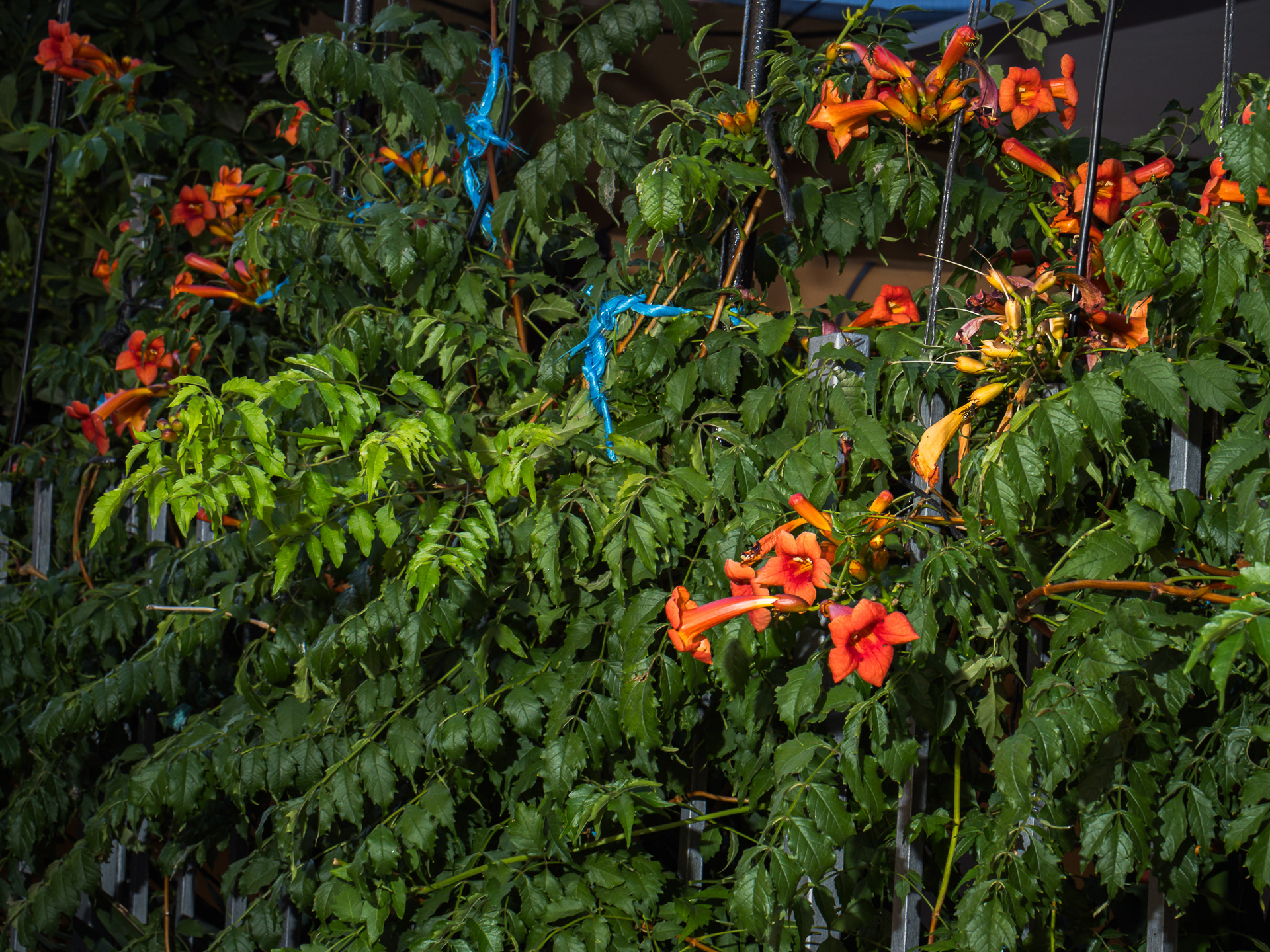
I
Todo comienza con la luz.
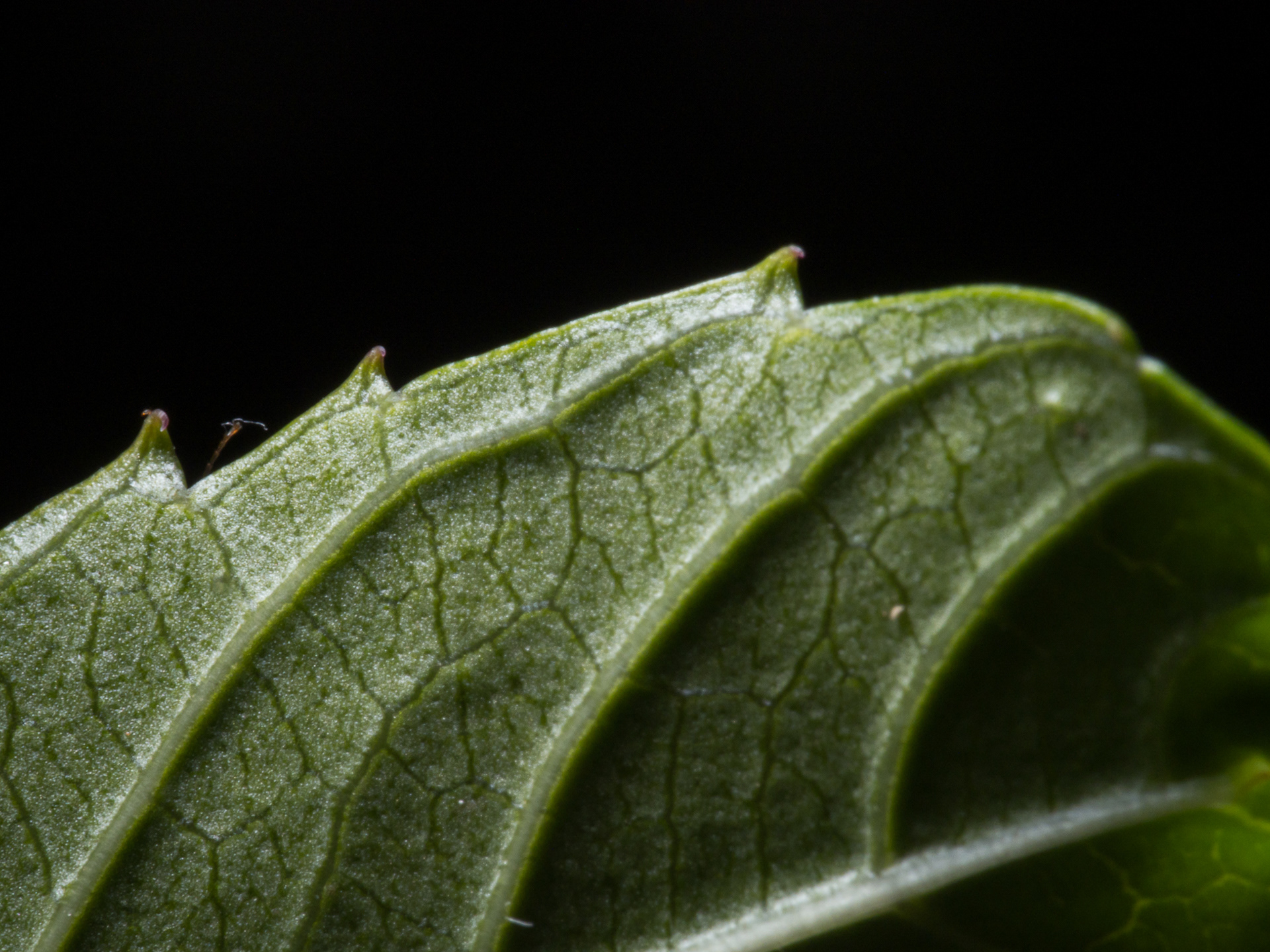
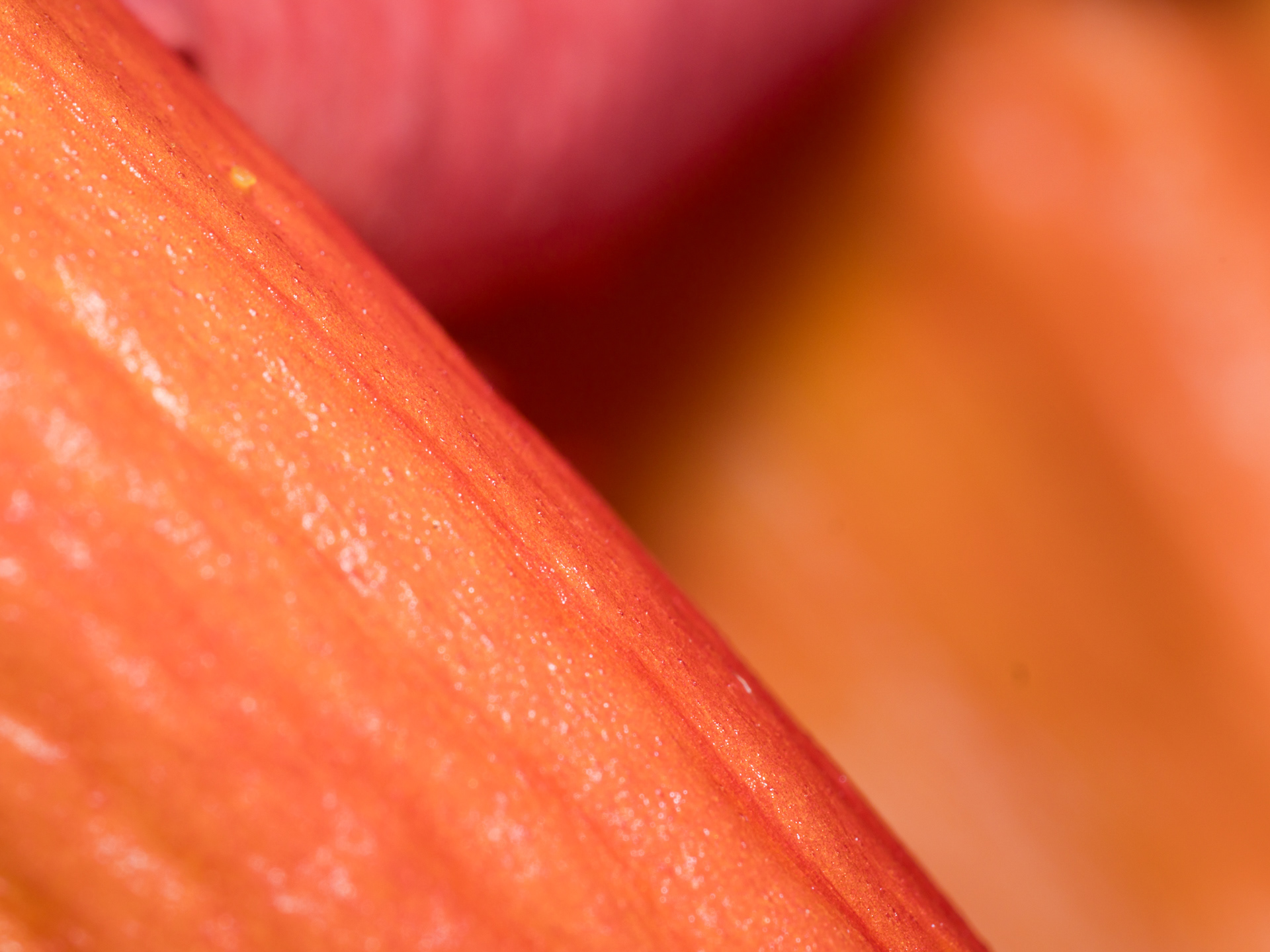
Sobre la superficie cerosa de la hoja, la radiación solar activa una maquinaria silenciosa y perfecta. Millones de estomas —pequeñas compuertas en el envés de la hoja— se abren rítmicamente para inhalar dióxido de carbono. En las profundidades del tejido celular, la energía se transforma en materia: glucosa.
Ese azúcar no permanece estático. Disuelto en agua, se convierte en savia elaborada, un torrente denso y dulce que viaja a una presión inmensa a través de las tuberías internas del floema. Es la sangre del sistema, bombeada con fuerza desde las raíces hacia los brotes más altos para alimentar la expansión continua de la estructura vegetal.
La planta se alza turgente. Sus defensas químicas están latentes; su arquitectura parece inexpugnable. El aire está quieto.
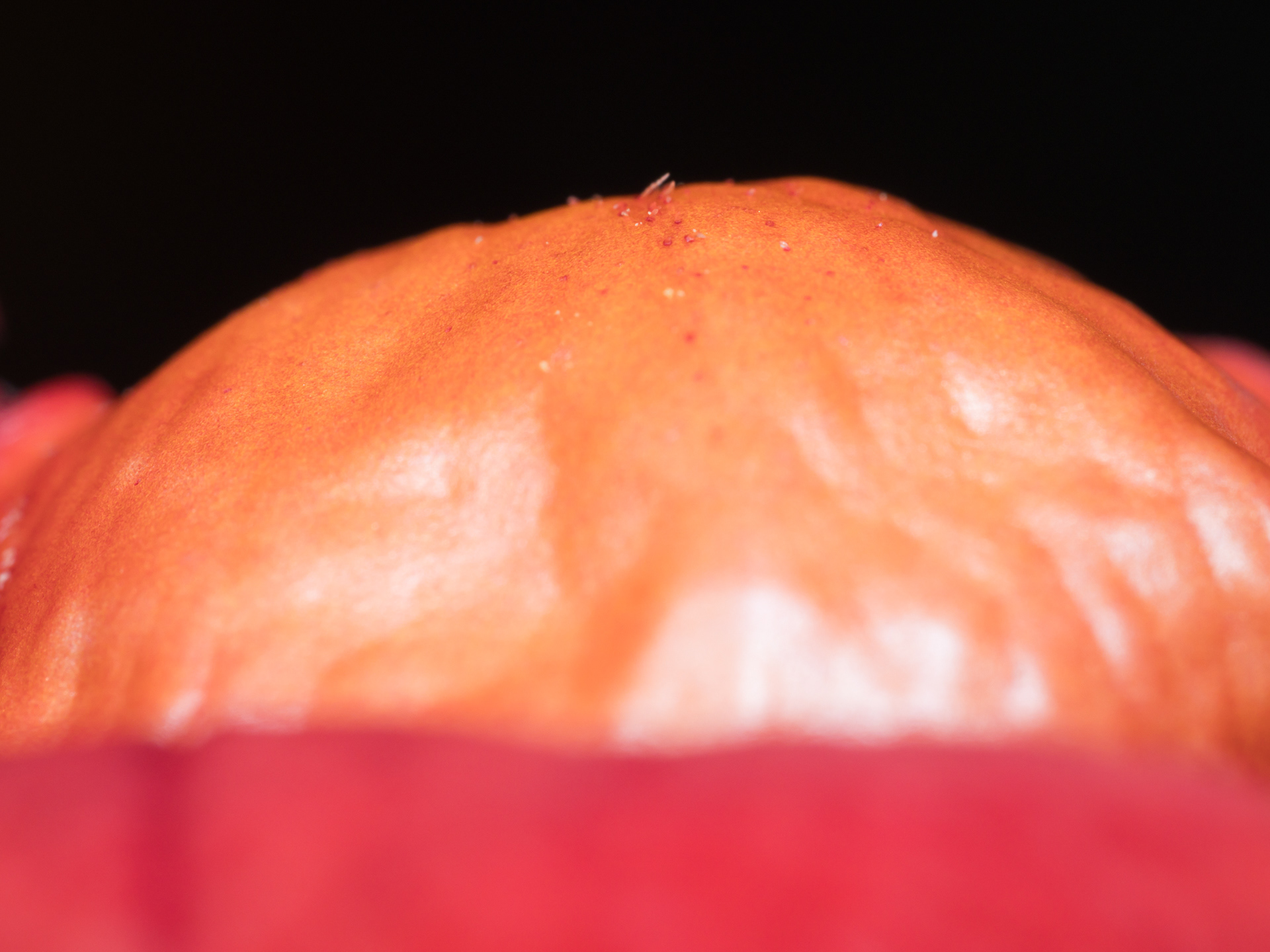
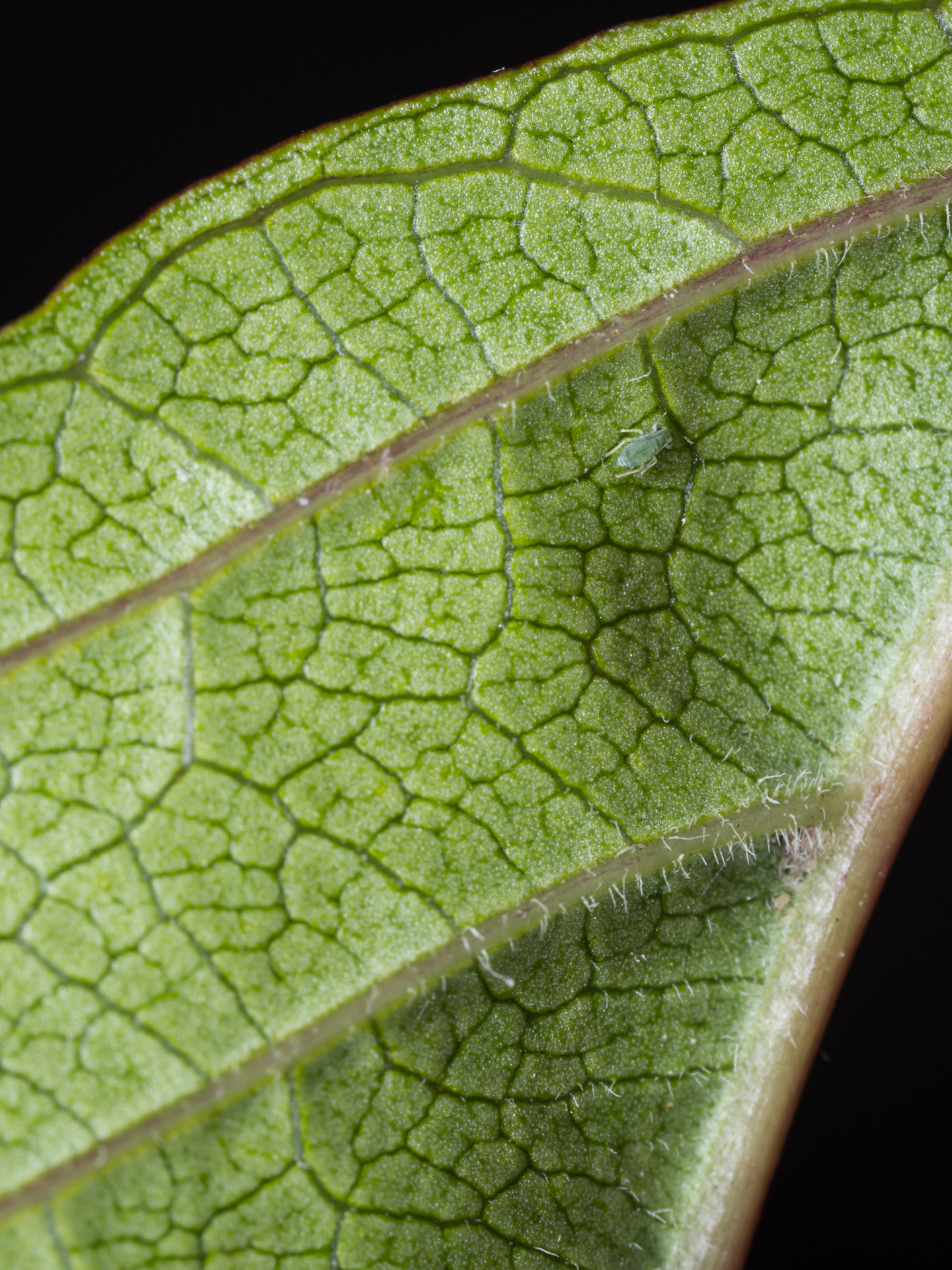
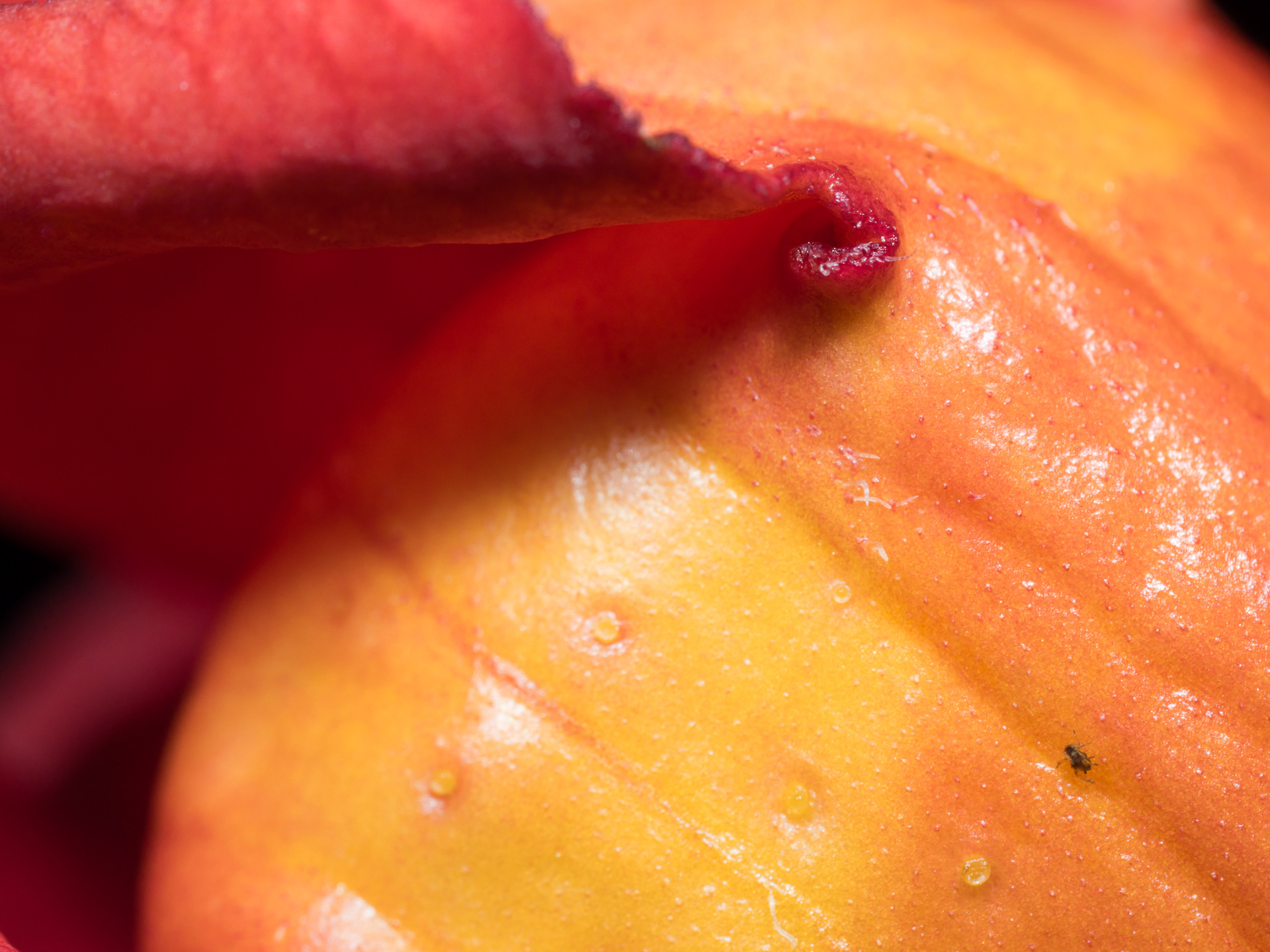
Entonces, una sombra minúscula rompe la monotonía. Una mota alada desciende y se posa sobre el tejido tierno de una hoja nueva. Es una hembra solitaria. Sus patas palpan la cutícula, buscando las venas donde el caudal de azúcar es más fuerte. Clava sus garras microscópicas. La fortaleza ha sido vulnerada.
It all begins with light.
Upon the waxy surface of the leaf, solar radiation activates a silent, perfect machinery. Millions of stomata—tiny floodgates on the leaf's underside—open rhythmically to inhale carbon dioxide. Deep within the cellular tissue, energy is transformed into matter: glucose.
This sugar does not remain static. Dissolved in water, it becomes nutrient-rich sap, a dense, sweet torrent traveling at immense pressure through the inner piping of the phloem. It is the system's blood, pumped forcefully from the roots to the highest shoots to fuel the continuous expansion of the vegetal structure.
The plant stands turgid. Its chemical defenses are dormant; its architecture seems impregnable. The air is still.
Then, a tiny shadow breaks the monotony. A winged speck descends and lands on the tender tissue of a new leaf. It is a solitary female. Her legs palpate the cuticle, searching for the veins where the sugar flow is strongest. She sinks her microscopic claws in. The fortress has been breached.
II
El ataque es quirúrgico.
La hembra no muerde; perfora. Despliega su estilete, una aguja flexible y microscópica, y la introduce entre las células vegetales con precisión de ingeniero. La sonda navega por el tejido evitando romper las paredes celulares para no alertar a las defensas de la planta, hasta que encuentra su objetivo: un tubo de floema.
Perfora el conducto.
La presión interna de la planta juega en su contra. La savia sale disparada hacia el interior del insecto como si fuera una manguera de bomberos conectada a una boca pequeña. El pulgón no necesita succionar; es alimentado a la fuerza por la propia presión vital de su víctima. Ingiere más azúcar del que puede procesar. Su cuerpo filtra las proteínas necesarias y expulsa el resto casi intacto: una gota de melaza dulce y pegajosa que cae sobre la hoja inferior.
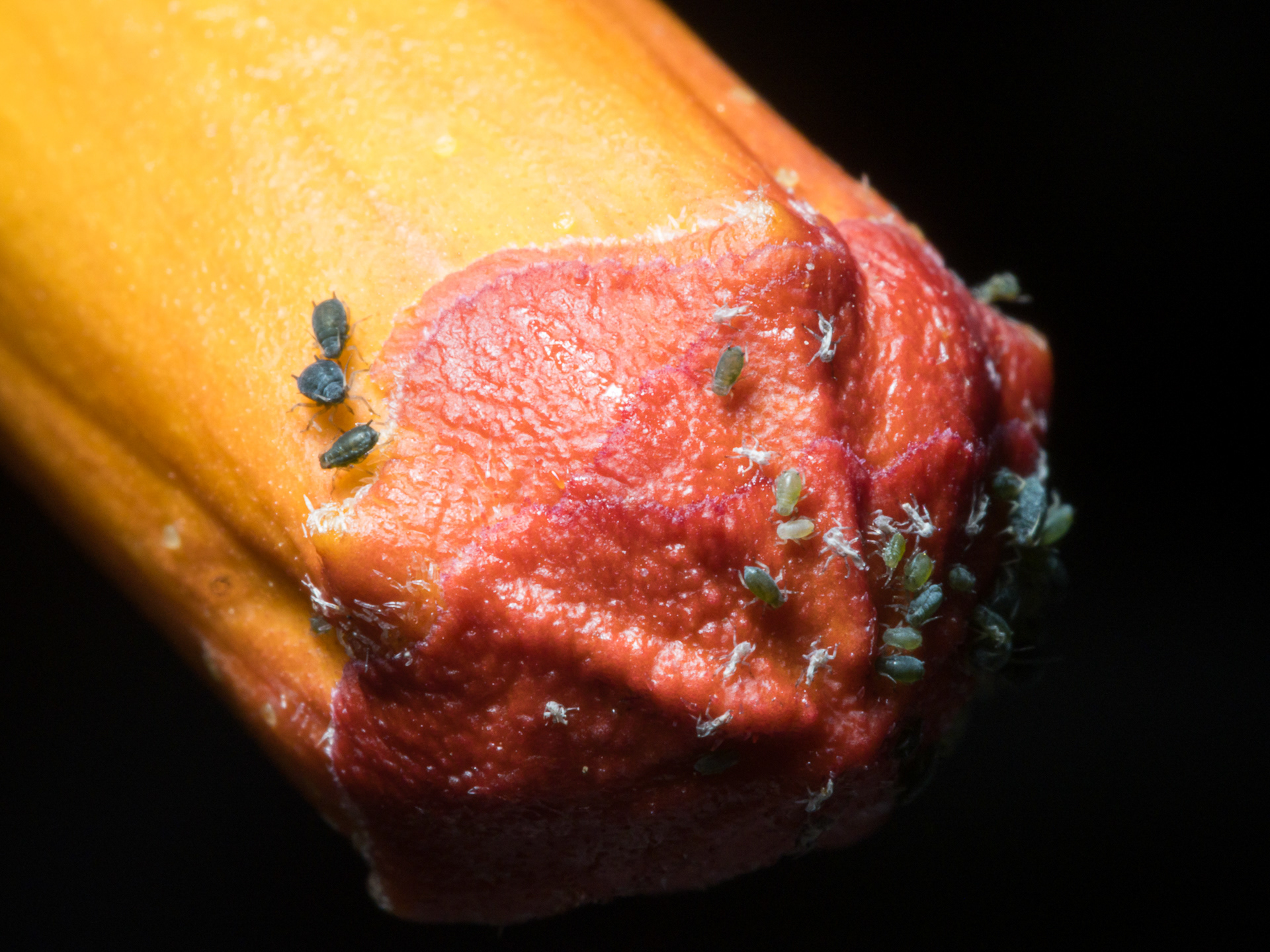
Saciada y anclada, la hembra comienza su verdadero propósito: la colonización.
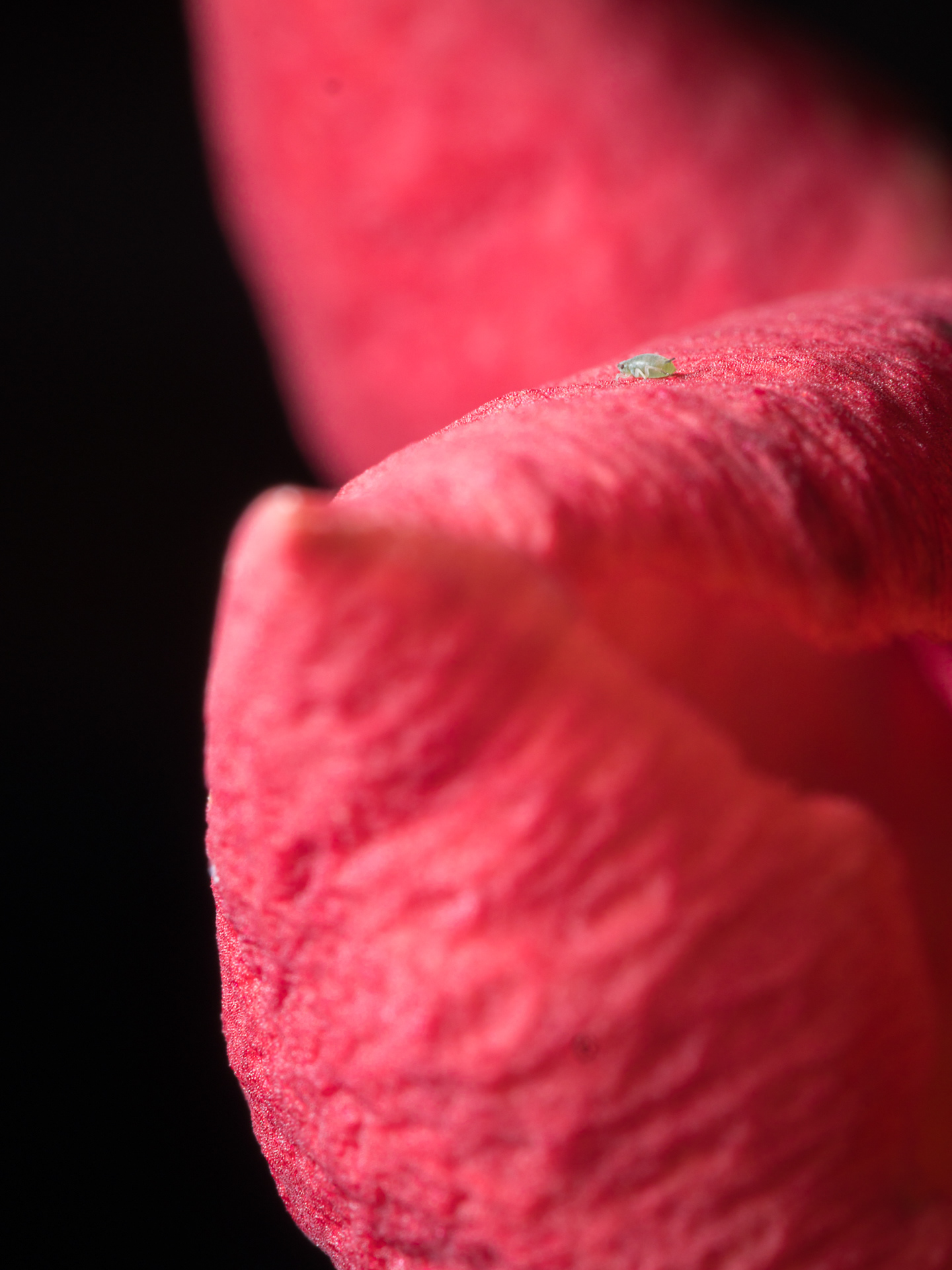
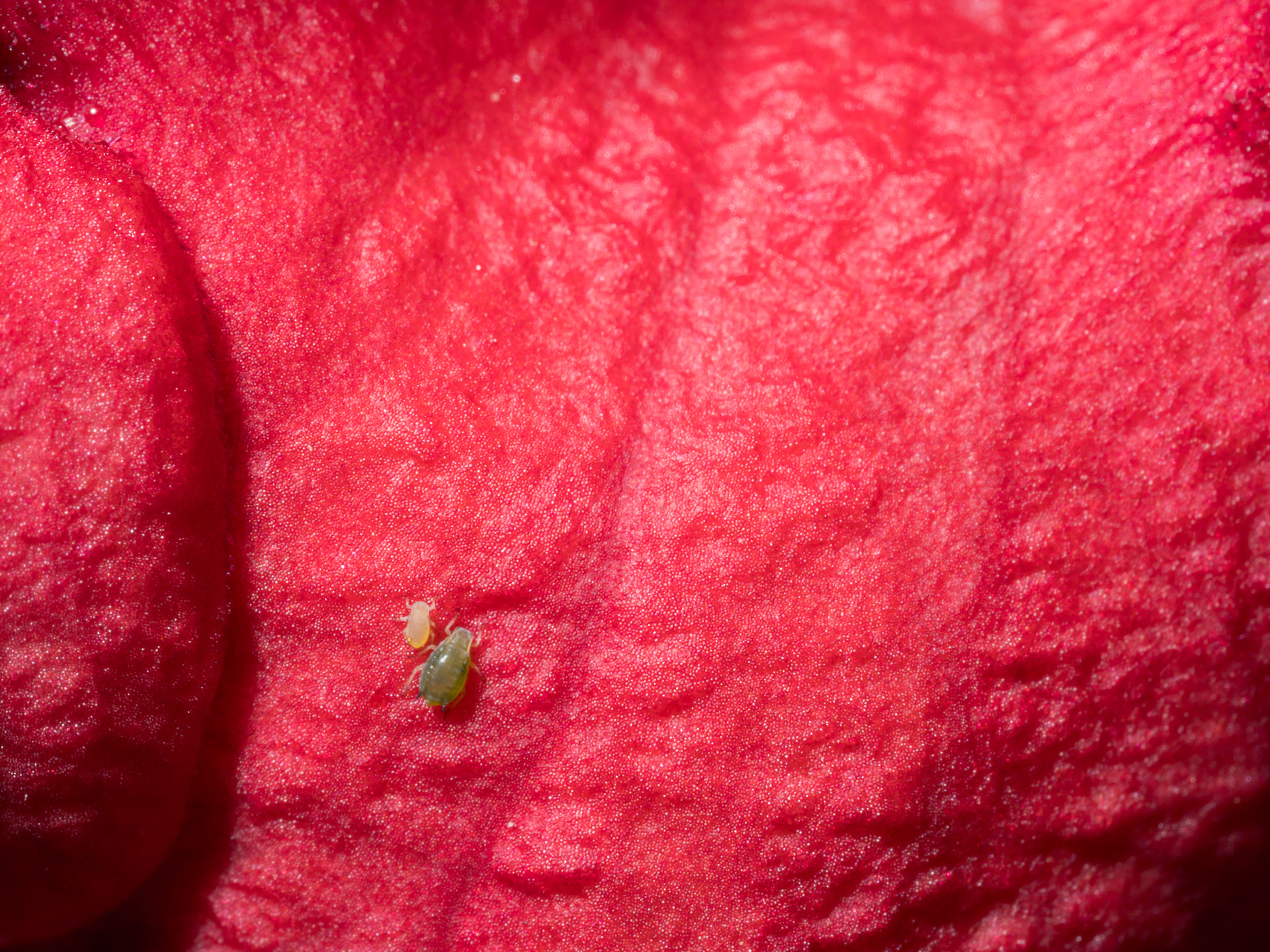
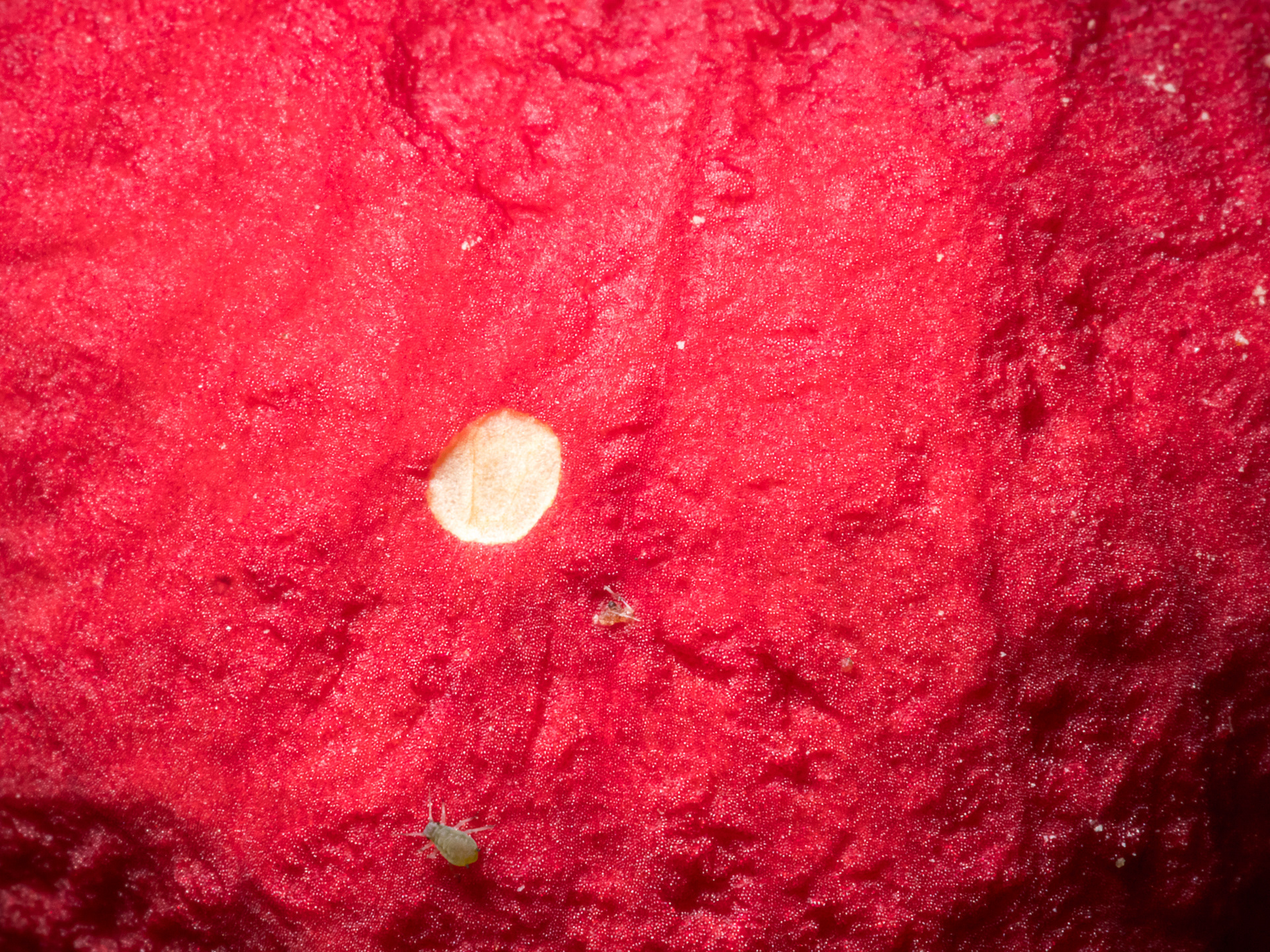
No necesita un macho. En su interior ya se están gestando copias genéticas exactas de sí misma. Es la partenogénesis. Da a luz a crías vivas, ninfas que ya nacen embarazadas de la siguiente generación. Es un efecto de muñecas rusas biológico.
Una sola hembra se convierte en diez en cuestión de días. Las diez se convierten en cien.
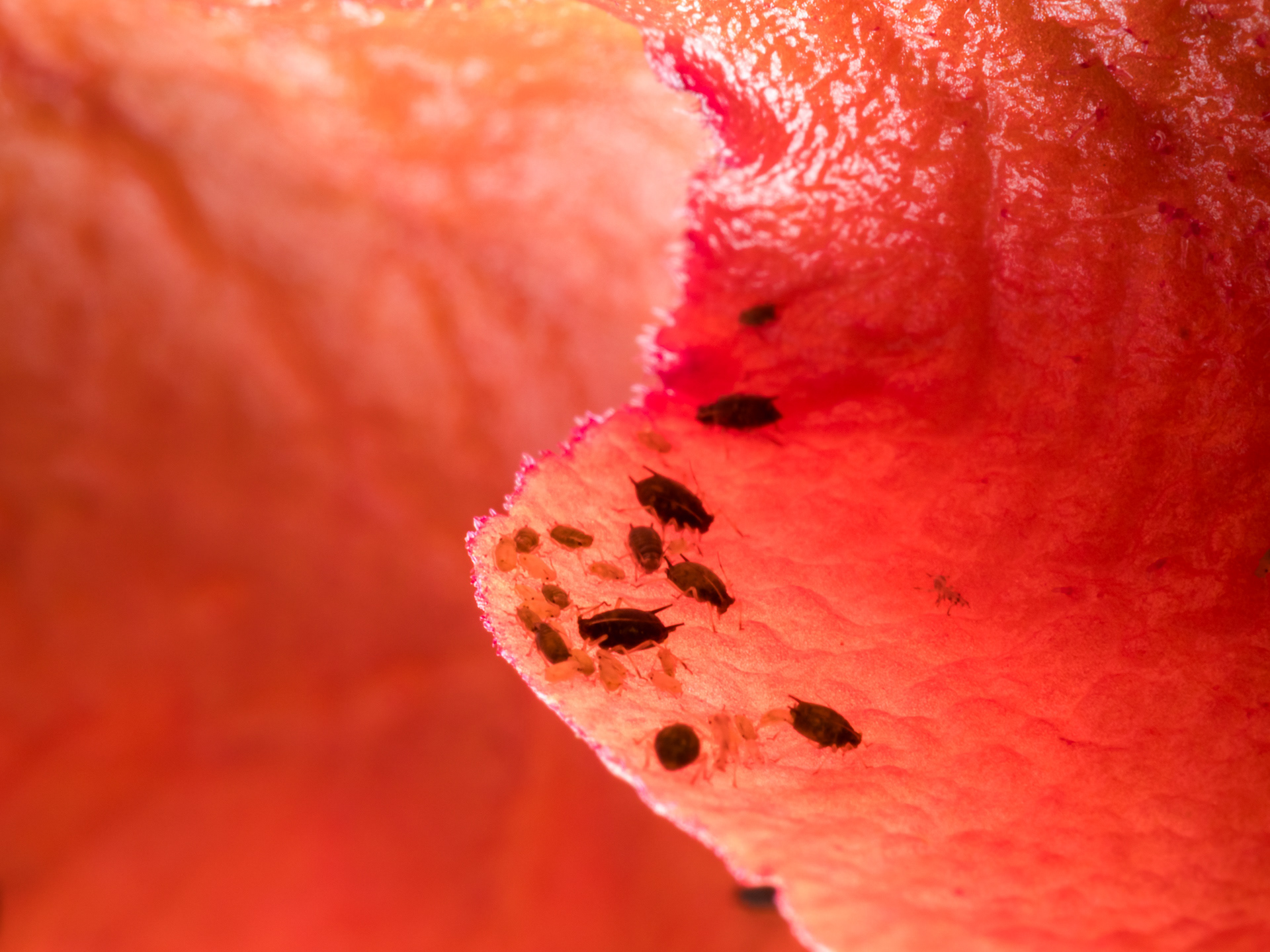
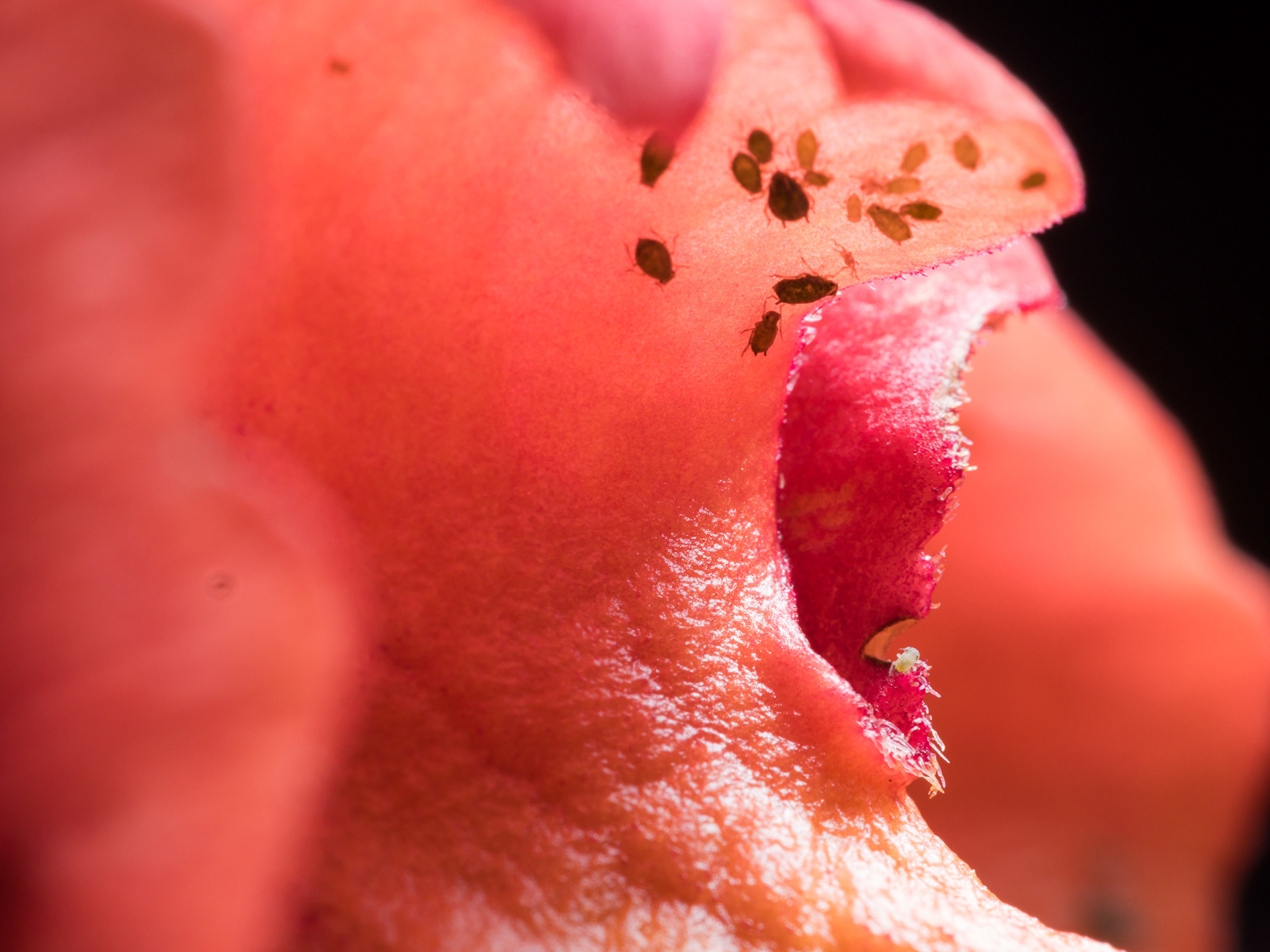
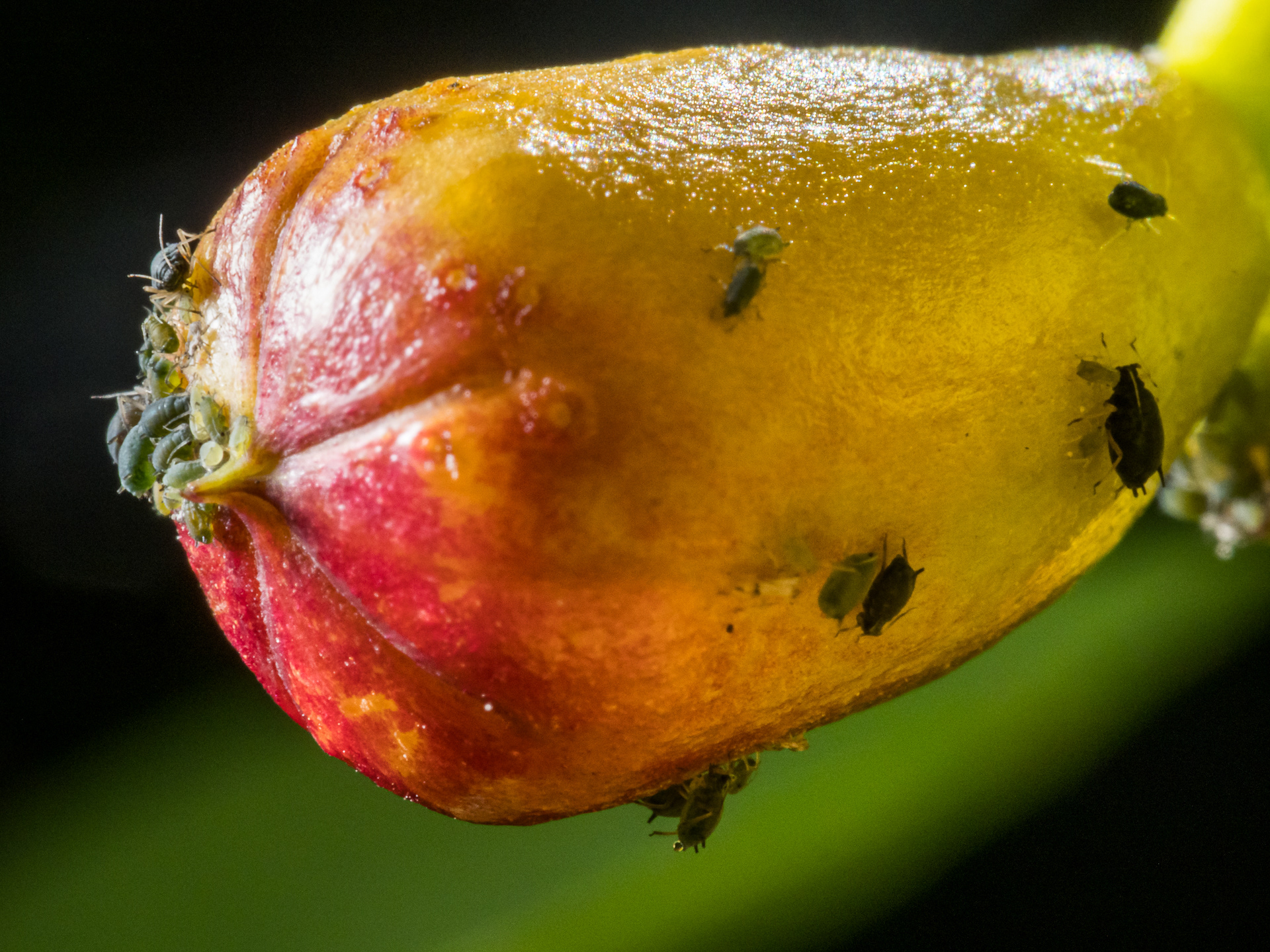
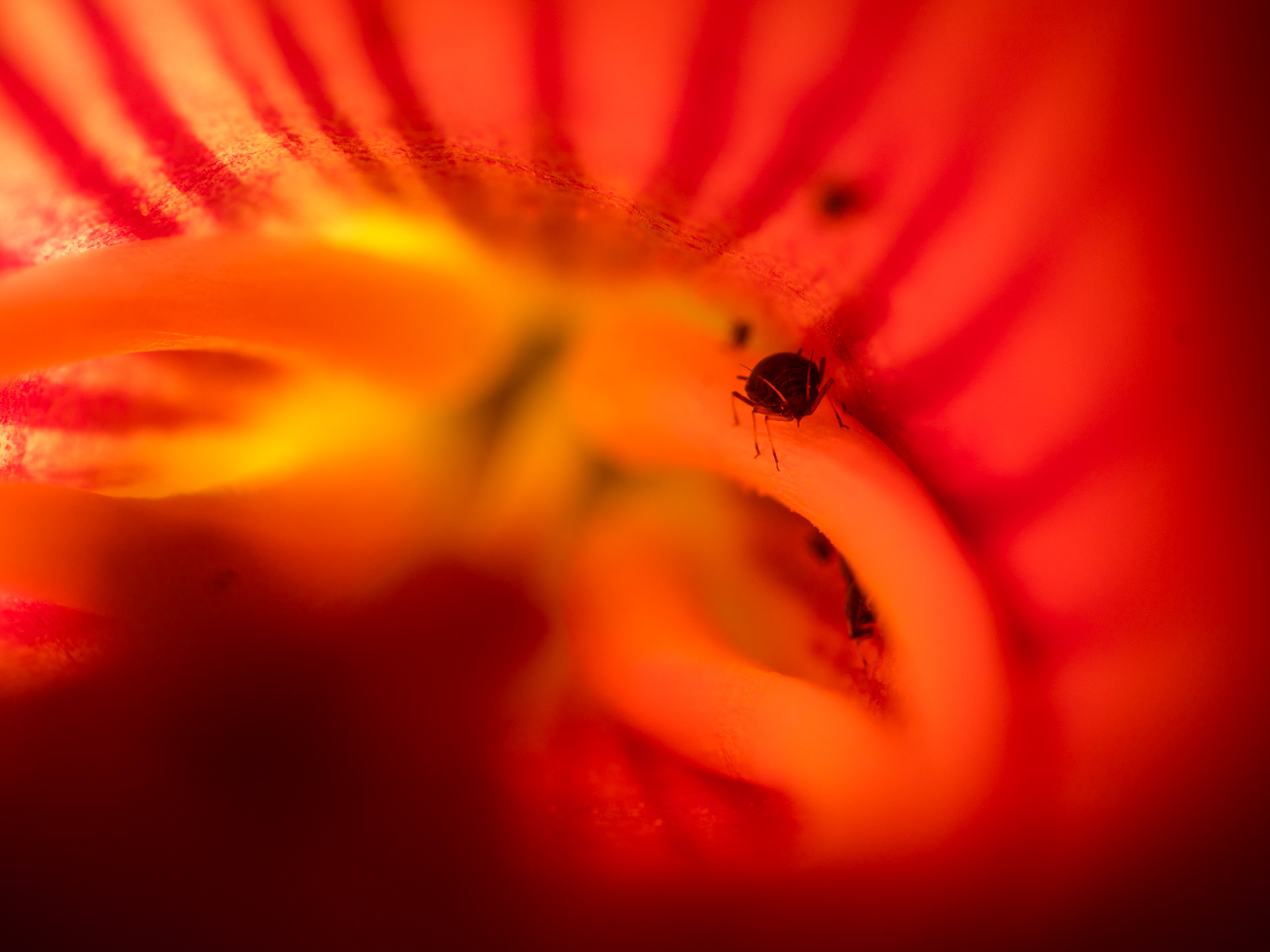
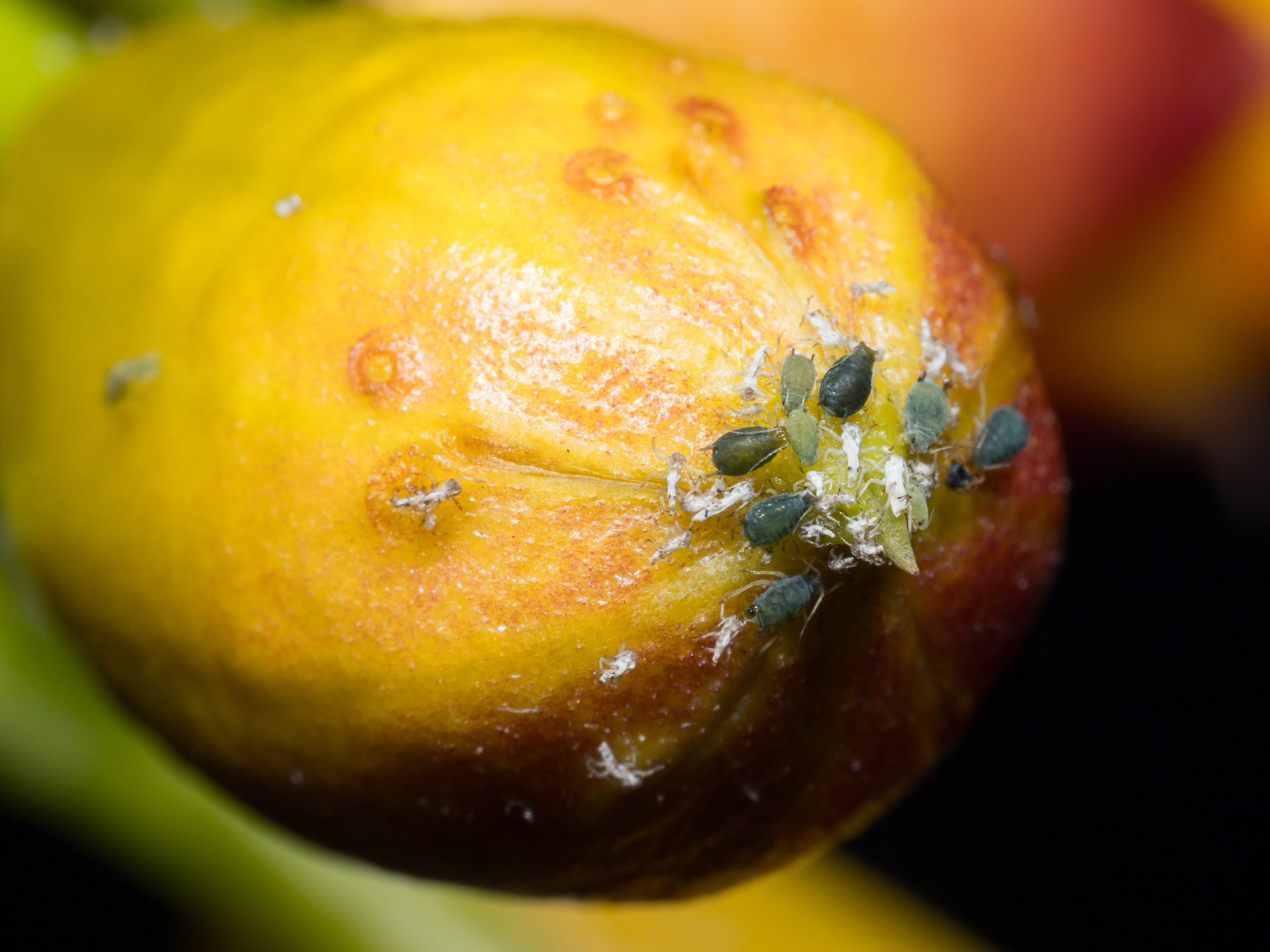
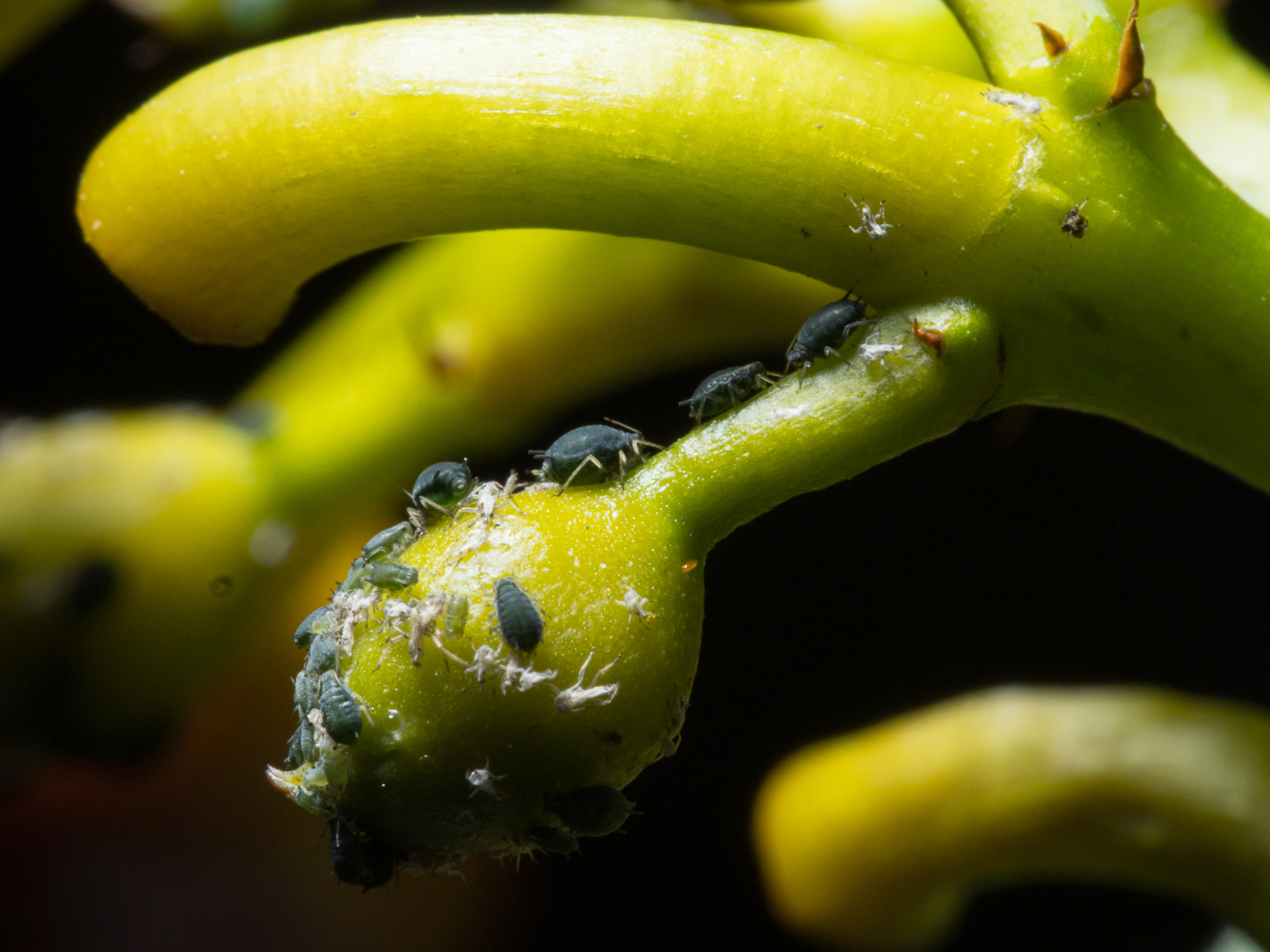
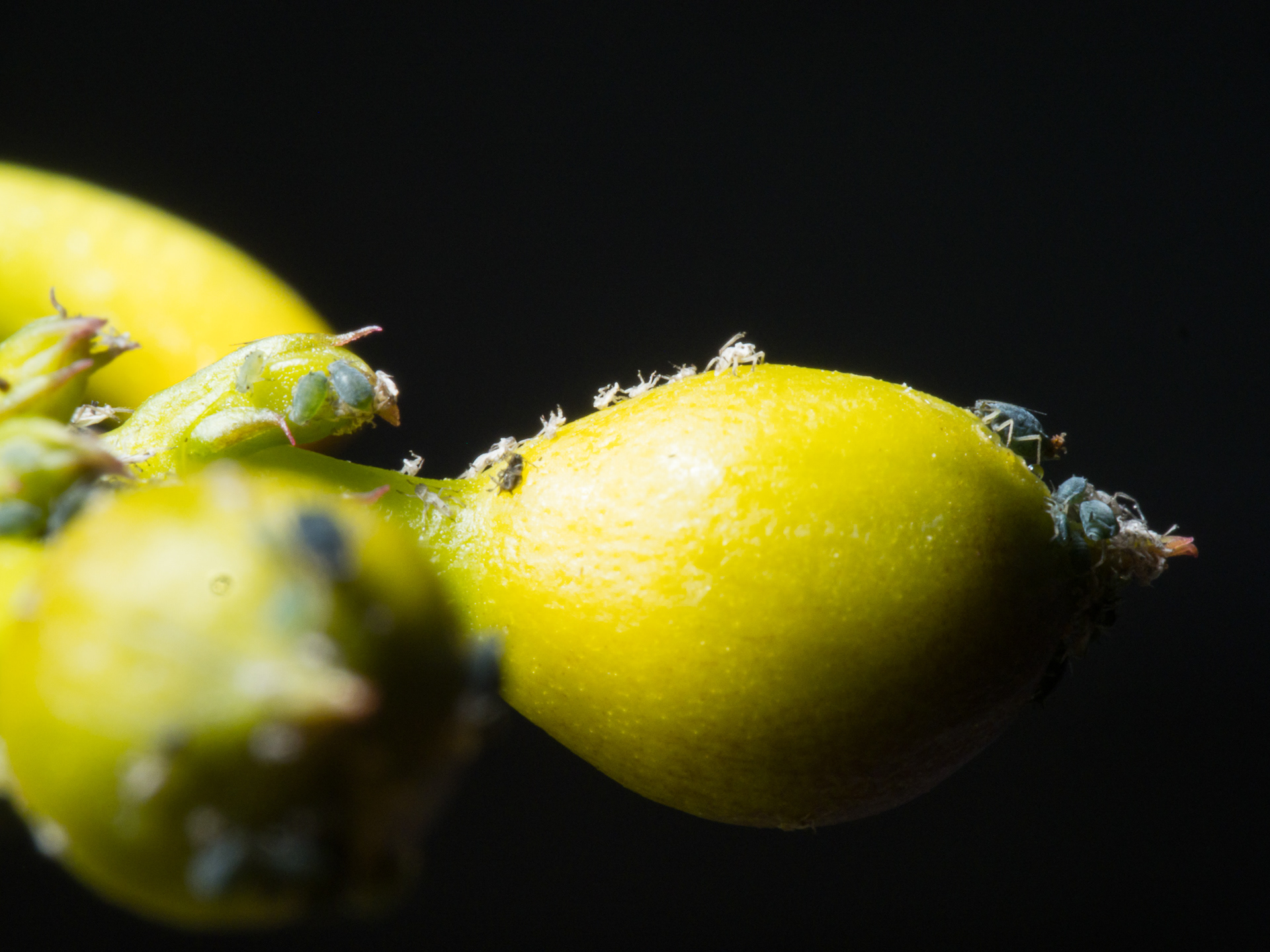
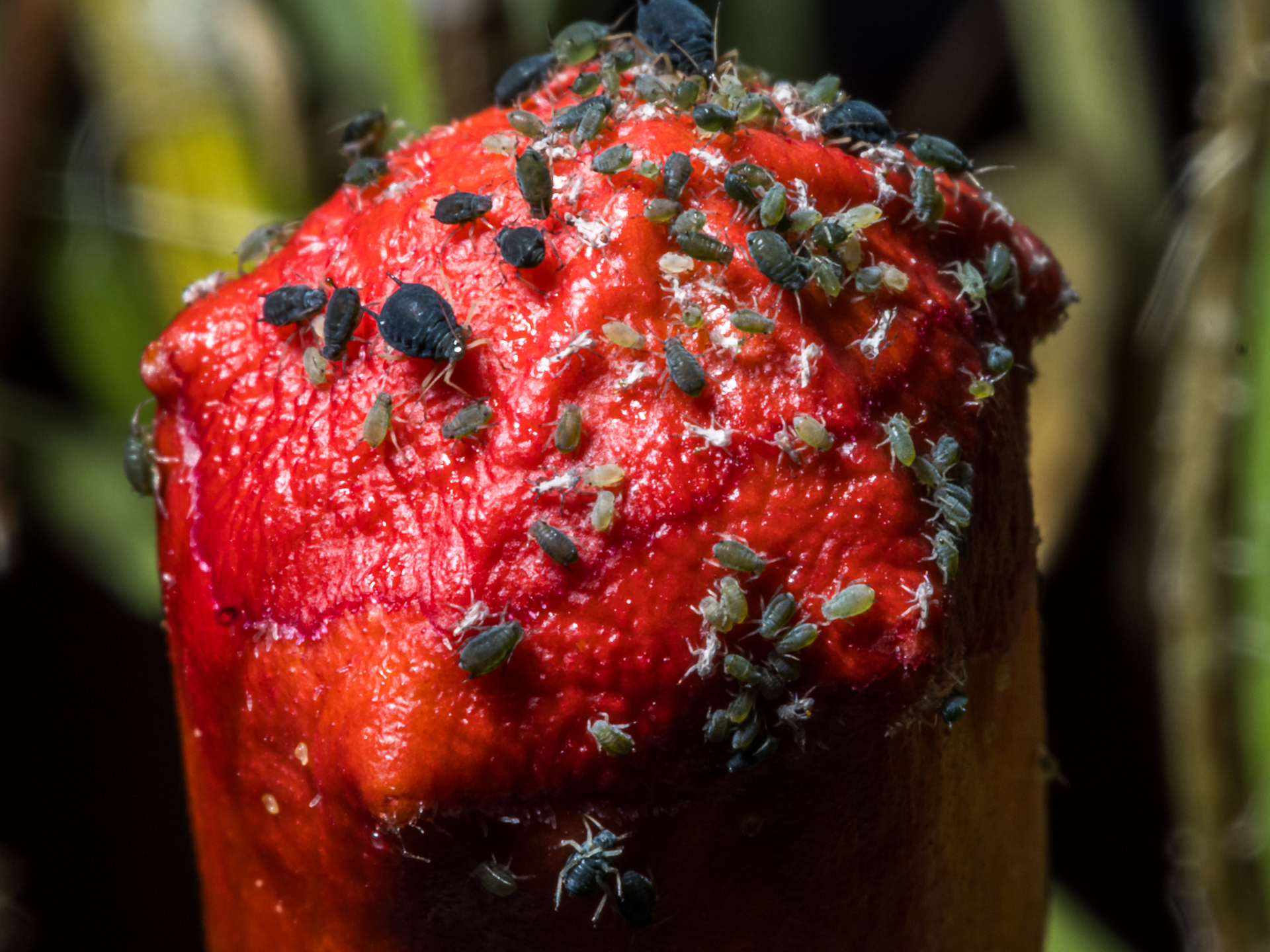
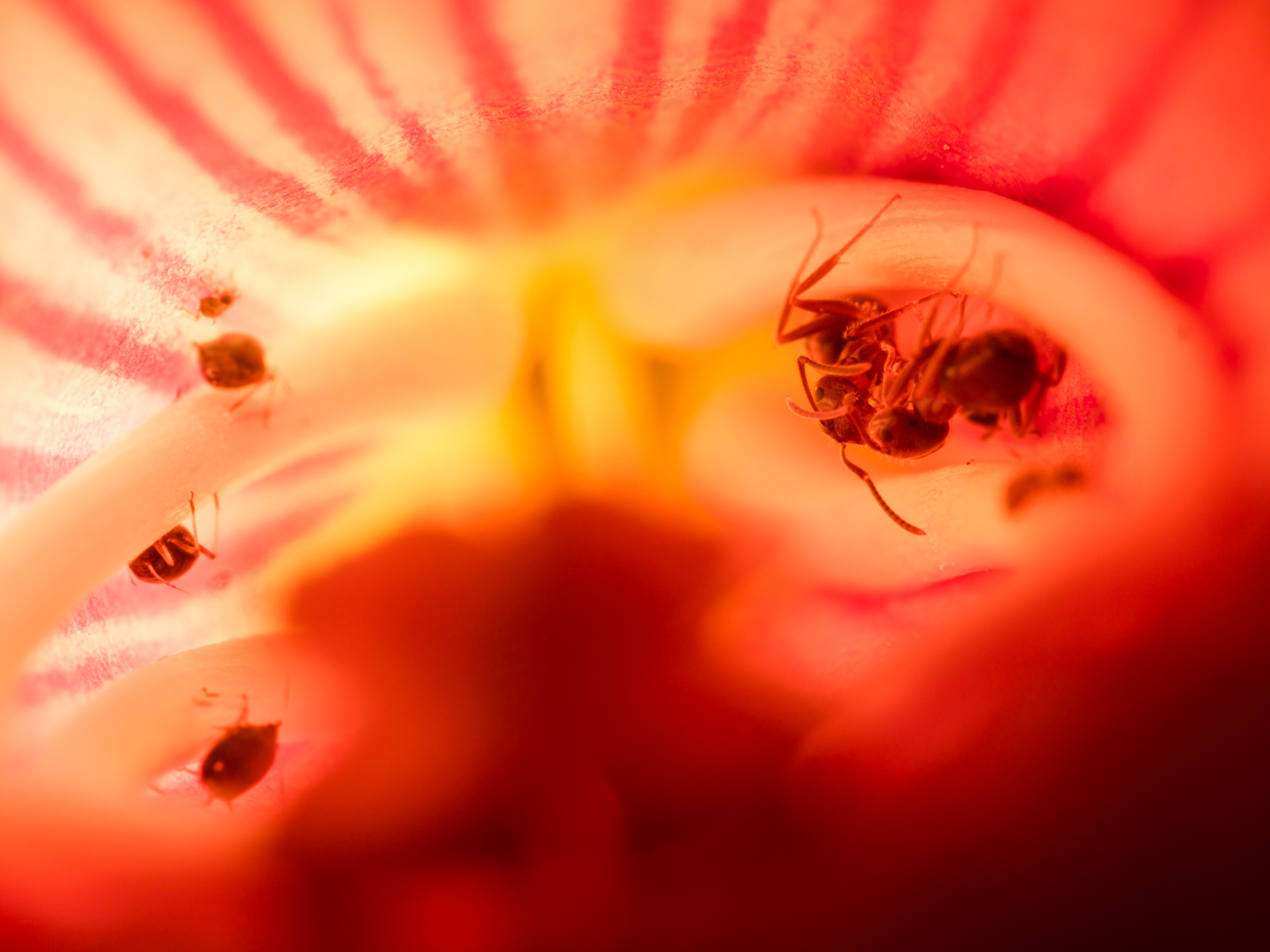
La hoja empieza a deformarse. Se enrolla sobre sí misma, debilitada por la pérdida de fluidos y la inyección de toxinas salivares que los pulgones usan para mantener el flujo abierto. Bajo el rizo de la hoja moribunda, la colonia se aprieta cuerpo contra cuerpo, una alfombra de parásitos que cubre el verde por completo. La planta comienza a marchitarse sector por sector, ahogada por sus propios "huéspedes".
Pero el exceso de melaza, esas gotas de azúcar desechado que brillan al sol, está enviando una señal química al aire. Alguien más ha detectado el olor.
The attack is surgical.
The female does not bite; she pierces. She unsheathes her stylet, a flexible, microscopic needle, and inserts it between plant cells with engineering precision. The probe navigates the tissue, avoiding rupturing cell walls so as not to alert the plant's defenses, until it finds its target: a phloem tube.
She punctures the conduit.
The plant's internal pressure works against it. Sap shoots into the insect like a fire hose connected to a small mouth. The aphid need not suck; it is force-fed by its victim's own vital pressure. It ingests more sugar than it can process. Its body filters out the necessary proteins and expels the rest almost intact: a drop of sweet, sticky honeydew falling onto the leaf below.
Sated and anchored, the female begins her true purpose: colonization.
She needs no male. Inside her, exact genetic copies of herself are already gestating. It is parthenogenesis. She gives birth to live young, nymphs born already pregnant with the next generation. It is a biological nesting doll effect.
A single female becomes ten in a matter of days. Ten become a hundred.
The leaf begins to deform. It curls in on itself, weakened by fluid loss and the injection of salivary toxins used by the aphids to keep the flow open. Beneath the curl of the dying leaf, the colony packs body against body, a carpet of parasites covering the green entirely. The plant begins to wither sector by sector, drowned by its own "guests."
But the excess honeydew, those discarded drops of sugar glinting in the sun, is sending a chemical signal into the air. Someone else has detected the scent.
III
La señal química no es ignorada.
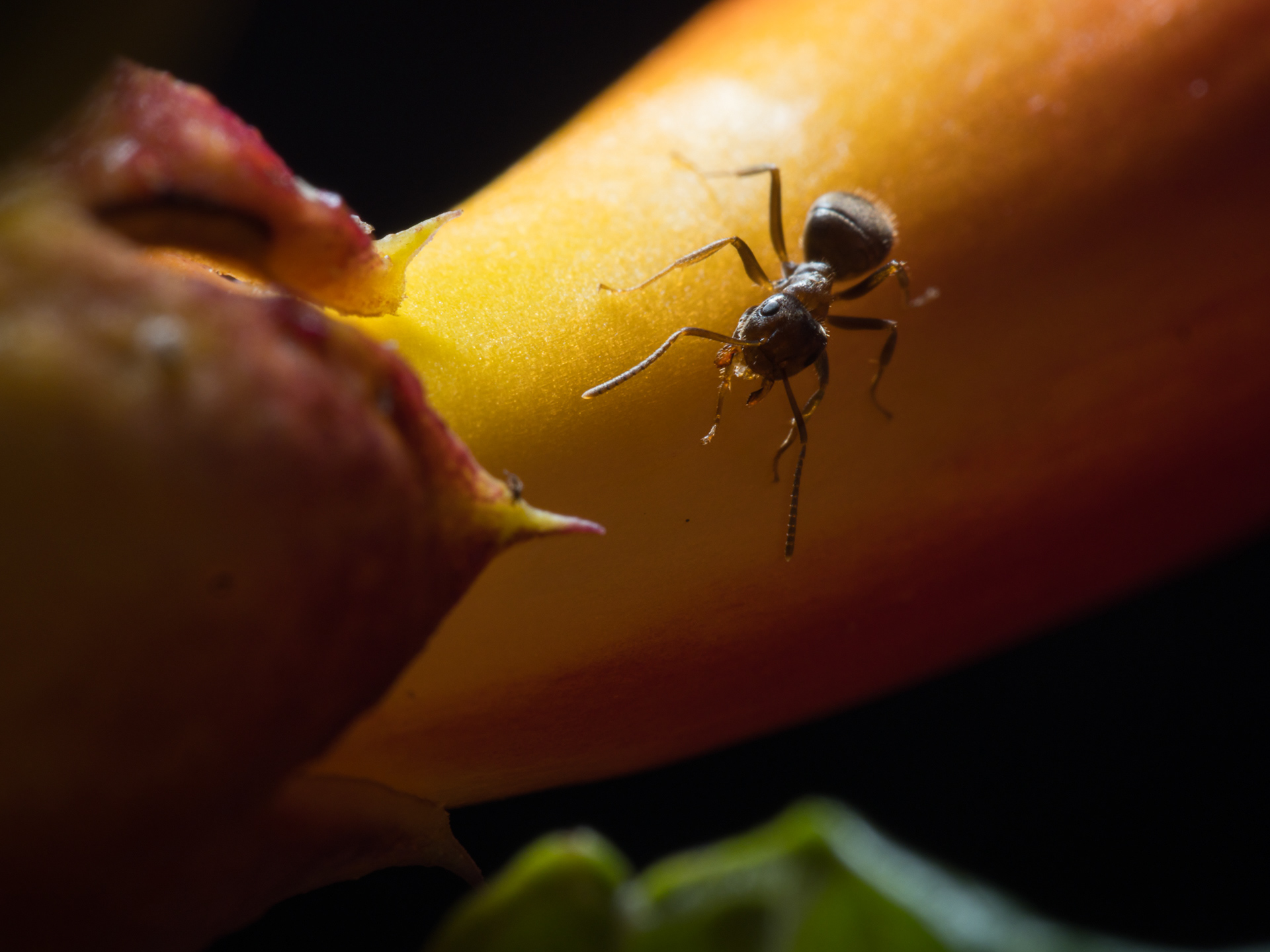
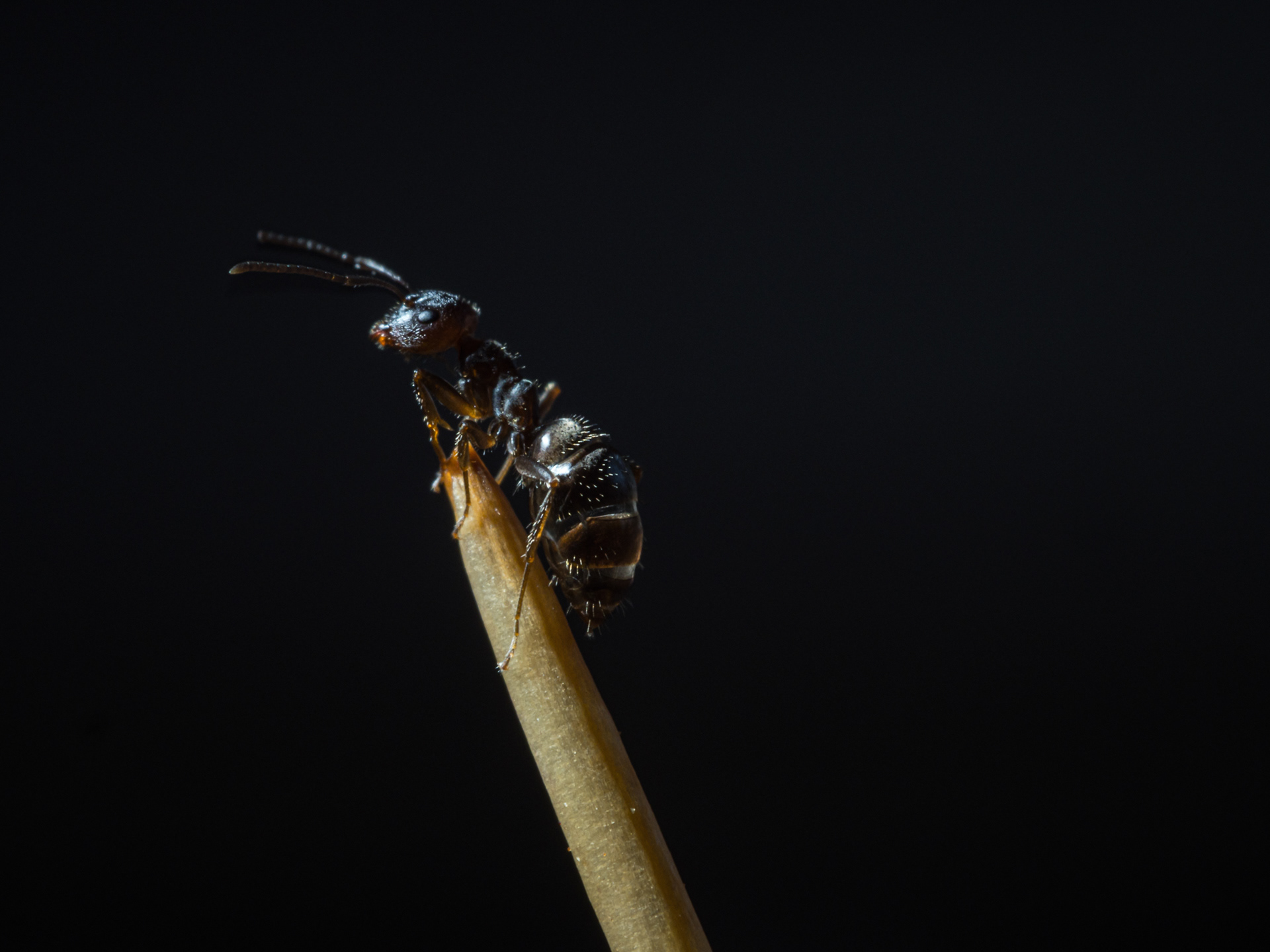
Primero llega una exploradora. No desciende del cielo, sino que sube marchando desde el tallo principal. Sus antenas vibran frenéticamente, captando las moléculas de azúcar suspendidas en el aire. Encuentra la hoja rizada. Encuentra el caos pegajoso. Para ella, esa melaza desechada no es basura; es combustible de alto octanaje.
La exploradora bebe una gota y regresa inmediatamente sobre sus pasos, dejando tras de sí un rastro invisible de feromonas. Ha marcado el camino hacia la mina de oro.
La movilización es rápida y brutal.
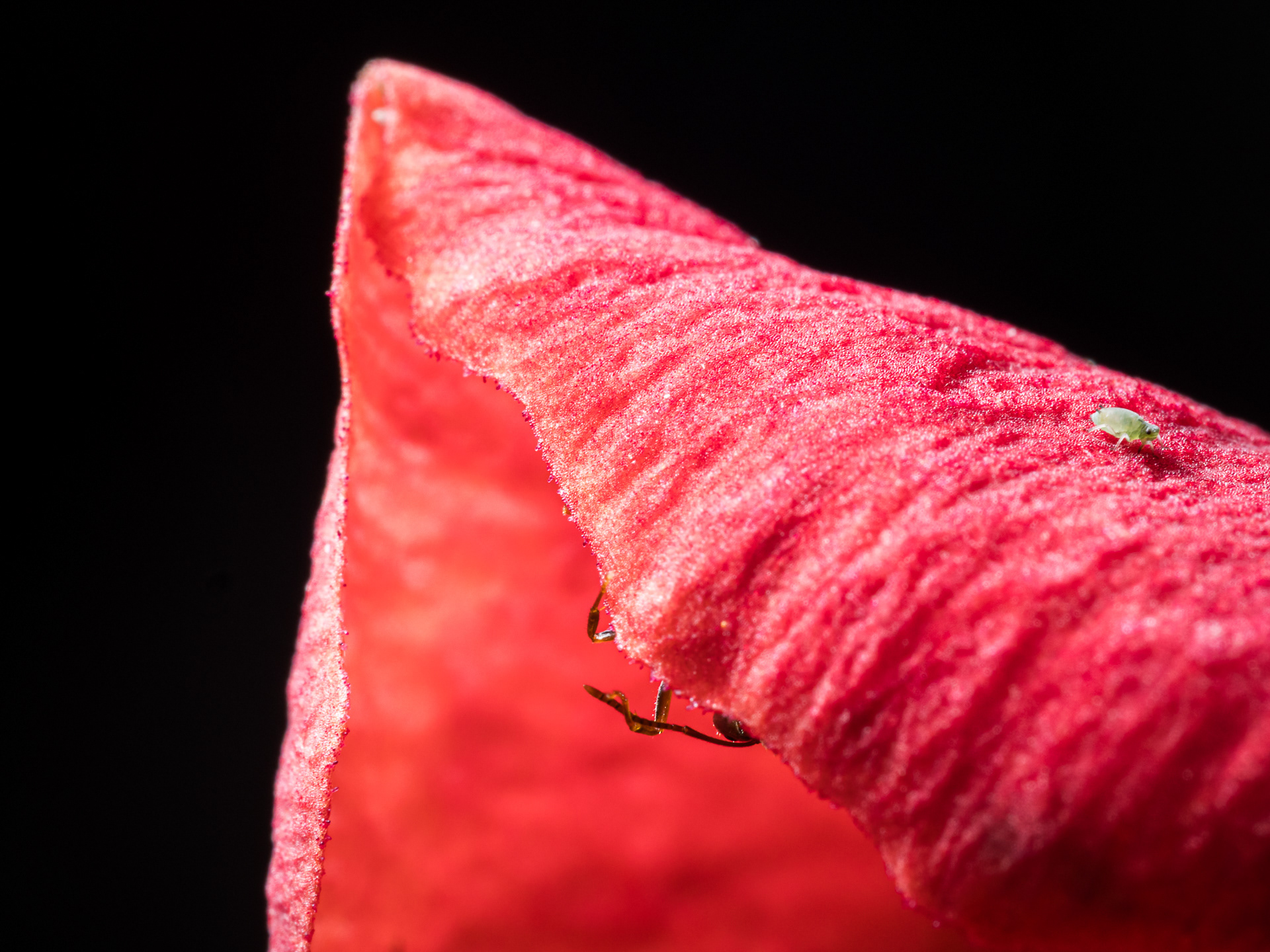
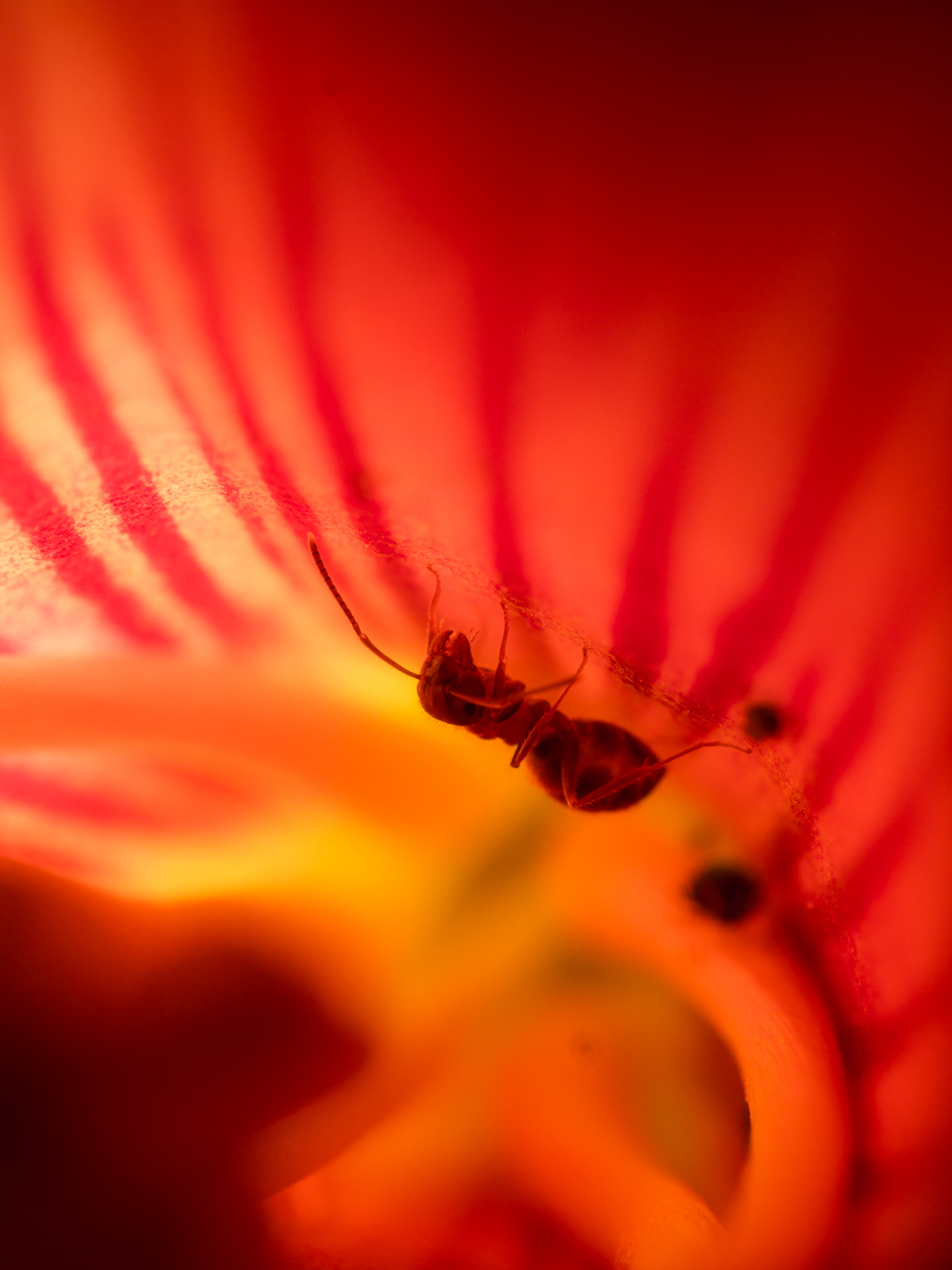
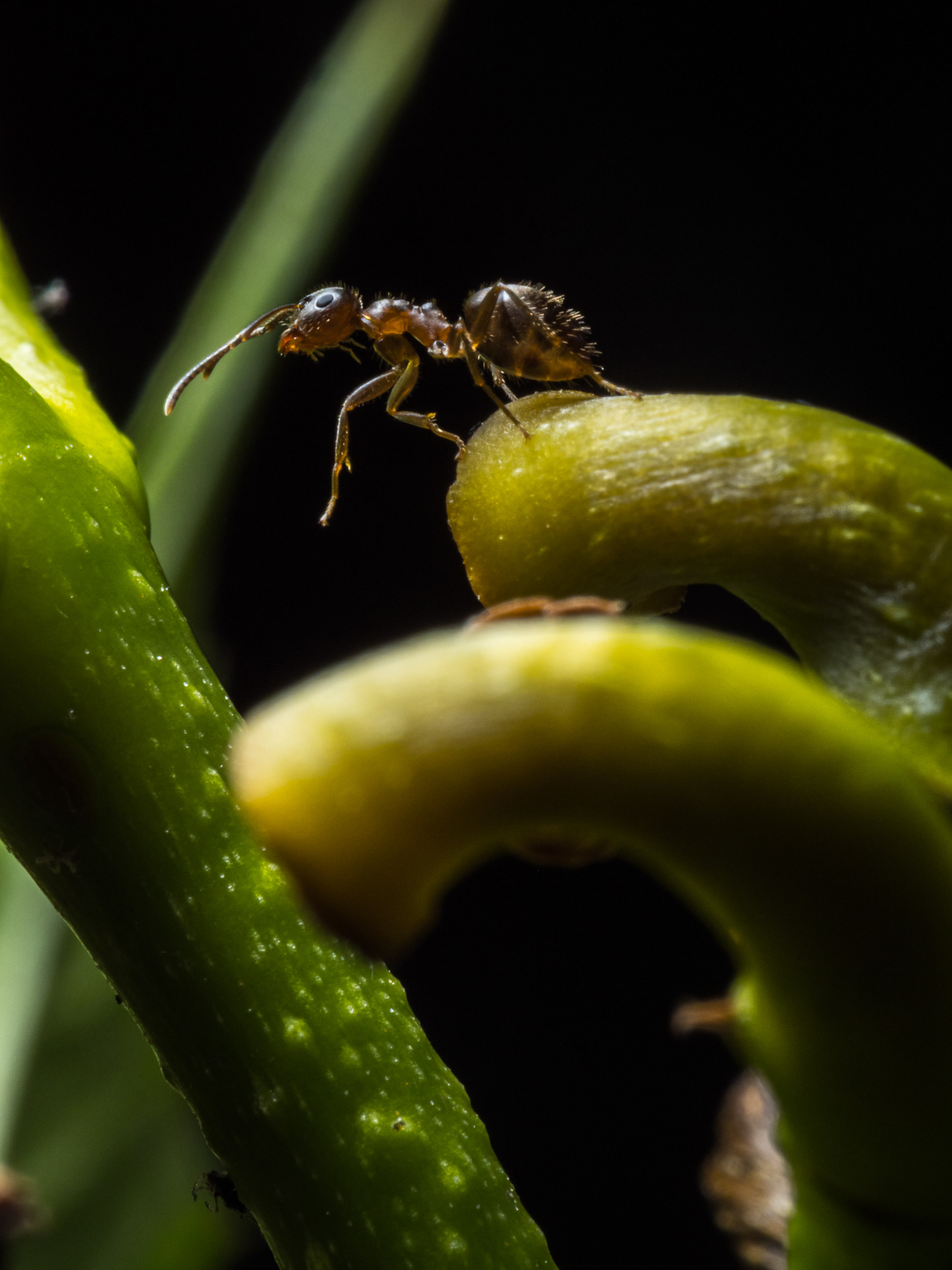
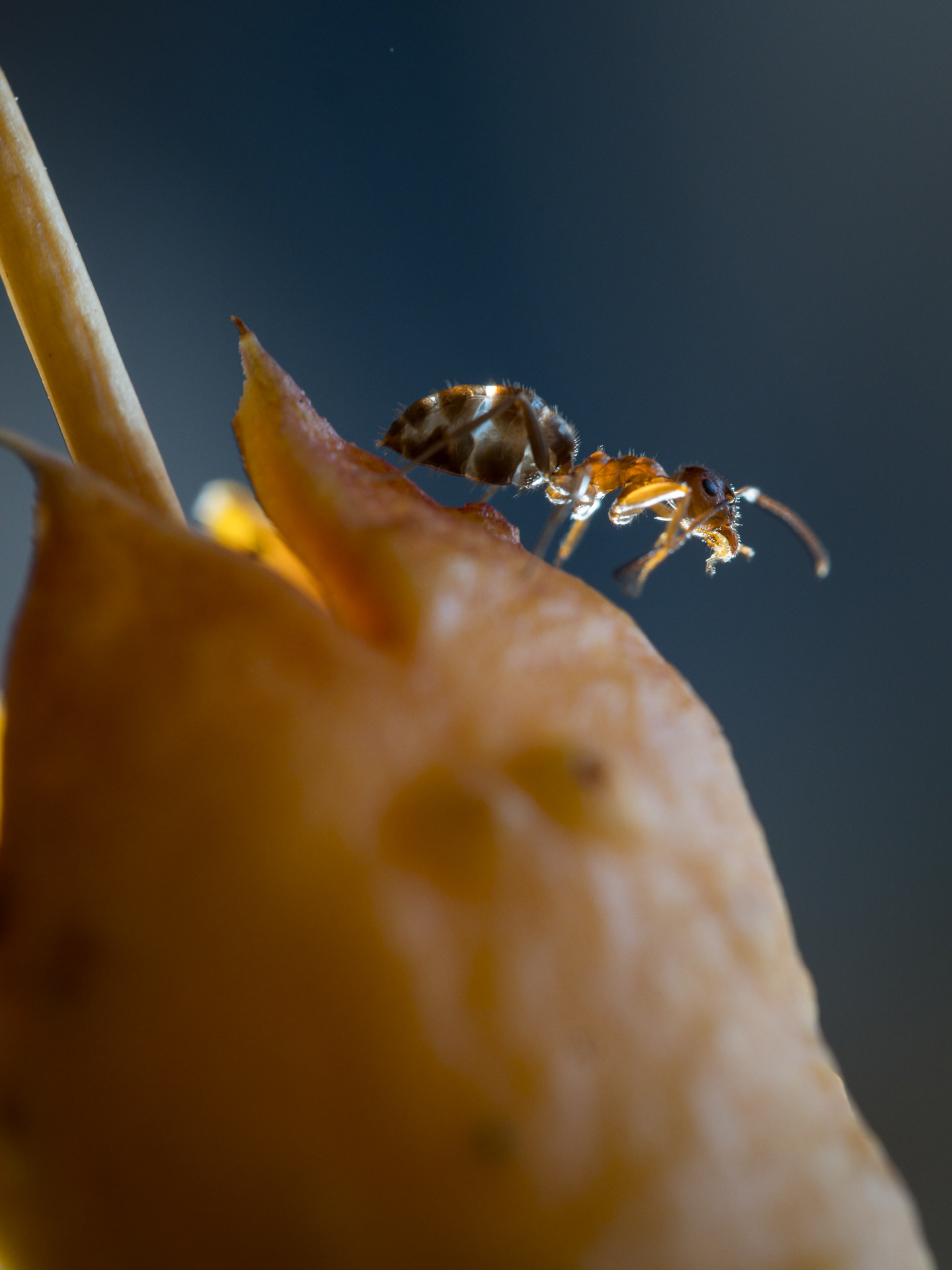
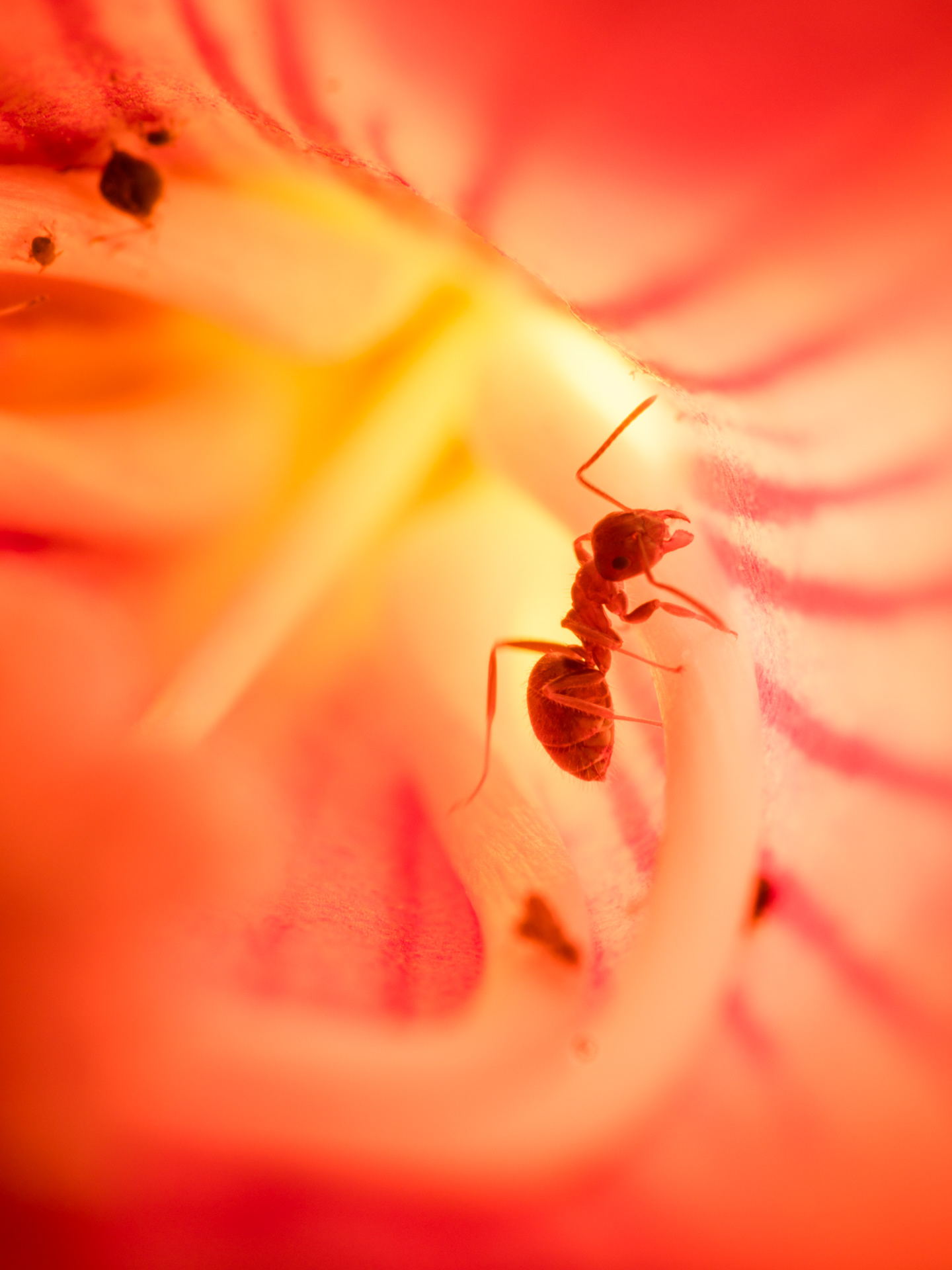
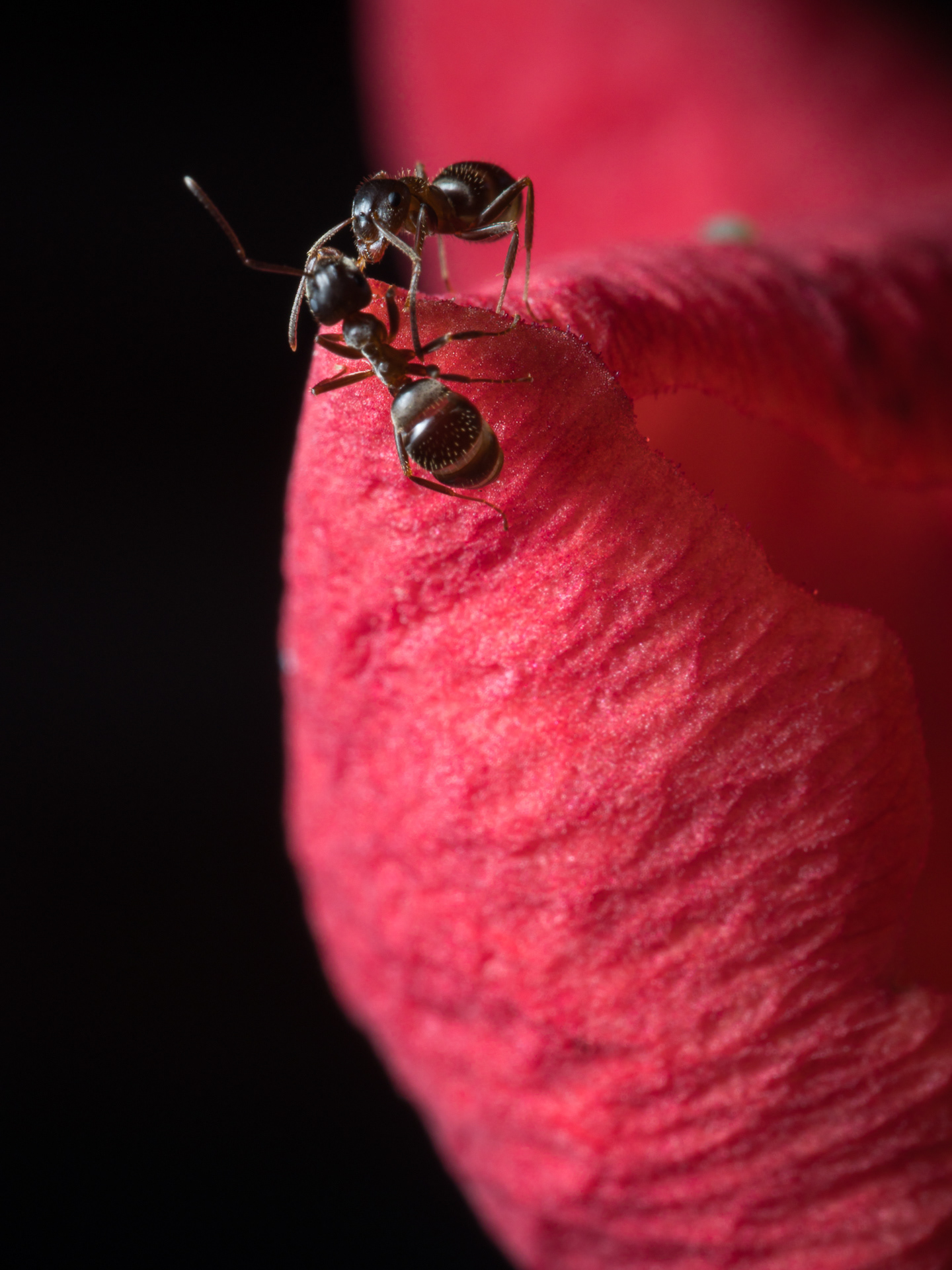
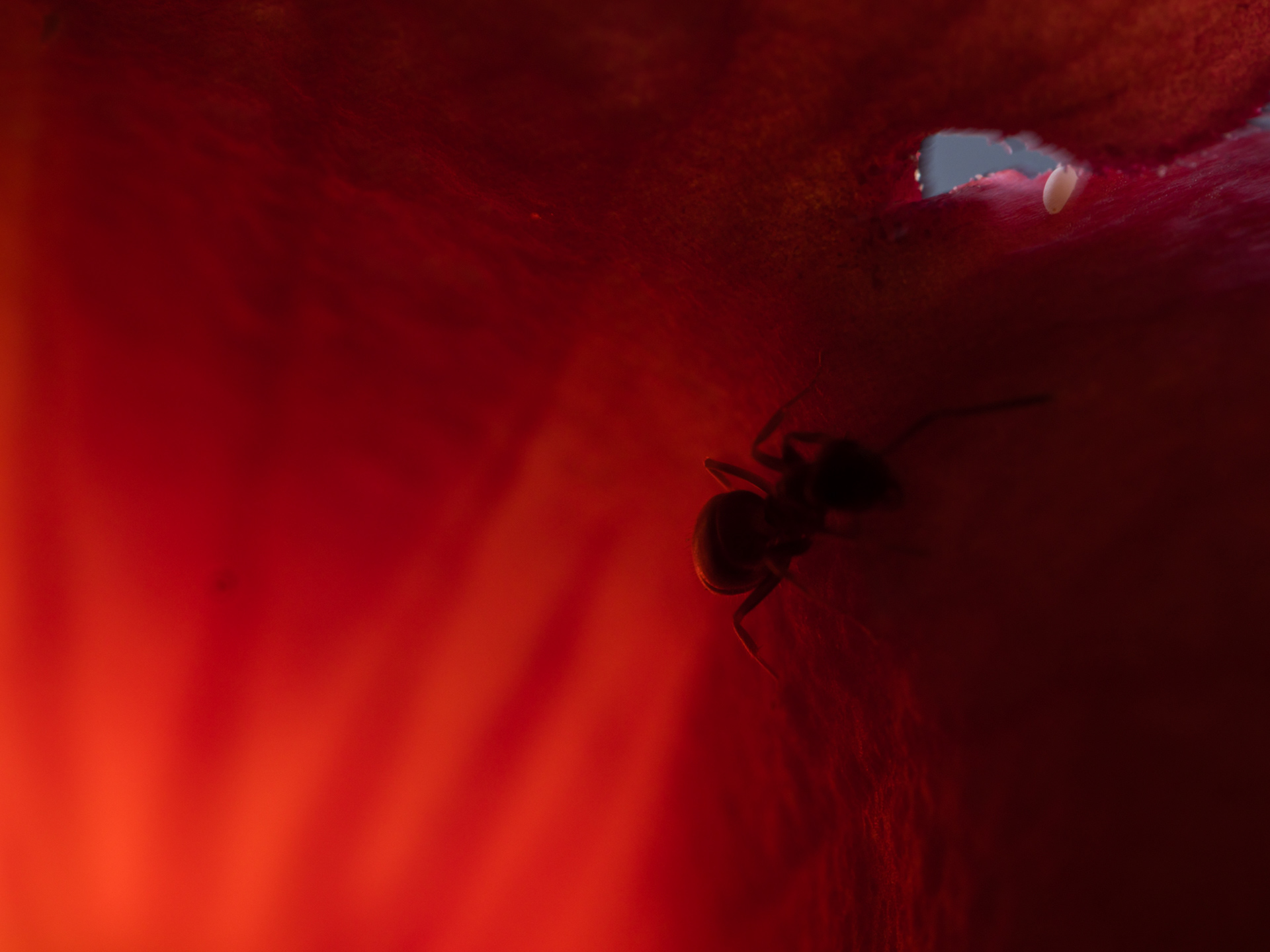
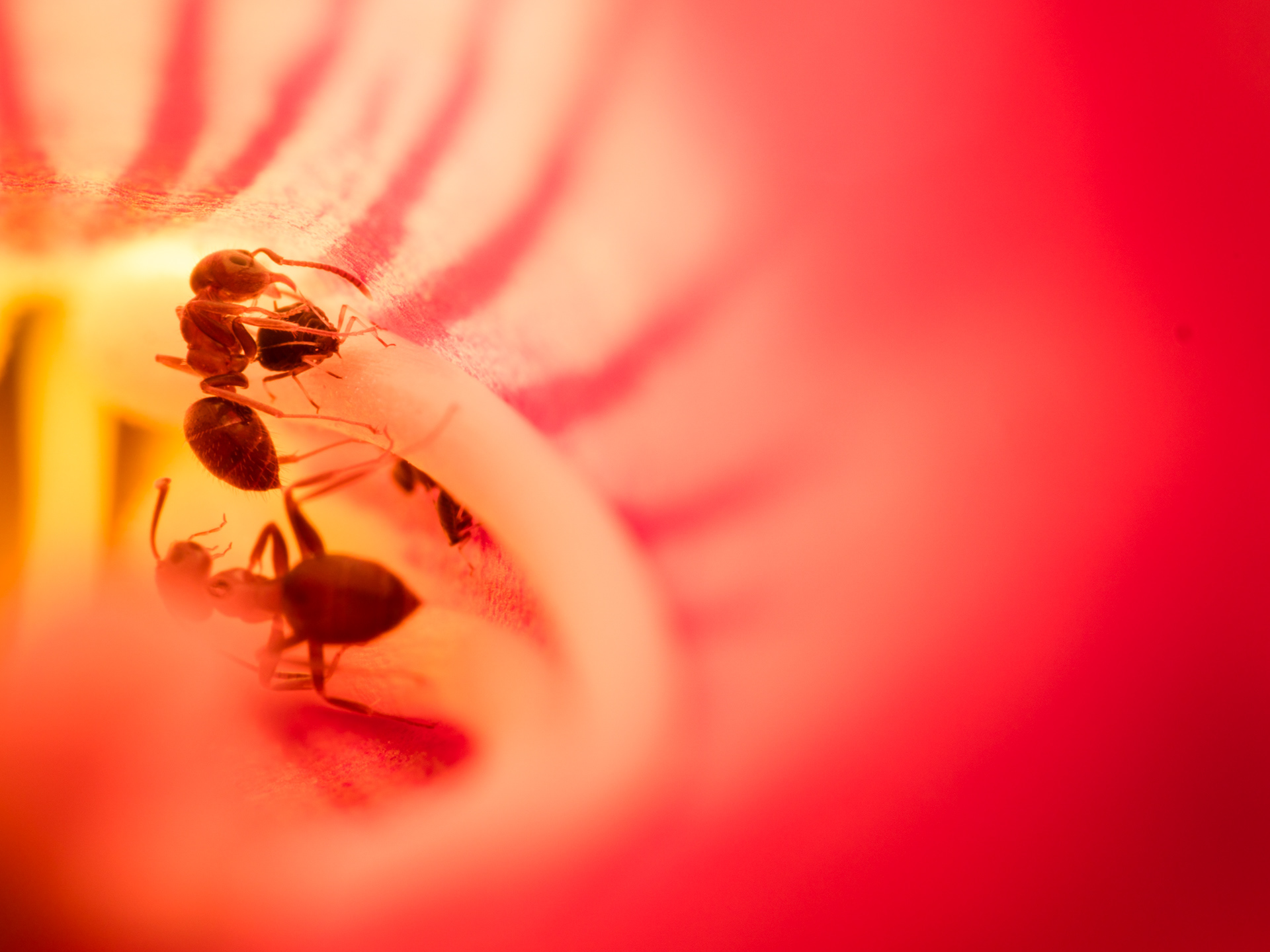
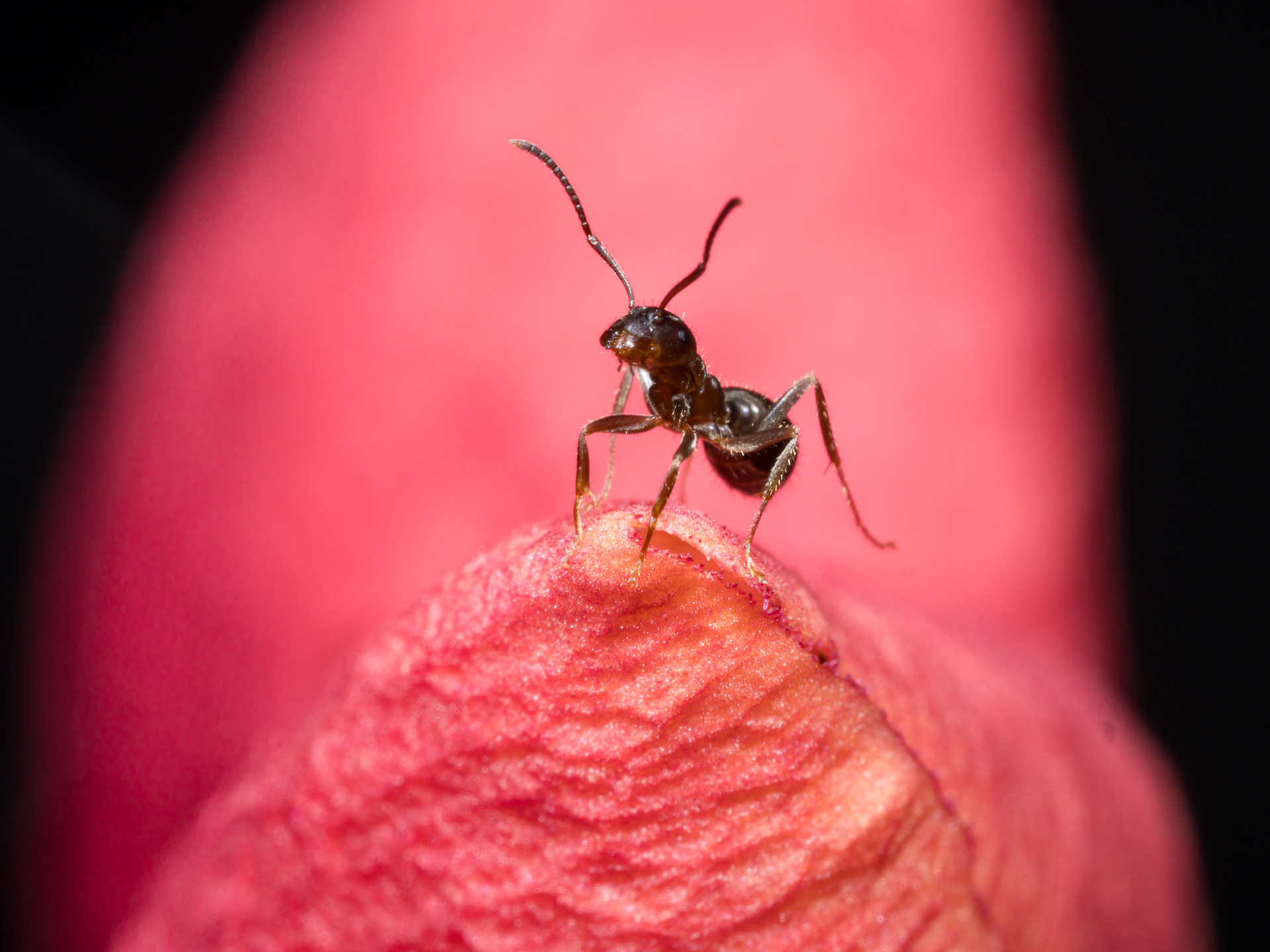
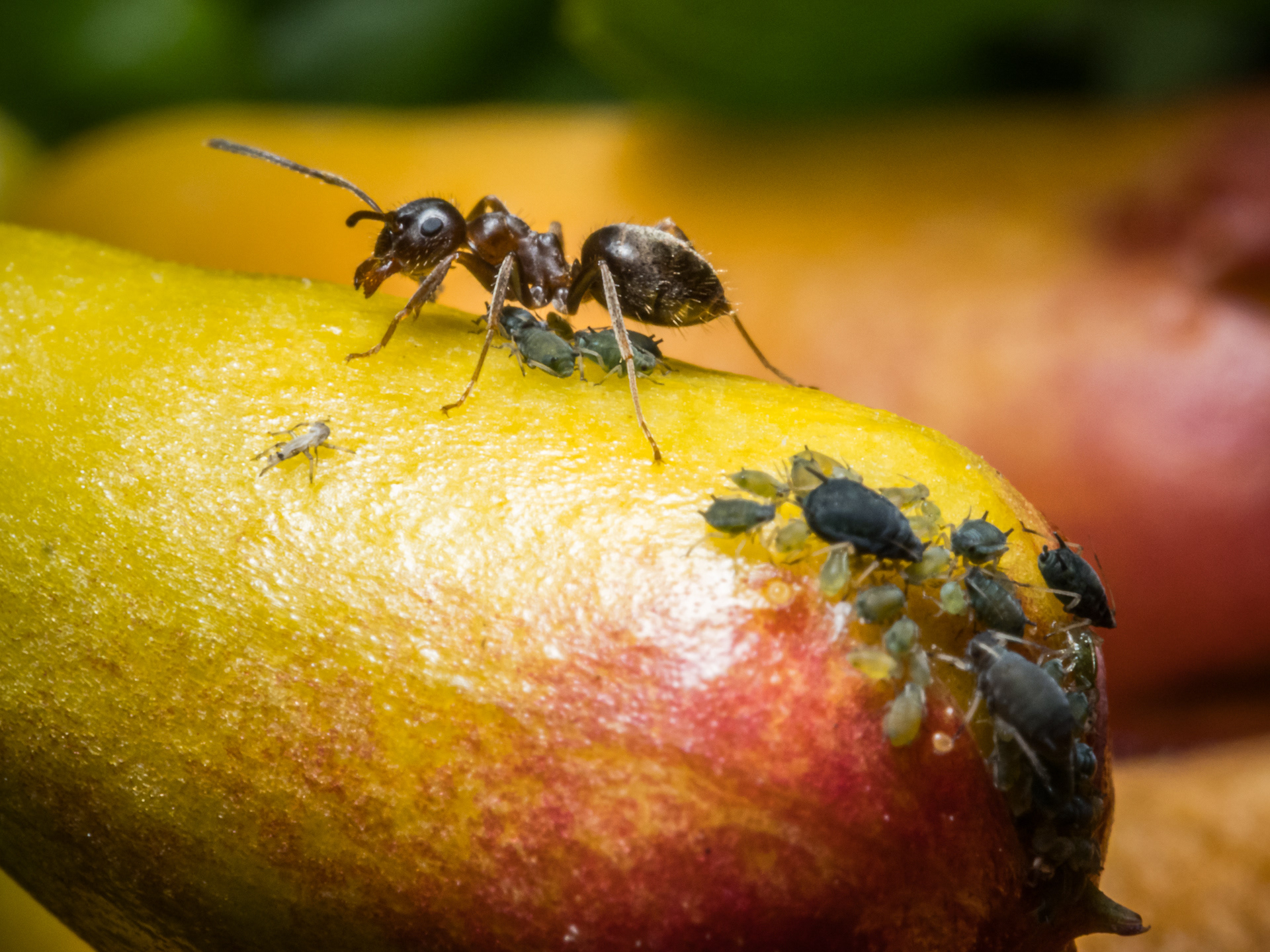
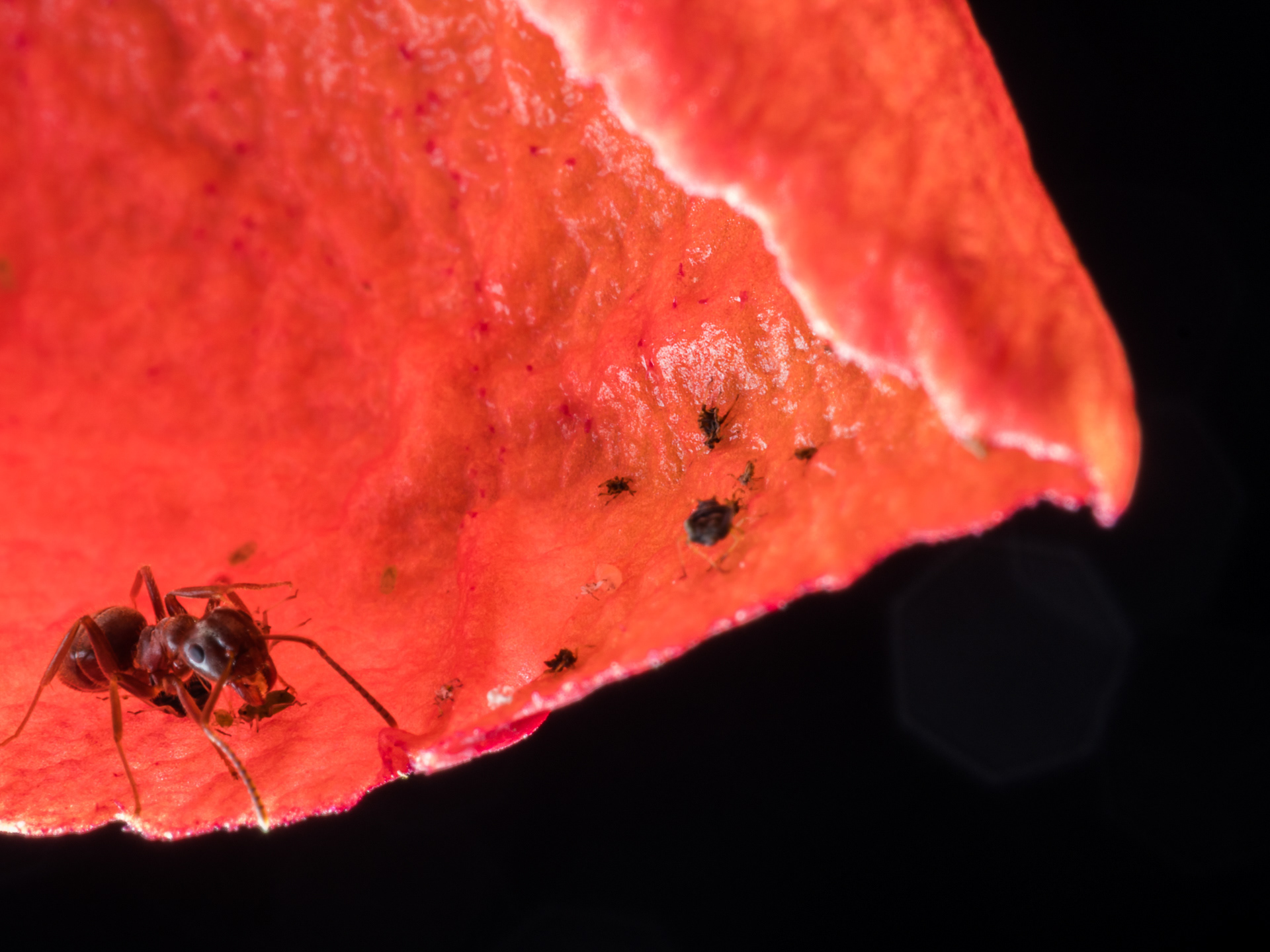
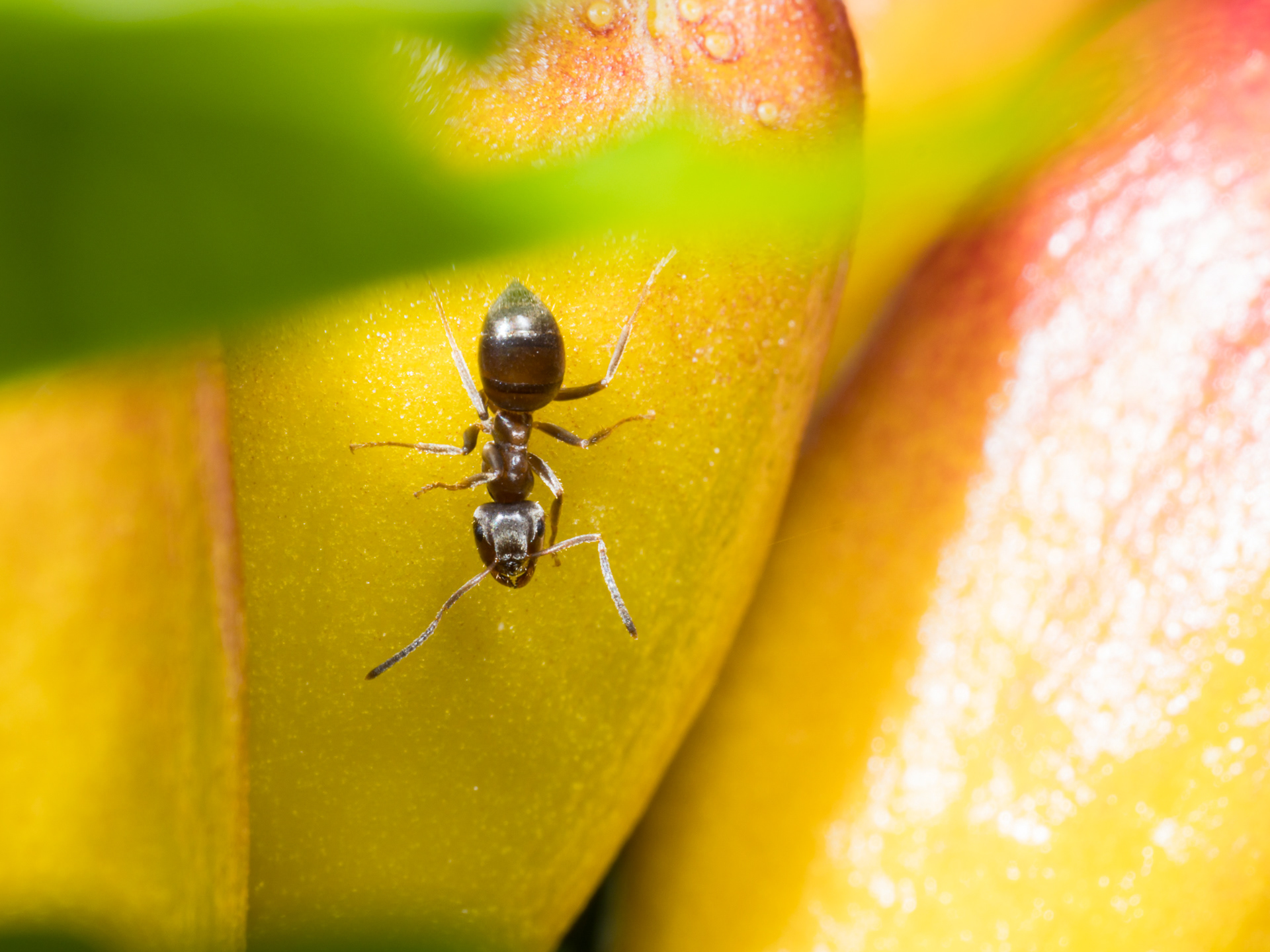
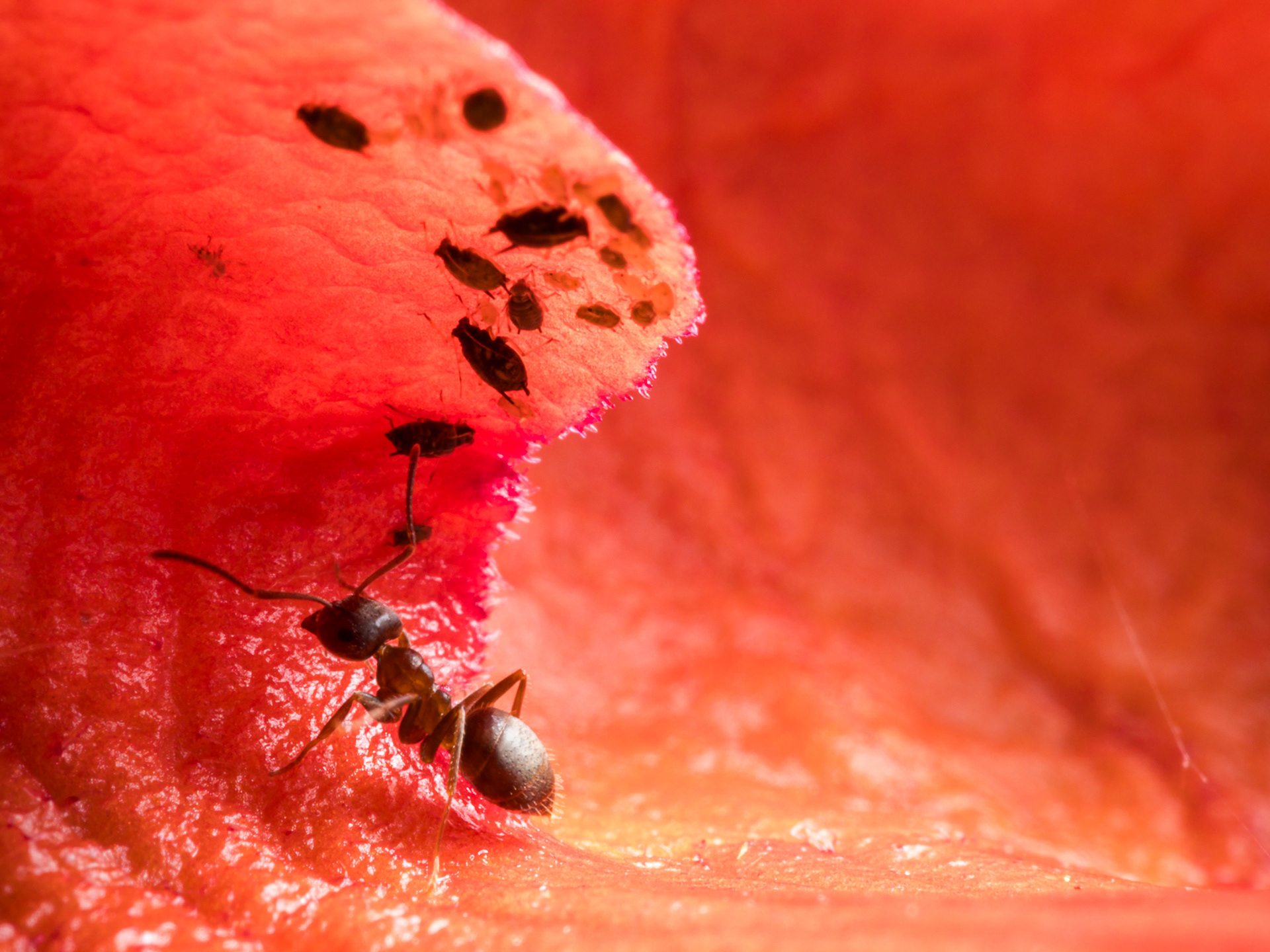
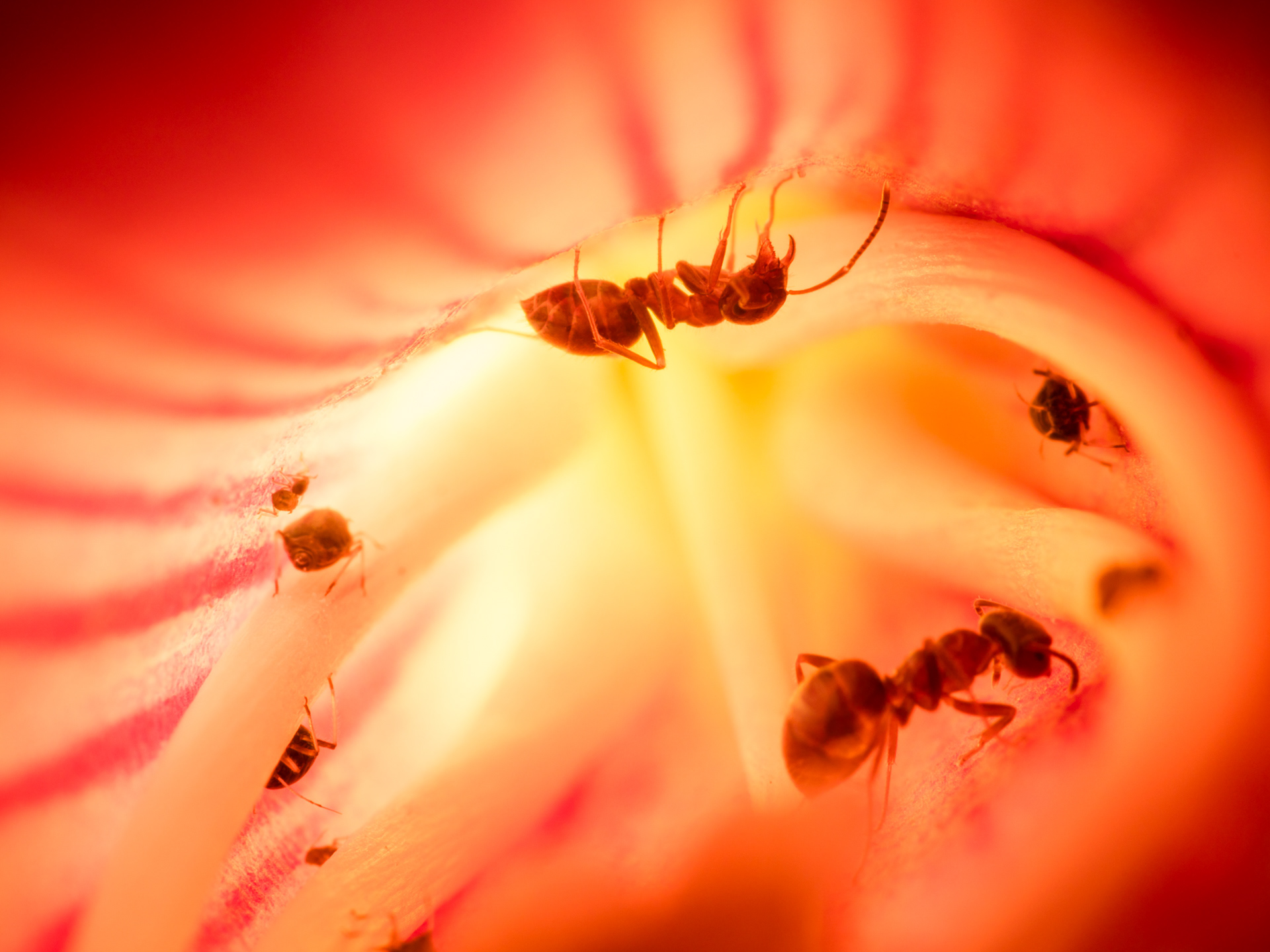
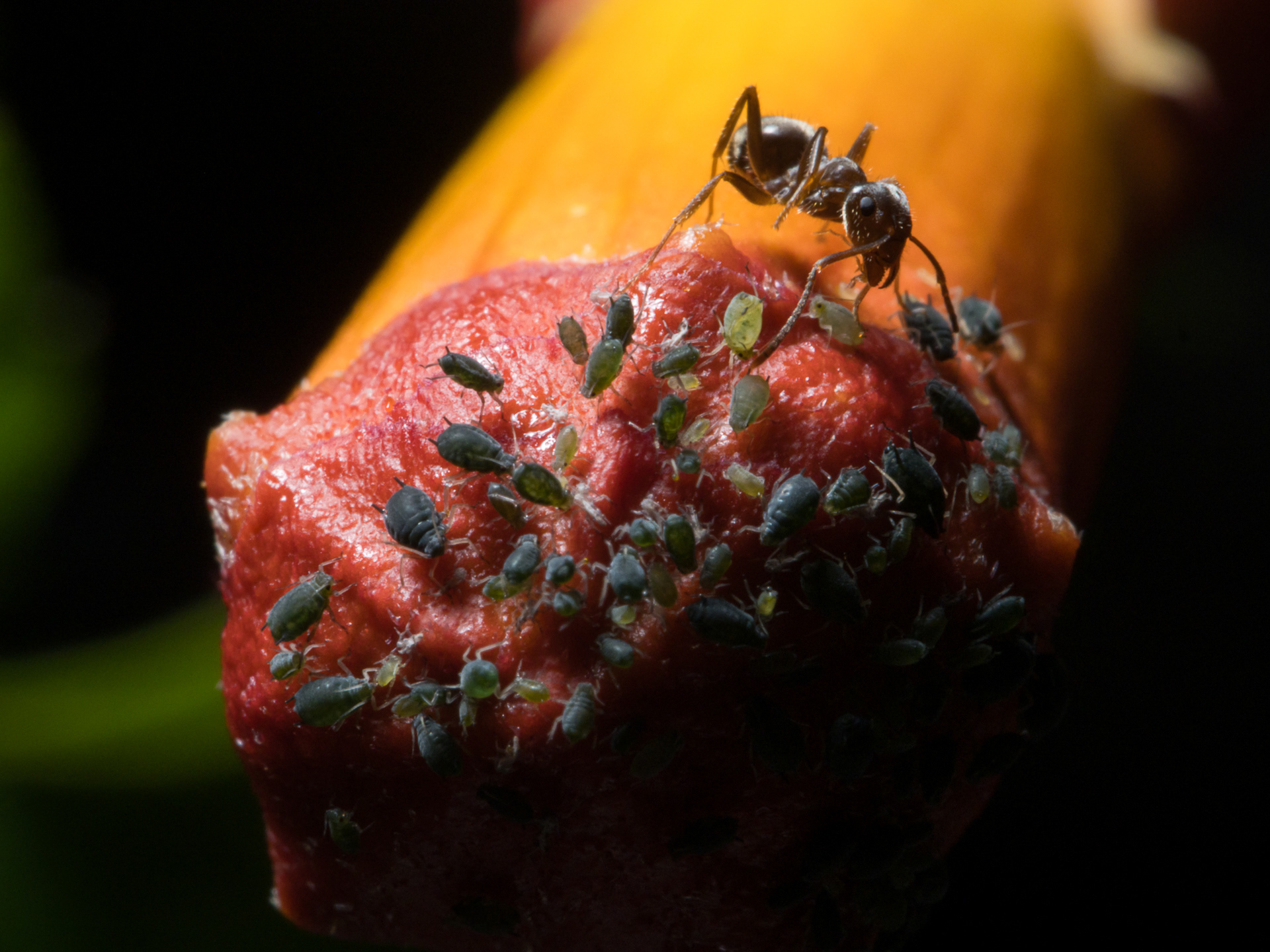
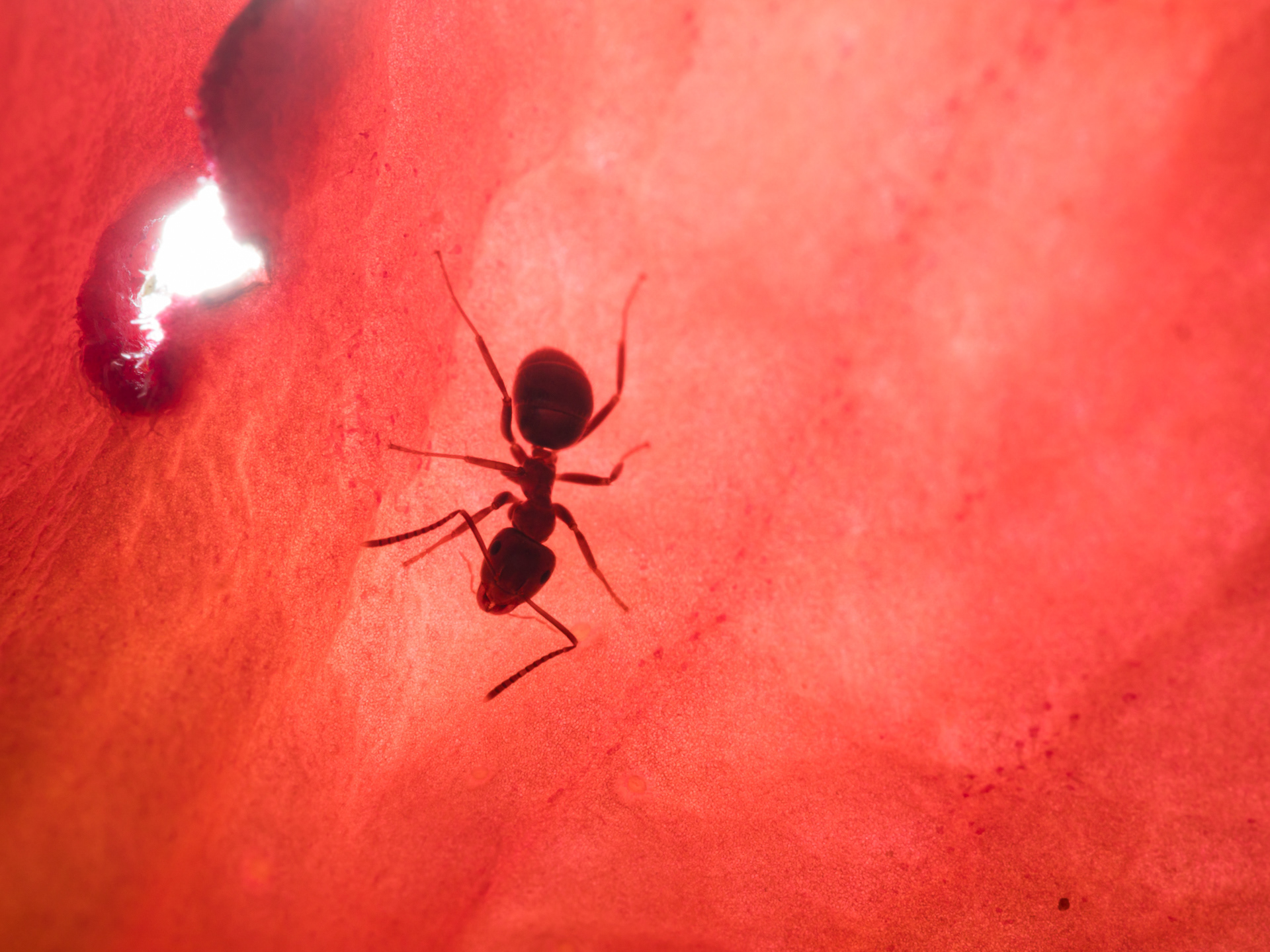
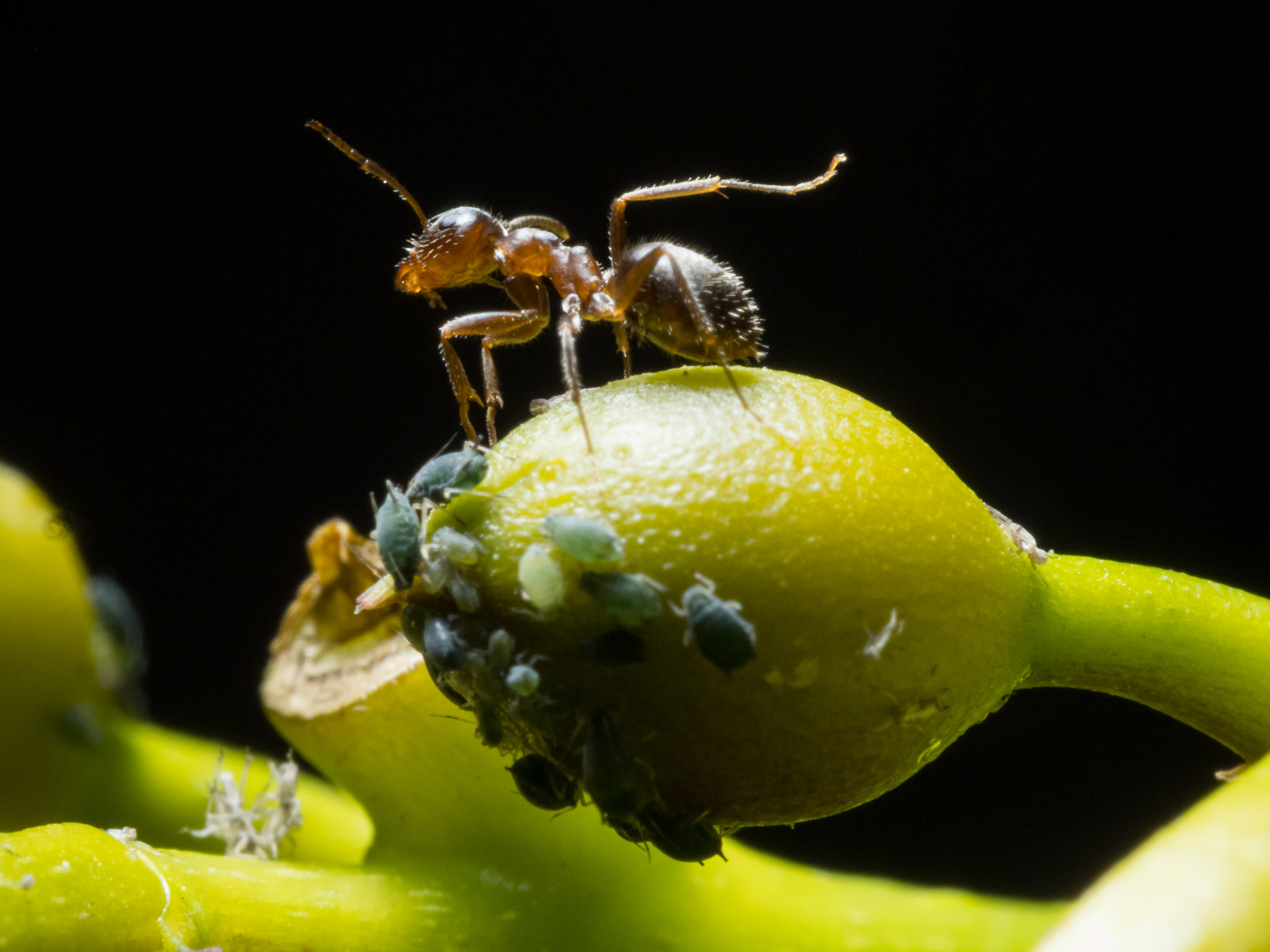
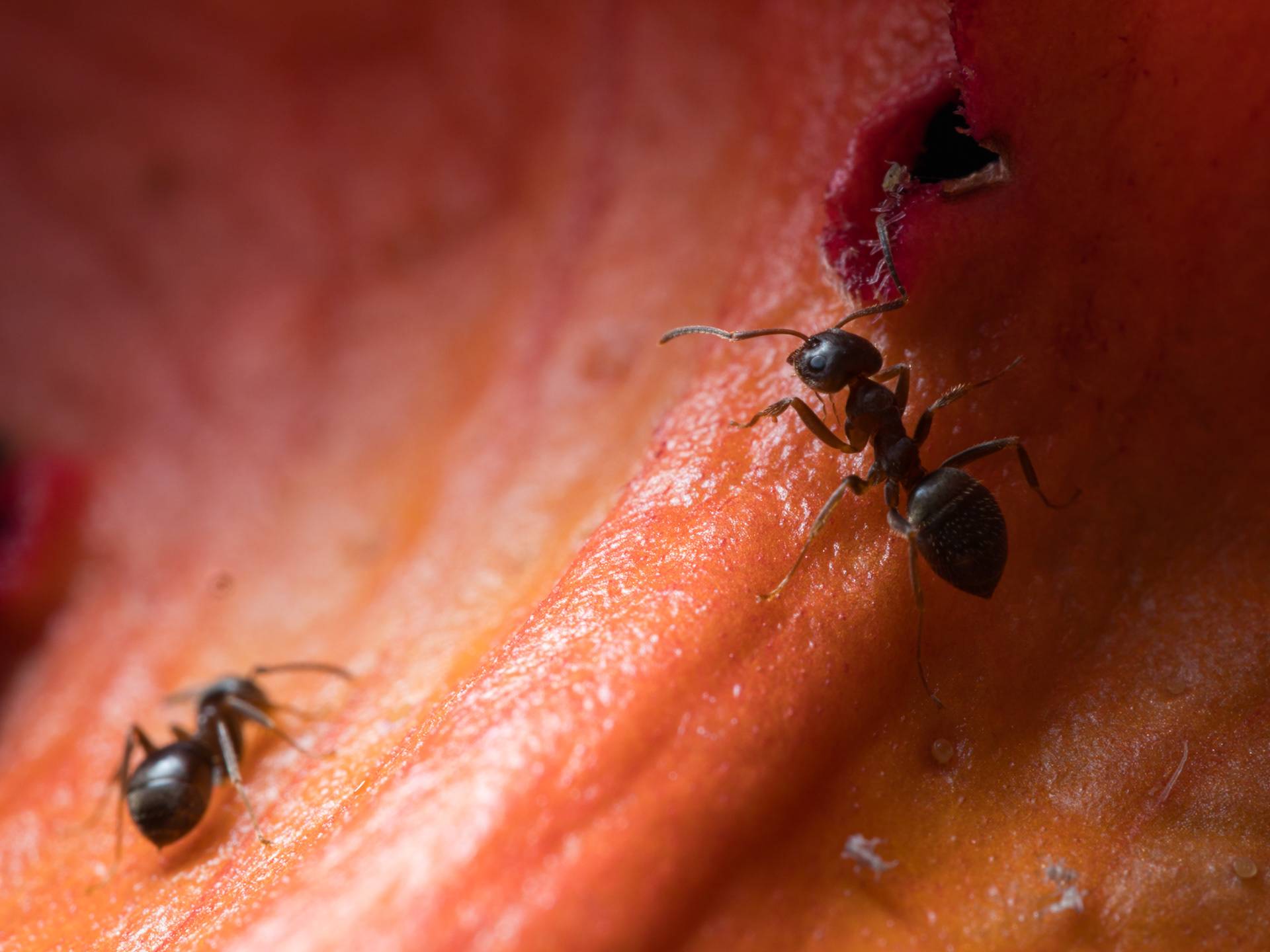
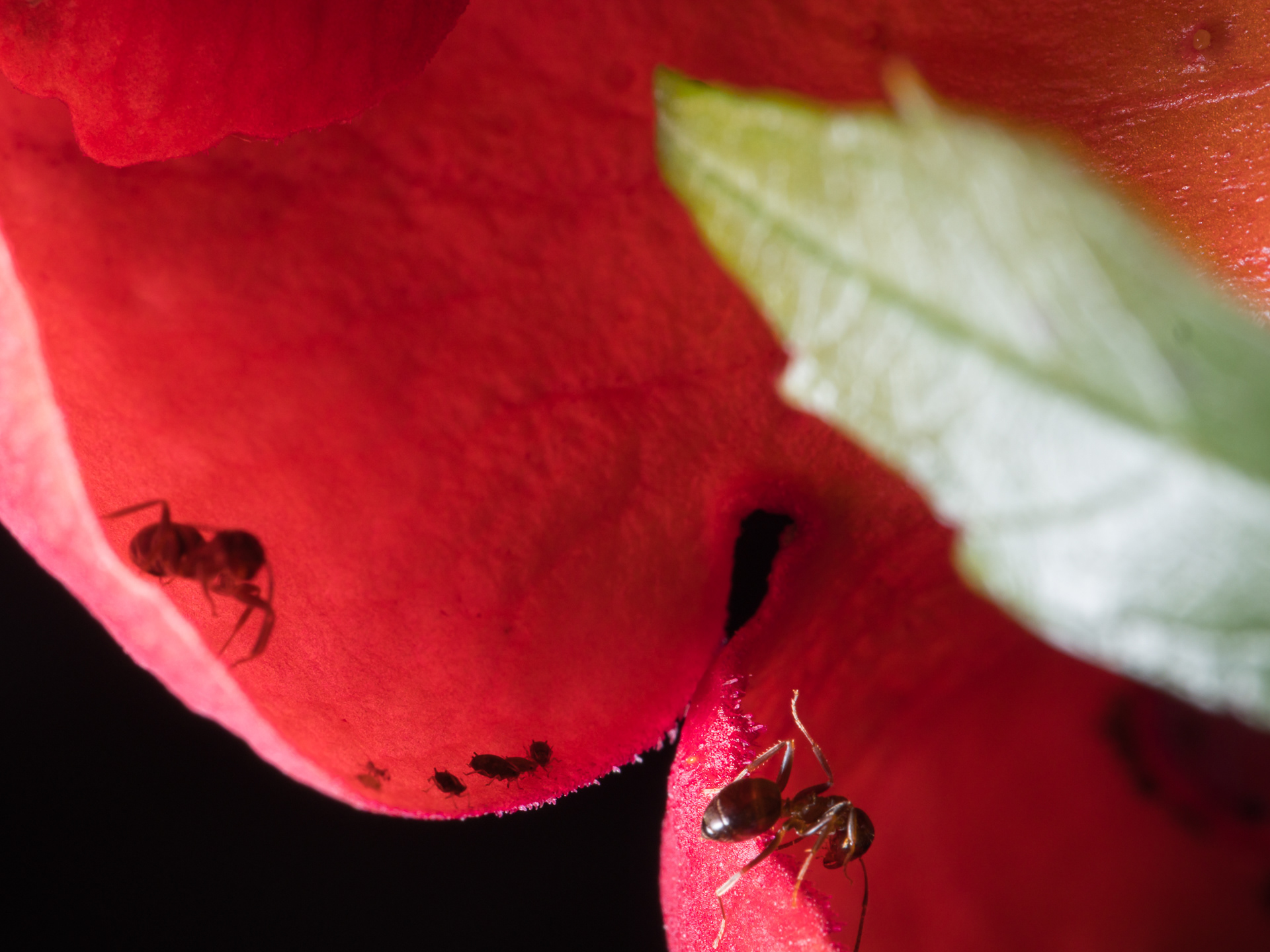
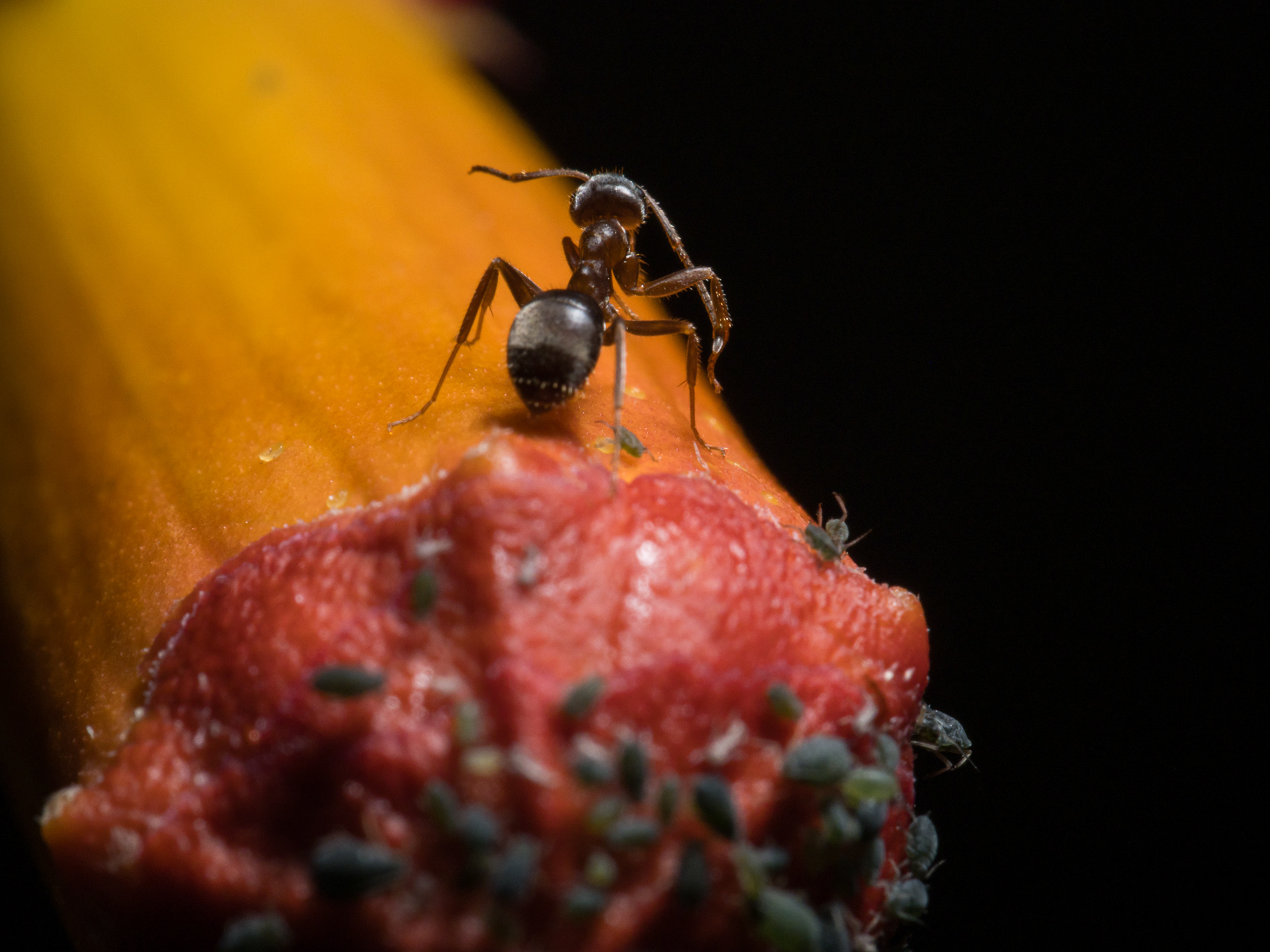
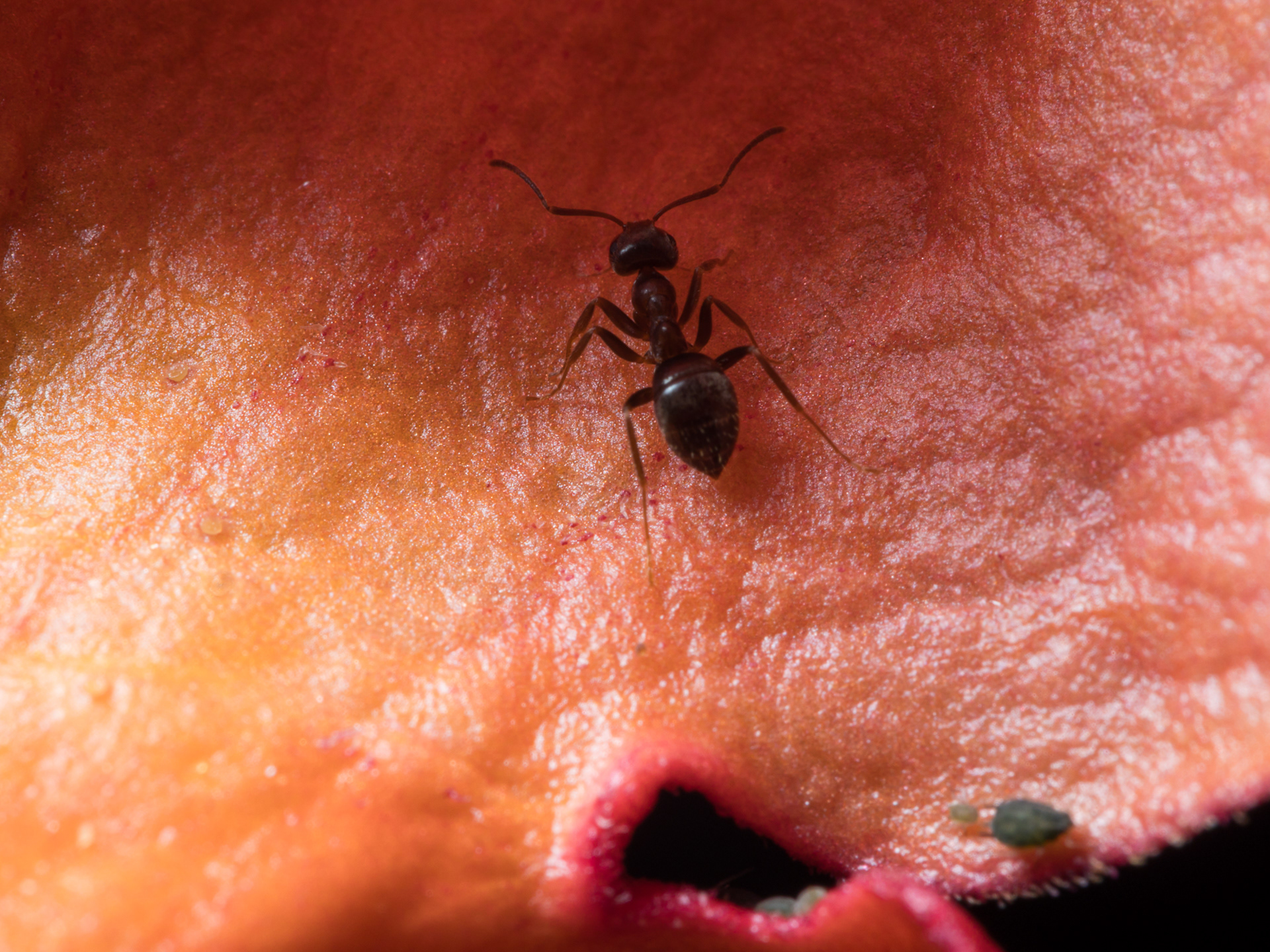
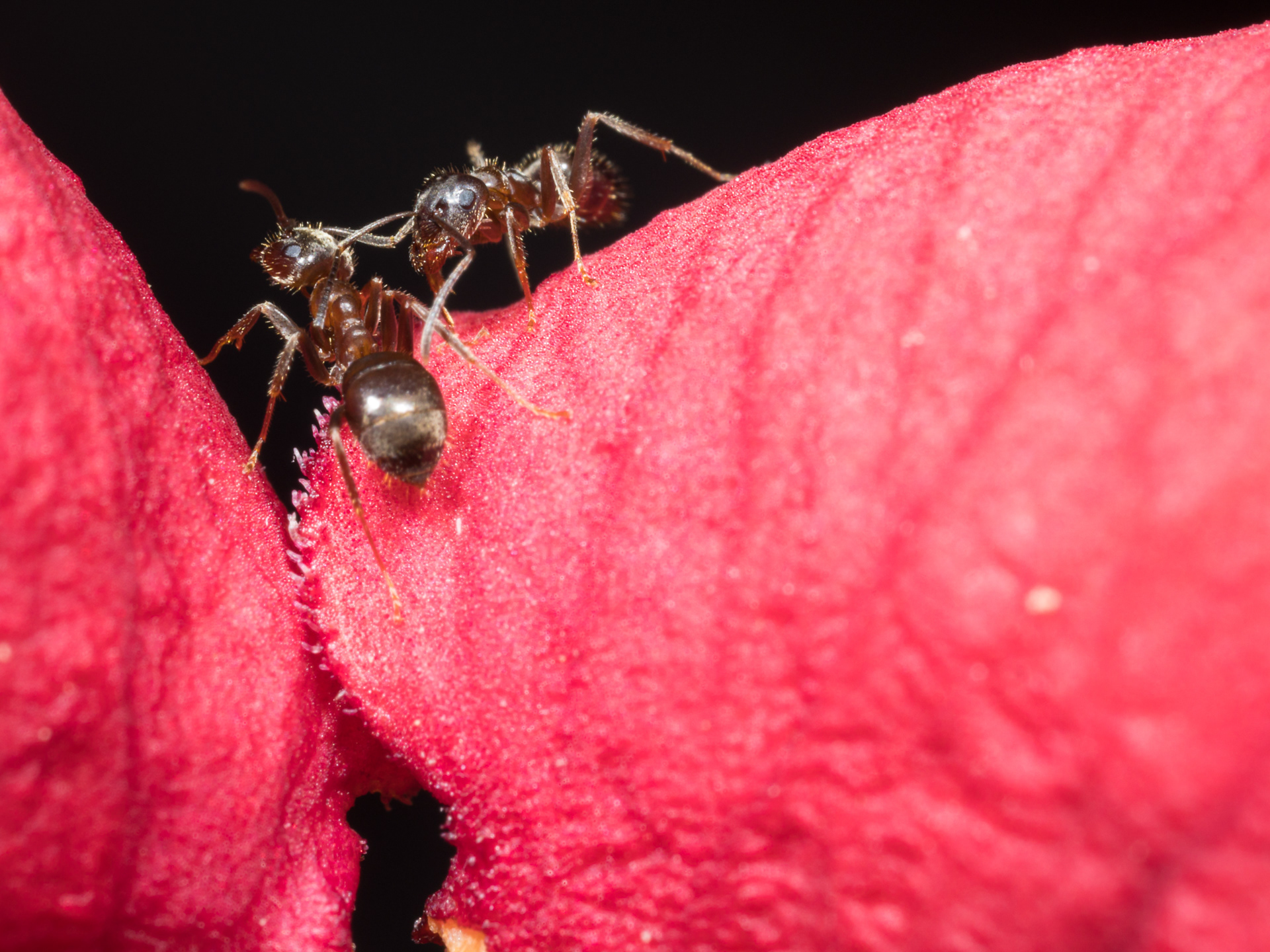
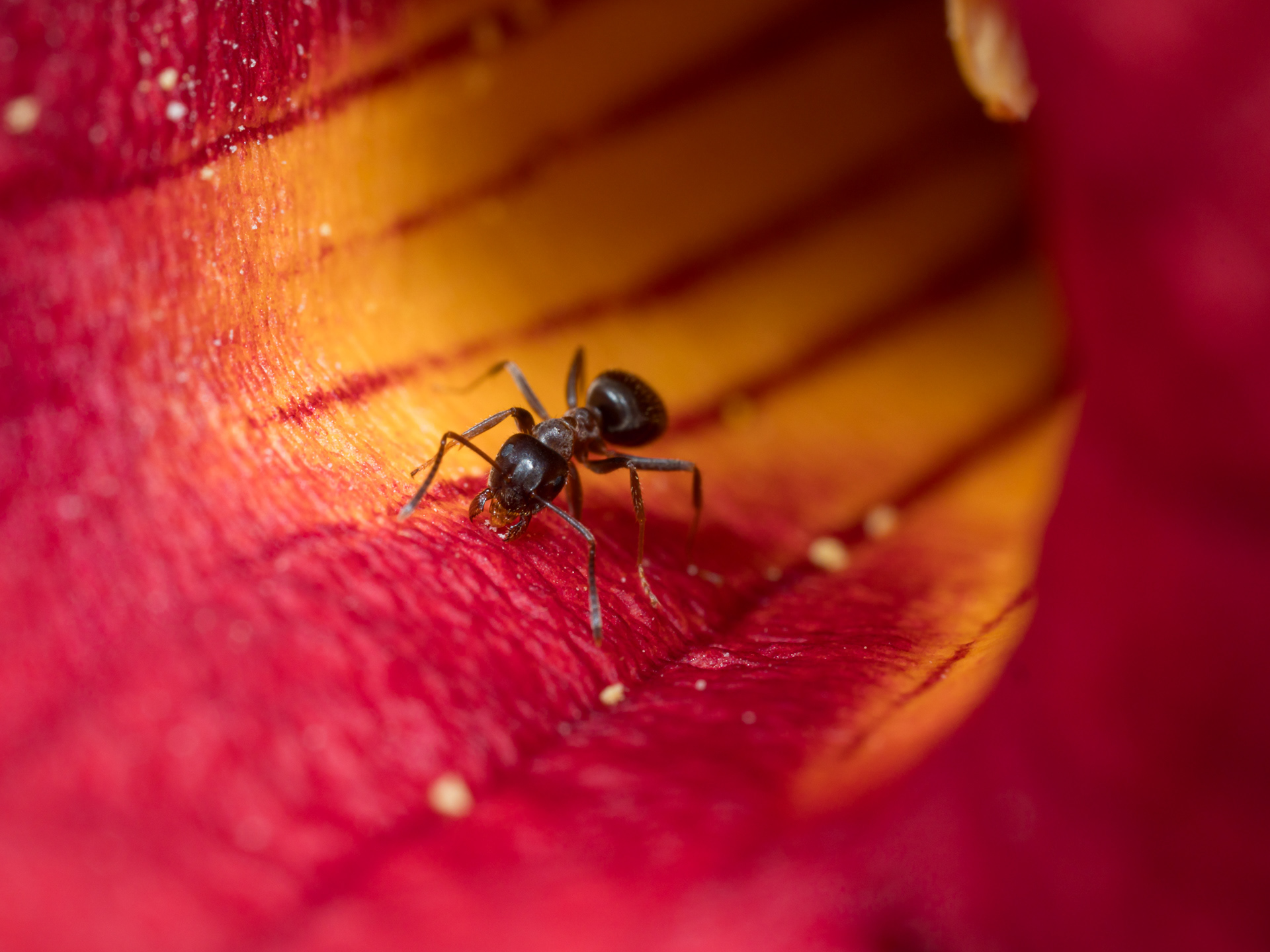
En cuestión de horas, una columna de obreras negras asciende por la planta. Toman el control de la hoja infestada. Su comportamiento no es depredador, sino ganadero. Se mueven entre los pulgones con una delicadeza sorprendente para sus mandíbulas blindadas.
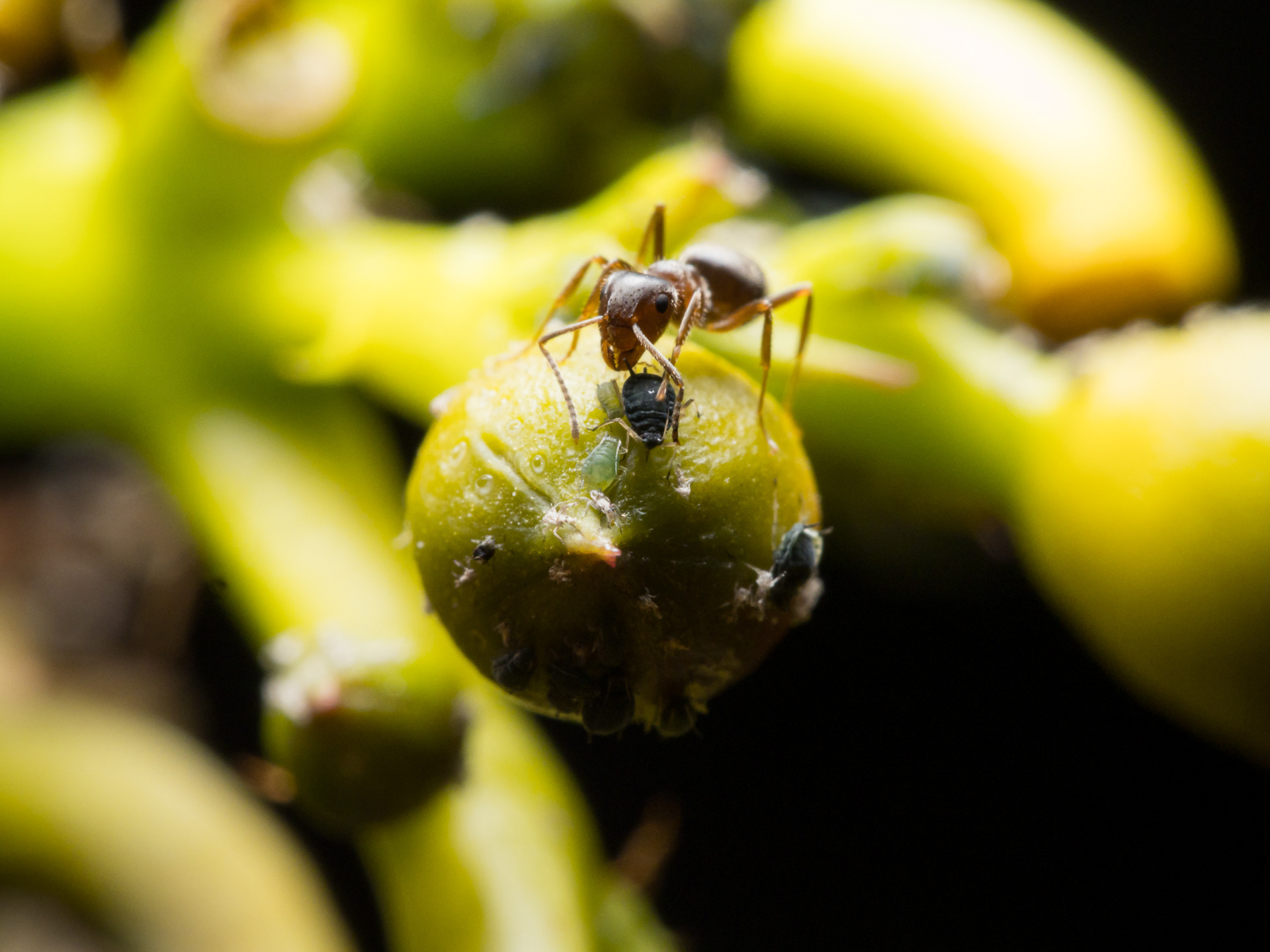
Comienza el ritual. Una hormiga se acerca a un pulgón hinchado y golpea suavemente su abdomen con las antenas. Es un tamborileo rítmico, una solicitud codificada. El pulgón responde excretando una gota fresca de melaza directamente para la hormiga.
El pacto biológico queda sellado: simbiosis.
Los pulgones dejan de expulsar el azúcar al azar, lo que evita que los hongos colonicen la hoja por el exceso de humedad. A cambio, las hormigas proveen un servicio de seguridad privada implacable.
La colonia se convierte en una fortaleza. Cualquier intruso —una mariquita adulta o una larva de crisopa— que intente acercarse al rebaño es interceptado. Las hormigas no negocian. Atacan en grupo, mordiendo patas y rociando ácido fórmico hasta que el depredador huye o muere.
Sin embargo, la defensa de las hormigas tiene un punto ciego: solo miran hacia el frente y hacia abajo. Están preparadas para una guerra de trincheras, cuerpo a cuerpo. No ven lo que ocurre encima de sus cabezas.
Flotando en las corrientes de aire, una silueta grácil y minúscula ya ha fijado el blanco. No tiene mandíbulas para luchar ni fuerza para empujar. No lo necesita. Es una especialista en infiltración aérea que está a punto de descender en picado, justo en medio del ejército enemigo, armada únicamente con una aguja y una velocidad que el ojo de la hormiga no puede seguir.
The chemical signal does not go unheeded.
First, a scout arrives. She does not descend from the sky, but marches up from the main stem. Her antennae vibrate frantically, detecting the sugar molecules suspended in the air. She finds the curled leaf. She finds the sticky chaos. To her, this discarded honeydew is not waste; it is high-octane fuel.
The scout drinks a drop and immediately retraces her steps, laying down an invisible trail of pheromones. She has marked the path to the gold mine.
The mobilization is rapid and brutal.
In a matter of hours, a column of black workers ascends the plant. They take control of the infested leaf. Their behavior is not predatory, but pastoral. They move among the aphids with surprising gentleness for creatures with armored mandibles.
The ritual begins. An ant approaches a bloated aphid and softly taps its abdomen with her antennae. It is a rhythmic drumming, a coded solicitation. The aphid responds by excreting a fresh drop of honeydew directly for the ant.
The biological pact is sealed: symbiosis.
The aphids cease ejecting sugar at random, preventing fungi from colonizing the leaf due to excess moisture. In exchange, the ants provide a relentless private security service.
The colony becomes a fortress. Any intruder—an adult ladybug or a lacewing larva—attempting to approach the herd is intercepted. The ants do not negotiate. They attack in swarms, biting legs and spraying formic acid until the predator flees or dies.
However, the ants' defense has a blind spot: they only look forward and down. They are prepared for trench warfare, hand-to-hand combat. They do not see what is happening above their heads.
Floating on the air currents, a graceful, tiny silhouette has already locked onto the target. She has no mandibles for fighting nor strength to push. She does not need them. She is an aerial infiltration specialist about to dive right into the middle of the enemy army, armed only with a needle and a speed that the ant's eye cannot follow.
IV
La vibración del aire cambia. Un zumbido grave y pesado anuncia la llegada de un organismo de otra escala.
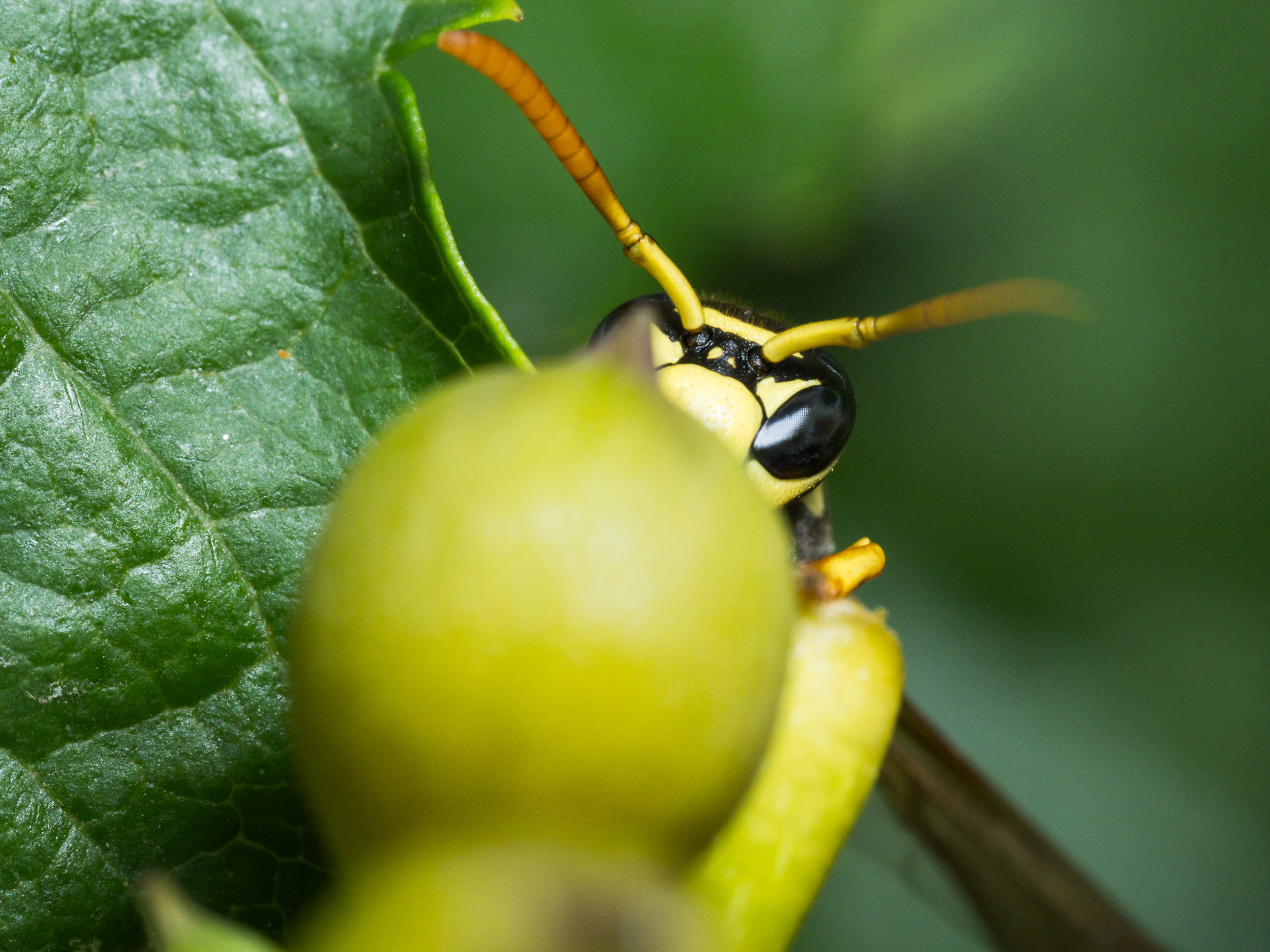
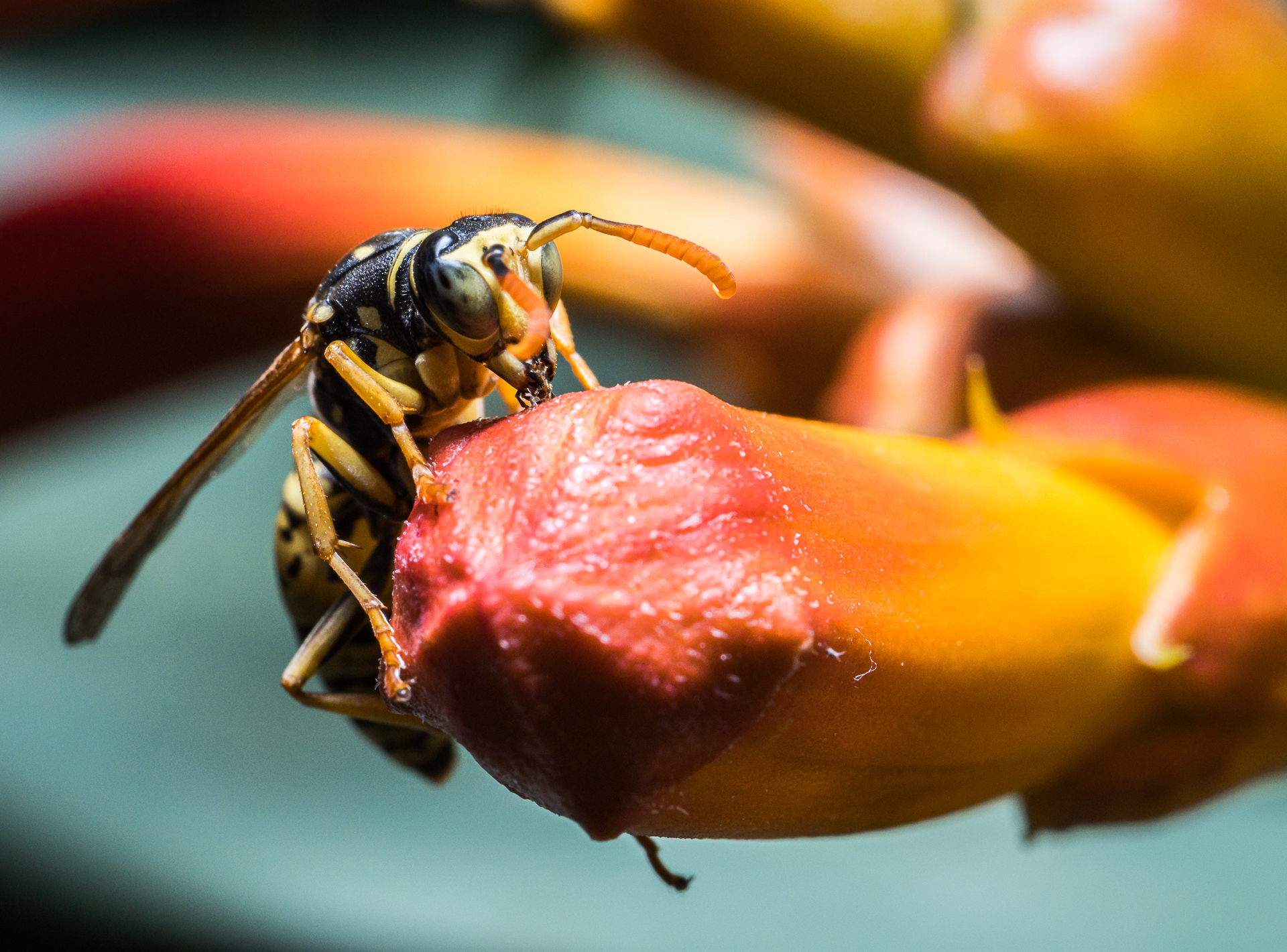
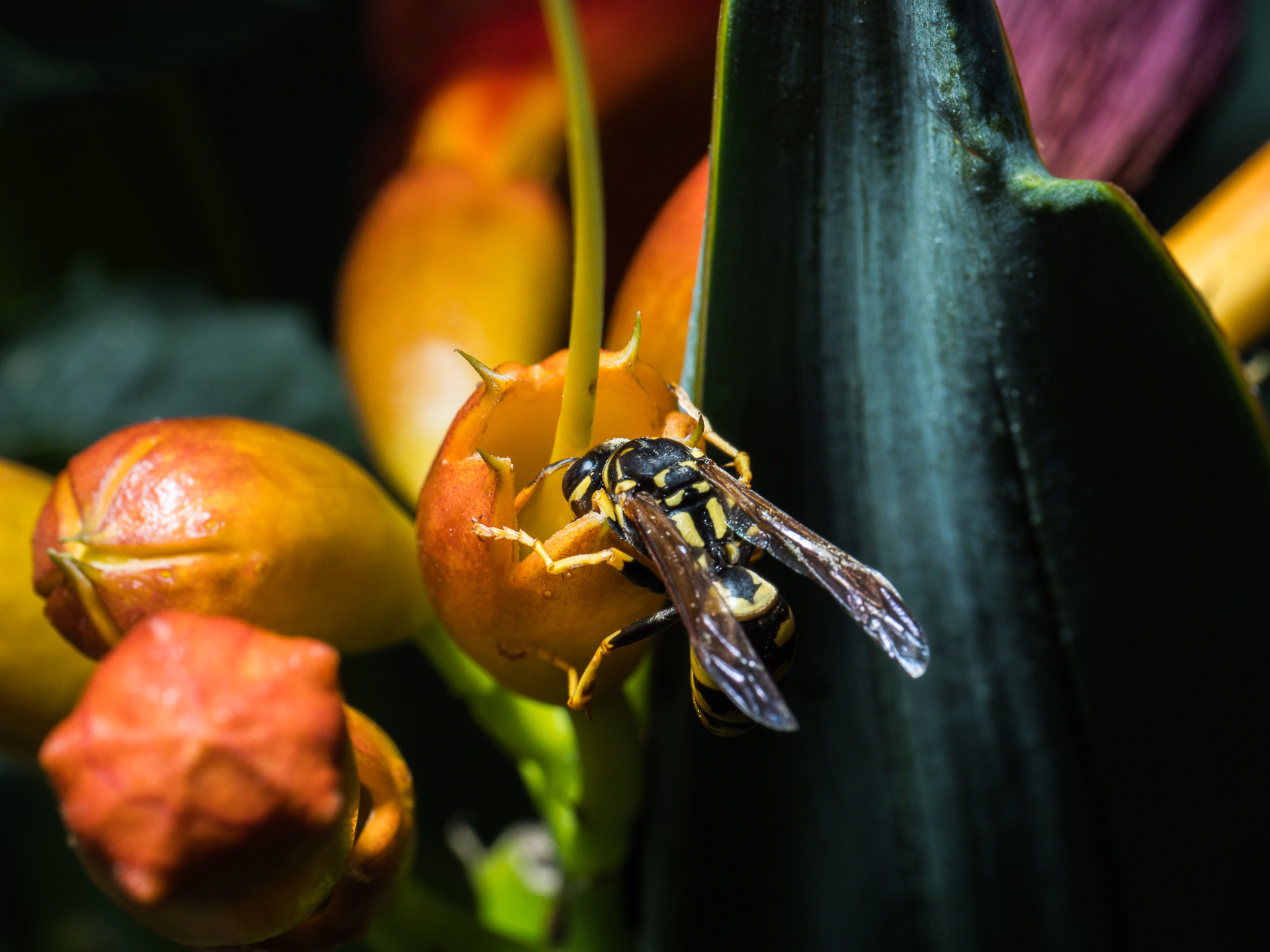
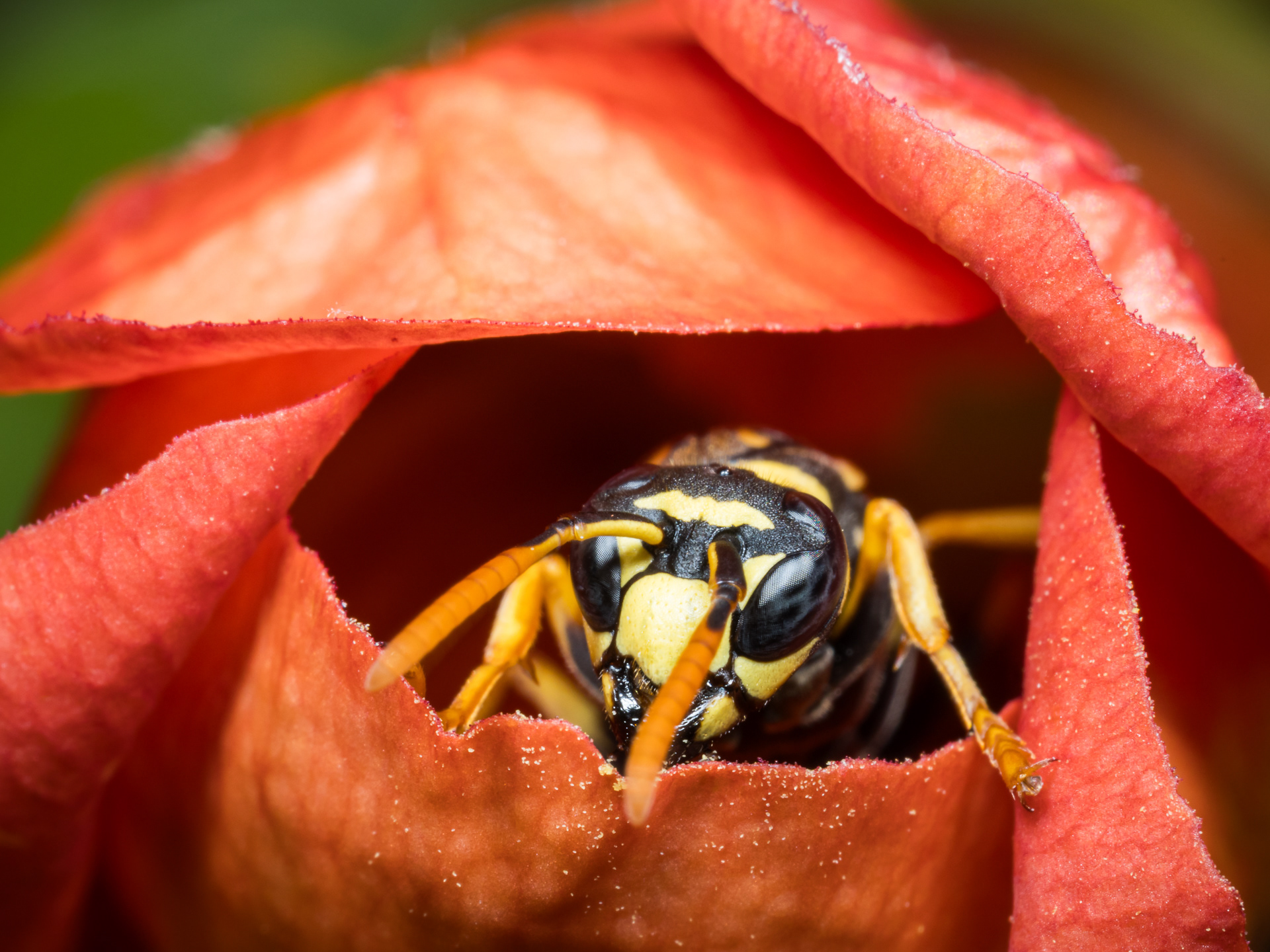
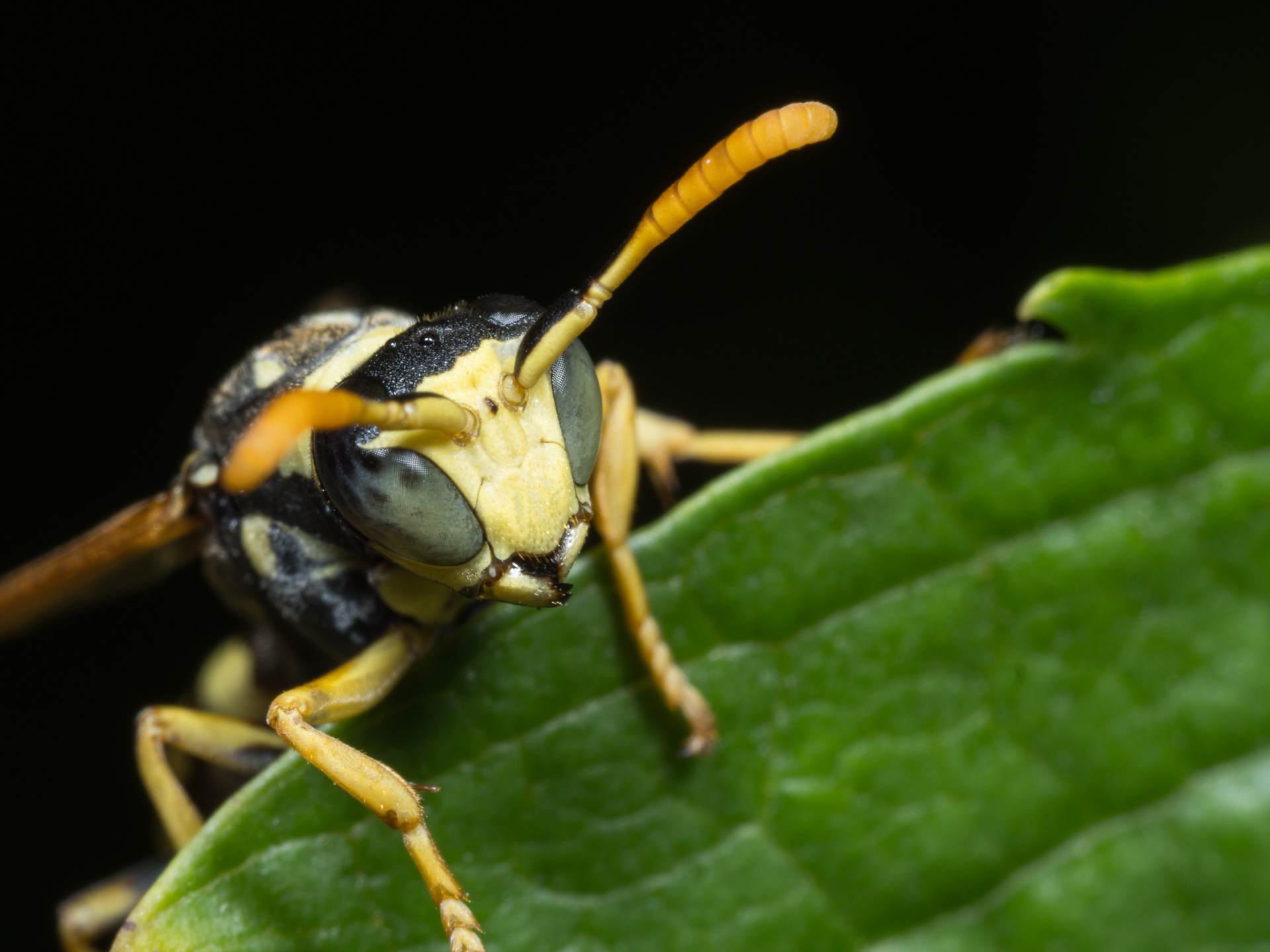
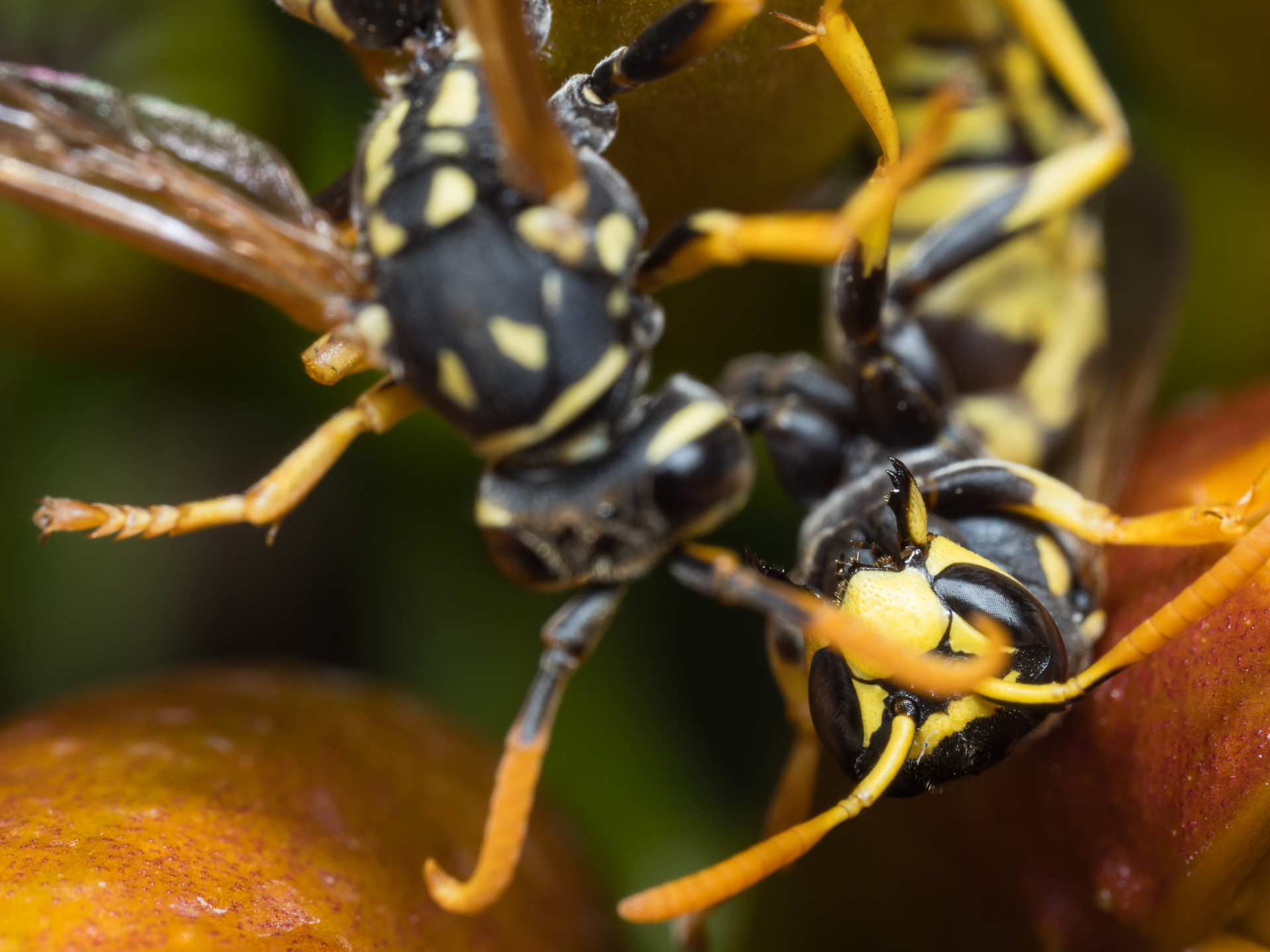
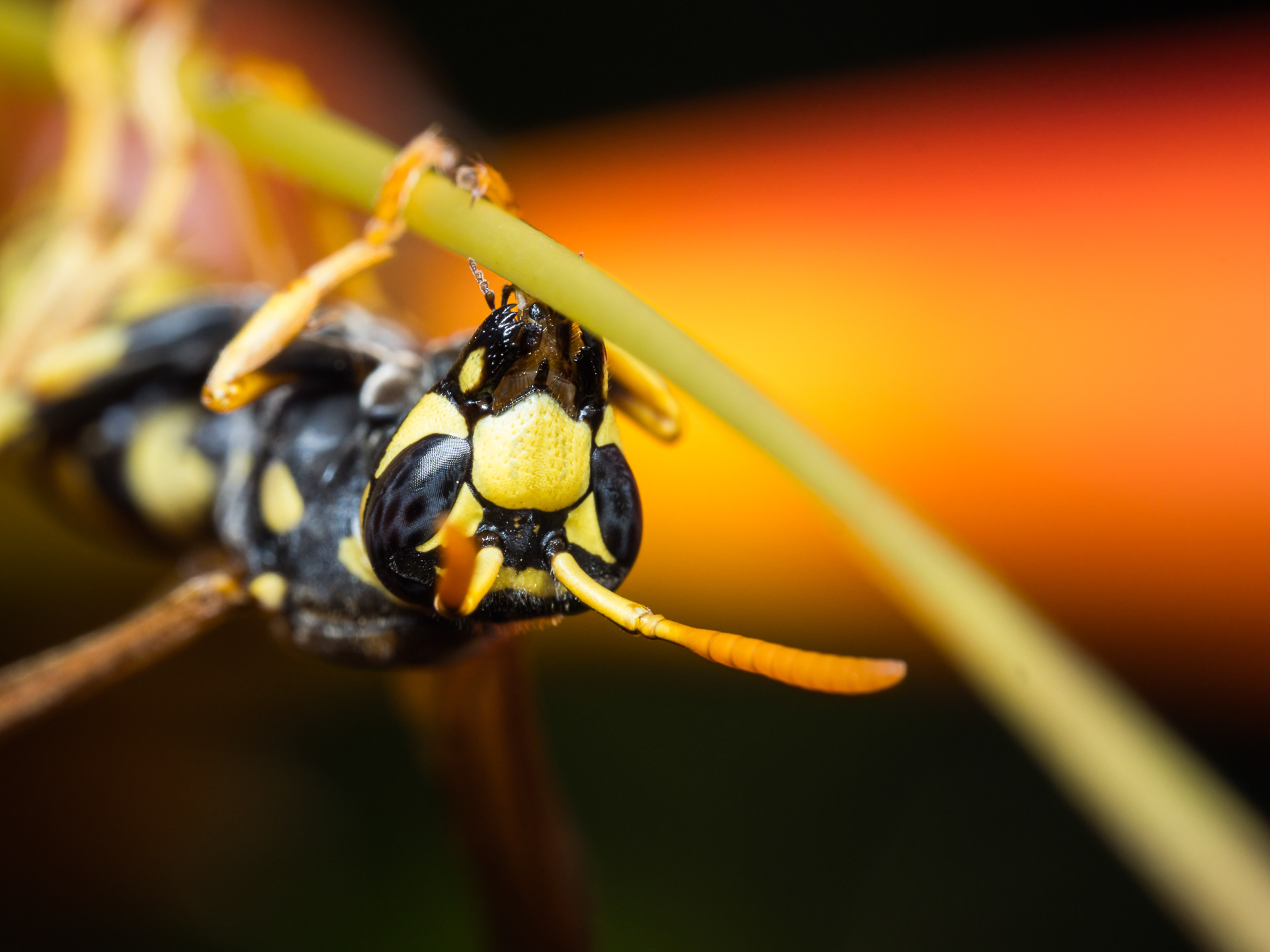
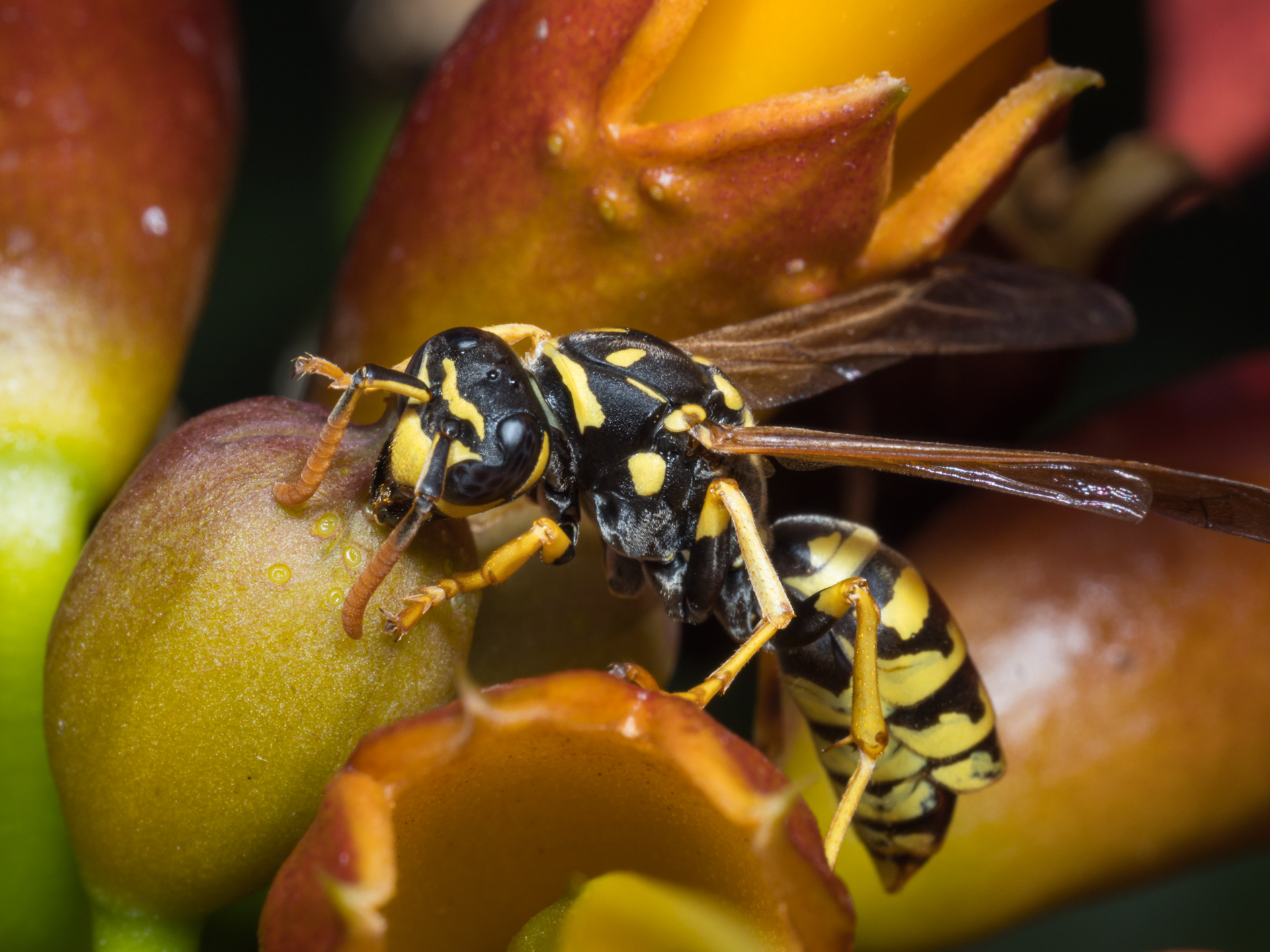
Una avispa del género Polistes aterriza sobre la hoja. Su sola presencia altera la dinámica de la colonia. Su coloración de advertencia, el patrón de franjas amarillas y negras, es una señal universal de peligro en el reino de los insectos.
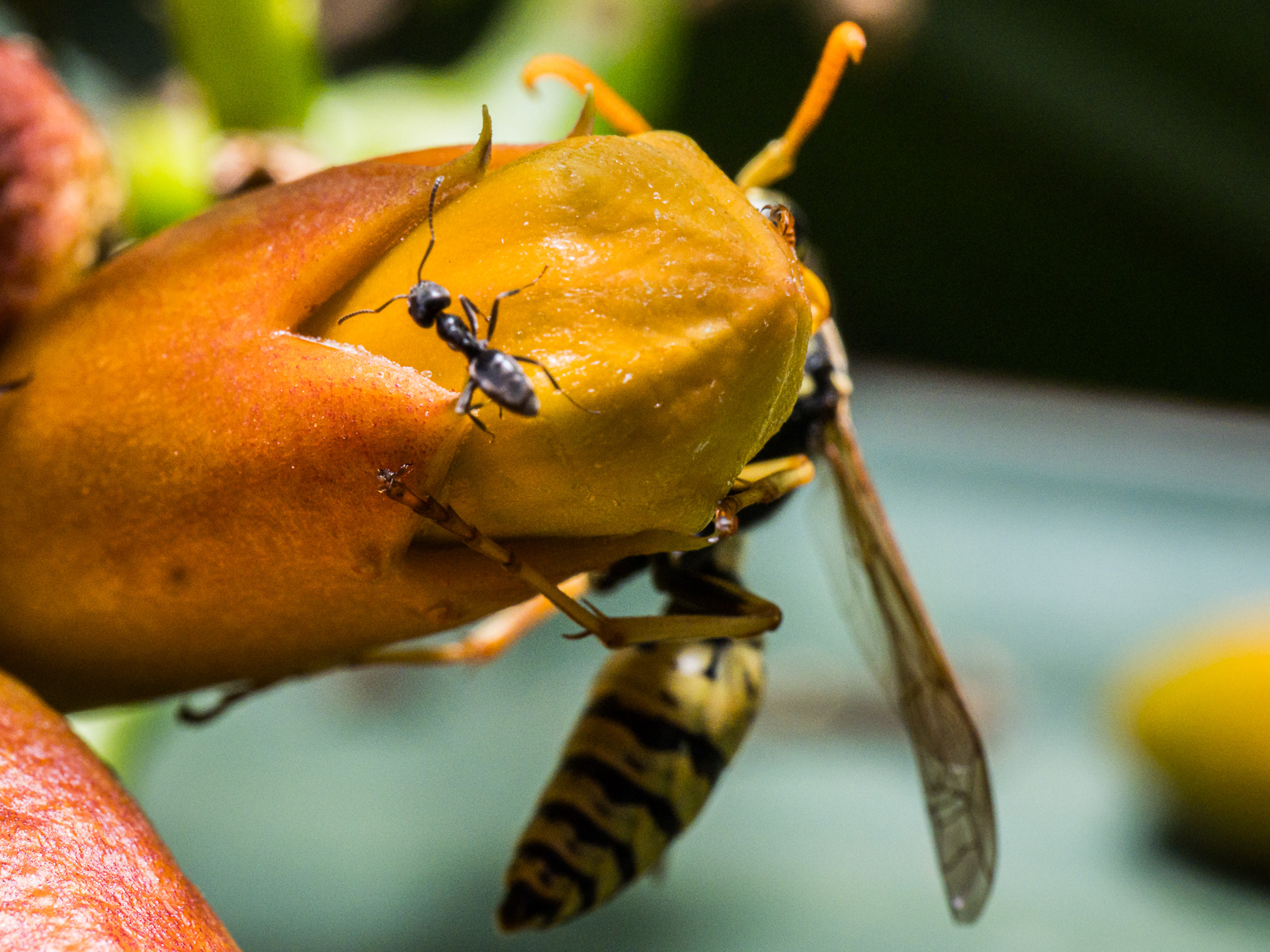
Las hormigas reaccionan ante la intrusión. Siguiendo su instinto defensivo, intentan rodear al gigante y morder sus extremidades. Sin embargo, la diferencia física es insalvable. El exoesqueleto de la avispa es demasiado grueso; las mandíbulas de las hormigas resbalan sobre la quitina blindada sin causar daño. La avispa apenas necesita apartarlas con sus patas espinosas para continuar su tarea.
Su objetivo es el recurso energético. La avispa se mueve entre los pulgones, lamiendo la melaza acumulada o capturando presas para triturarlas y llevar proteínas a su nido. Es un depredador dominante en este microcosmos. Nada en la planta representa una amenaza real para su integridad física.
Saciada, la avispa despliega sus alas y retoma el vuelo hacia su colonia, aparentemente en la cúspide de su vitalidad.
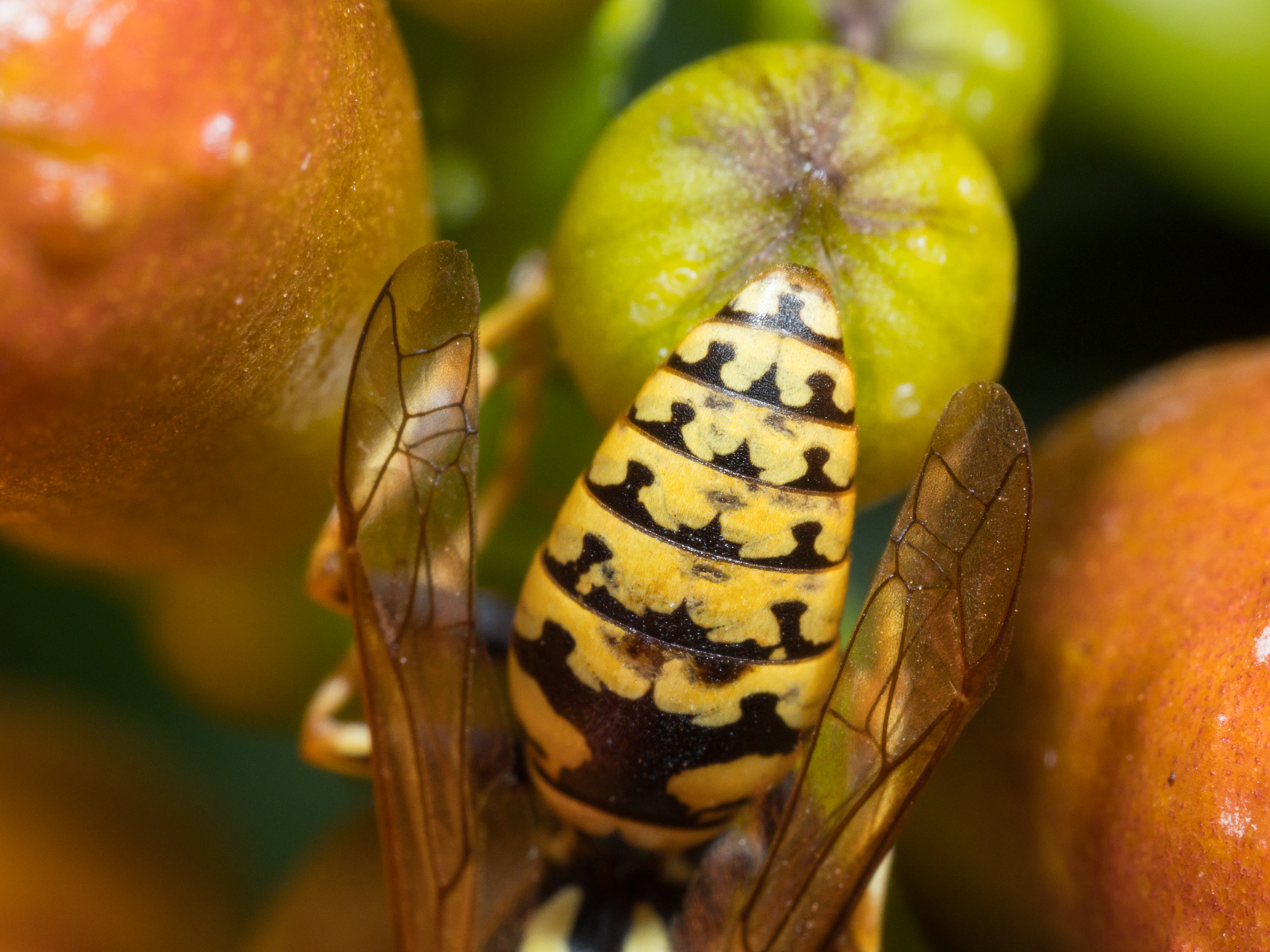
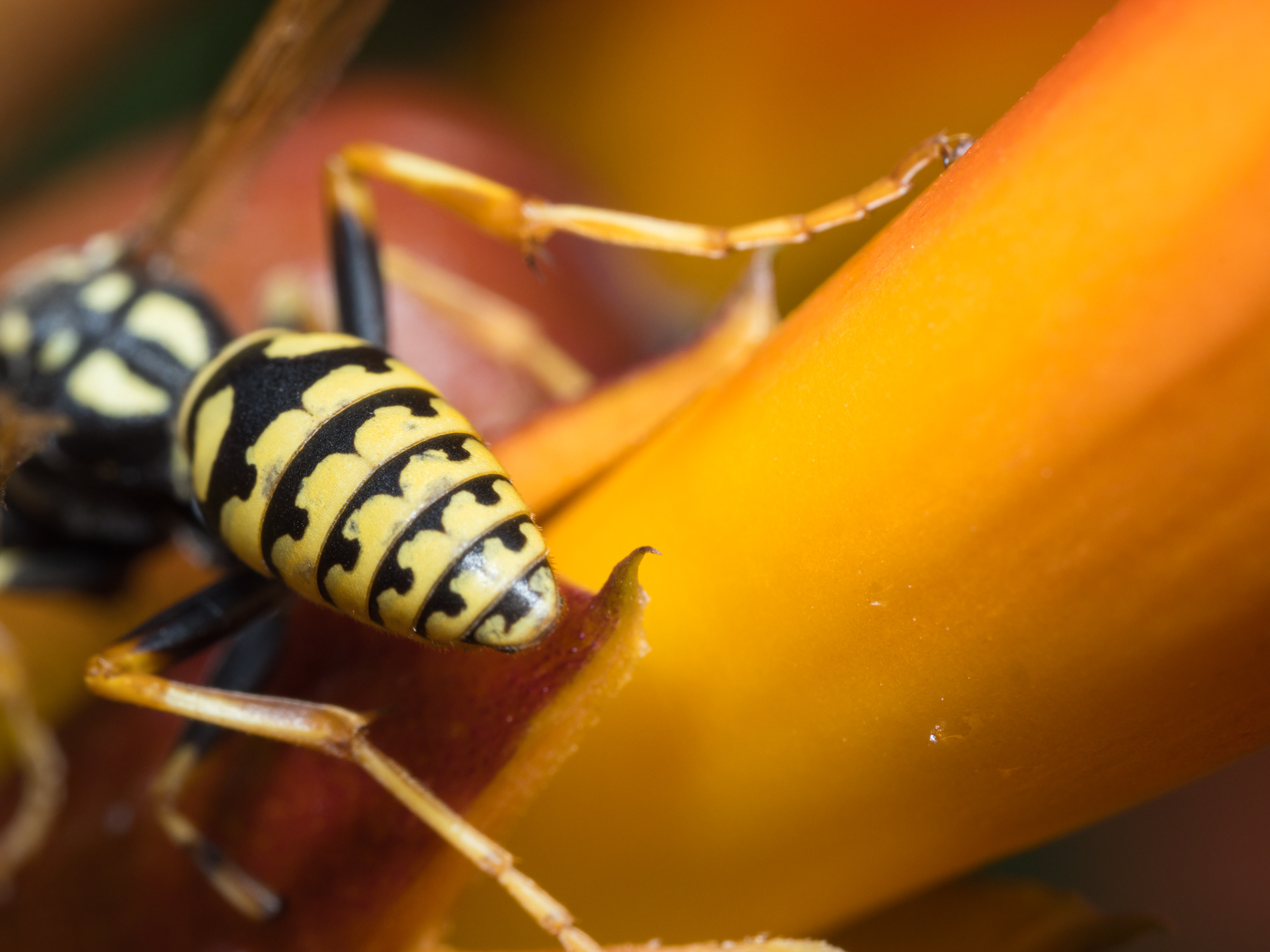
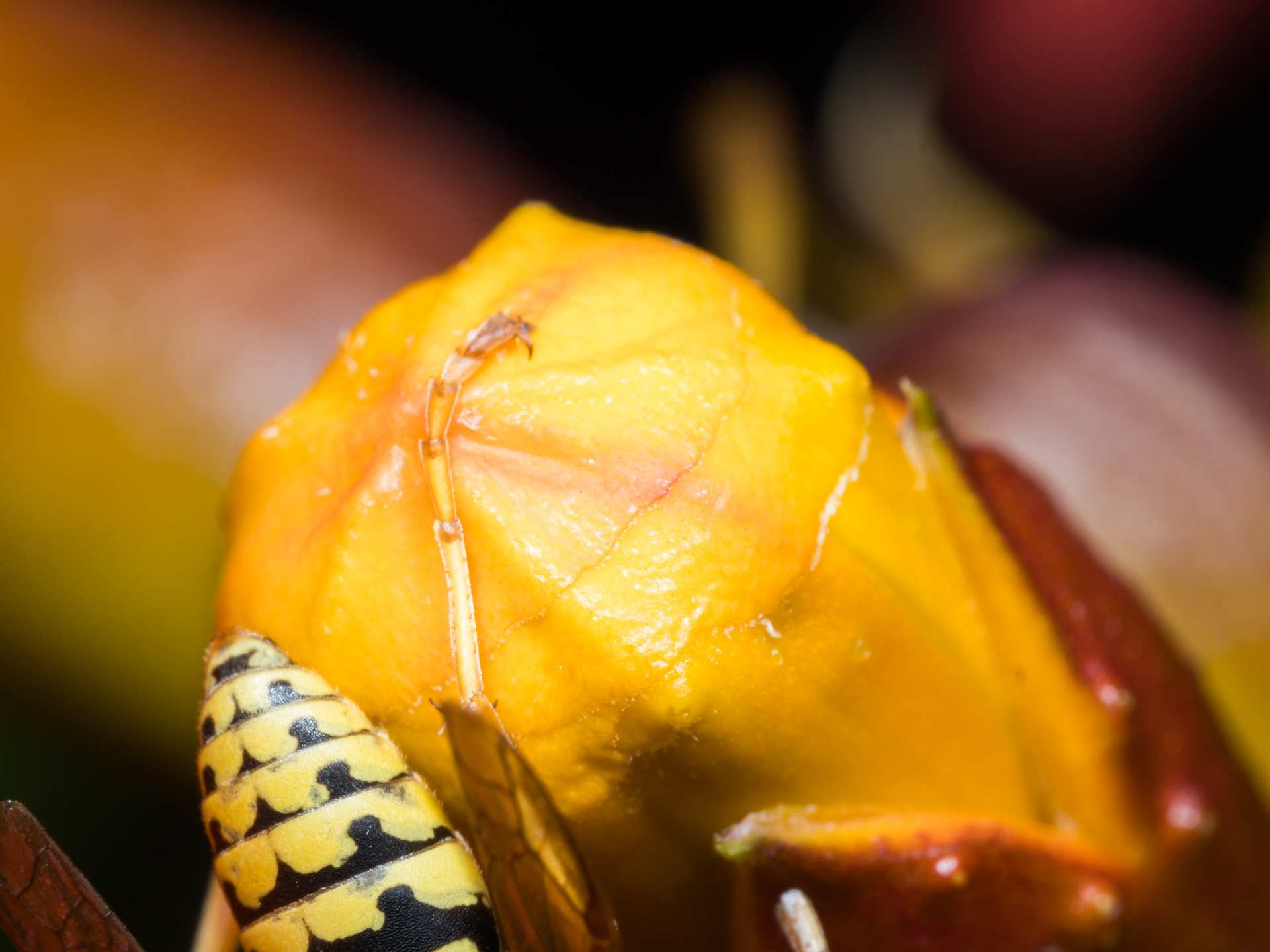
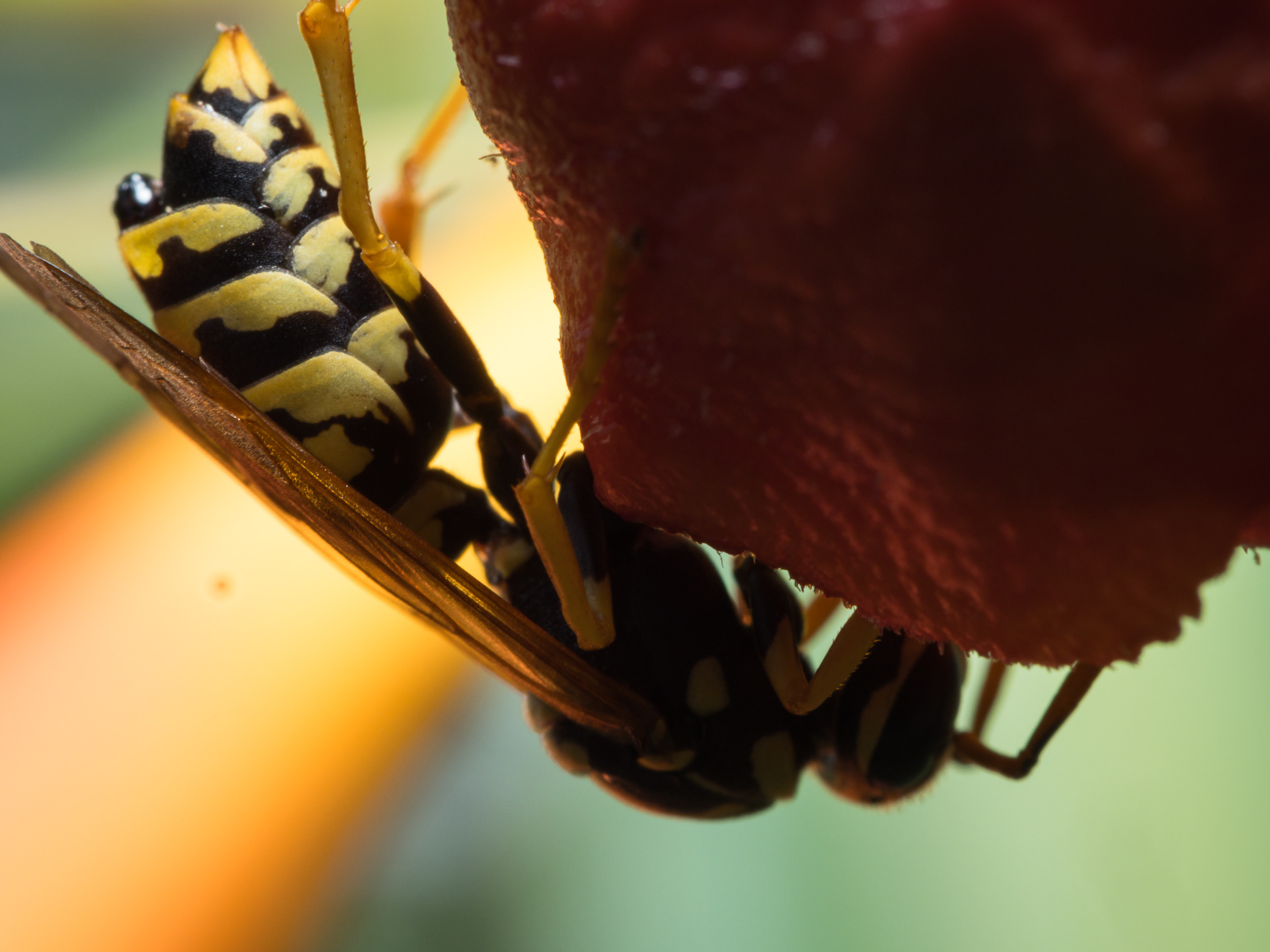
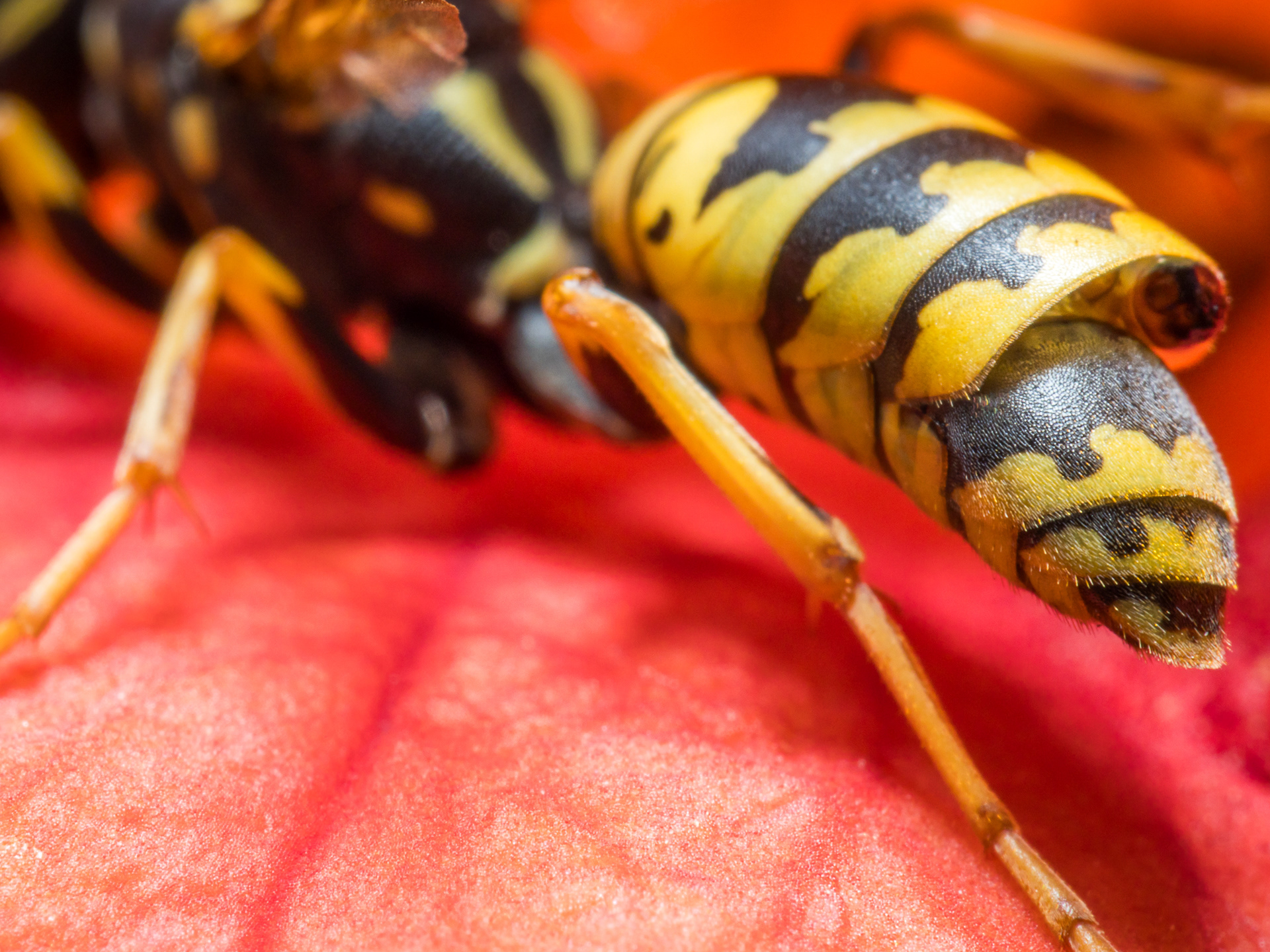
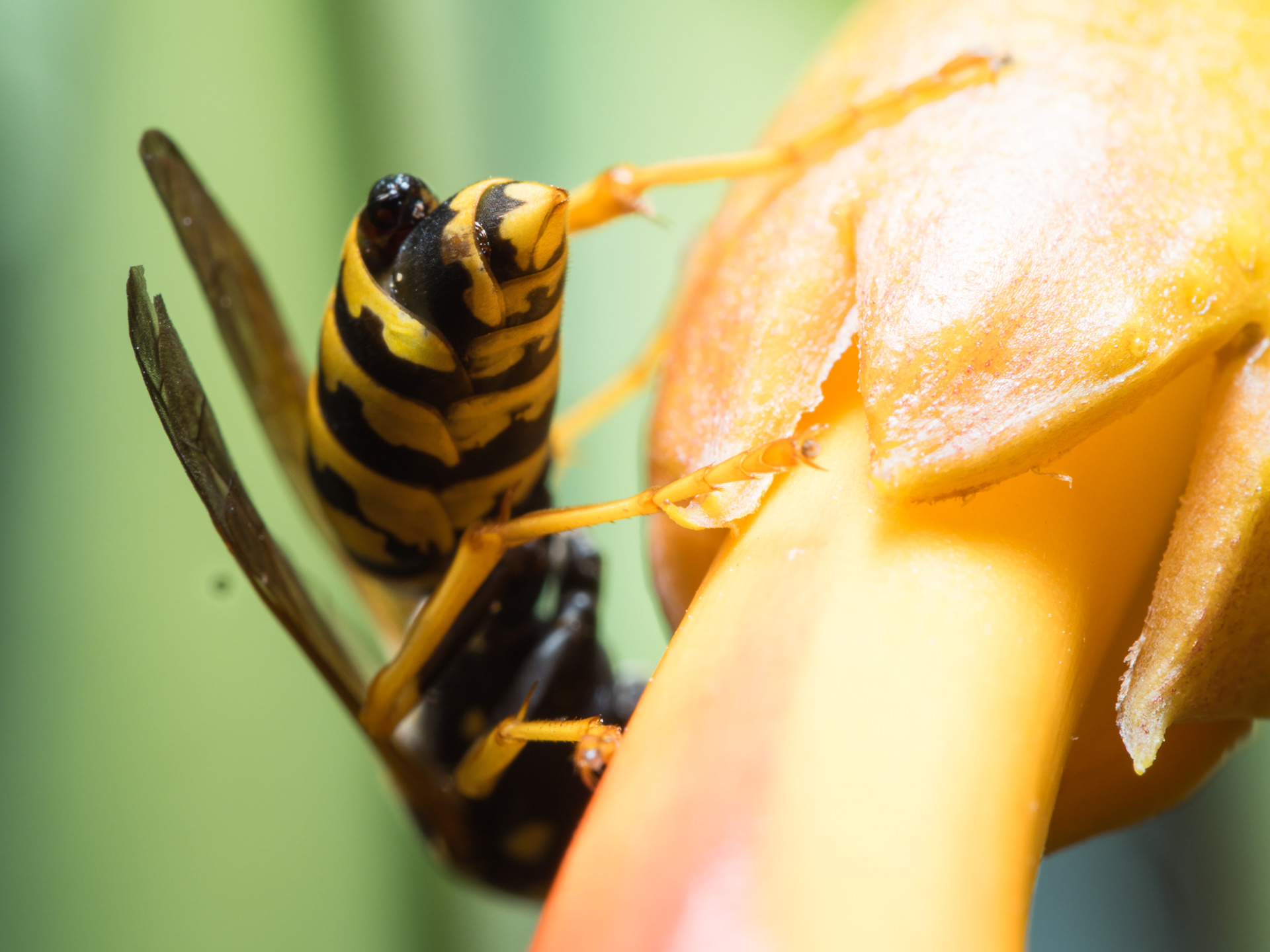
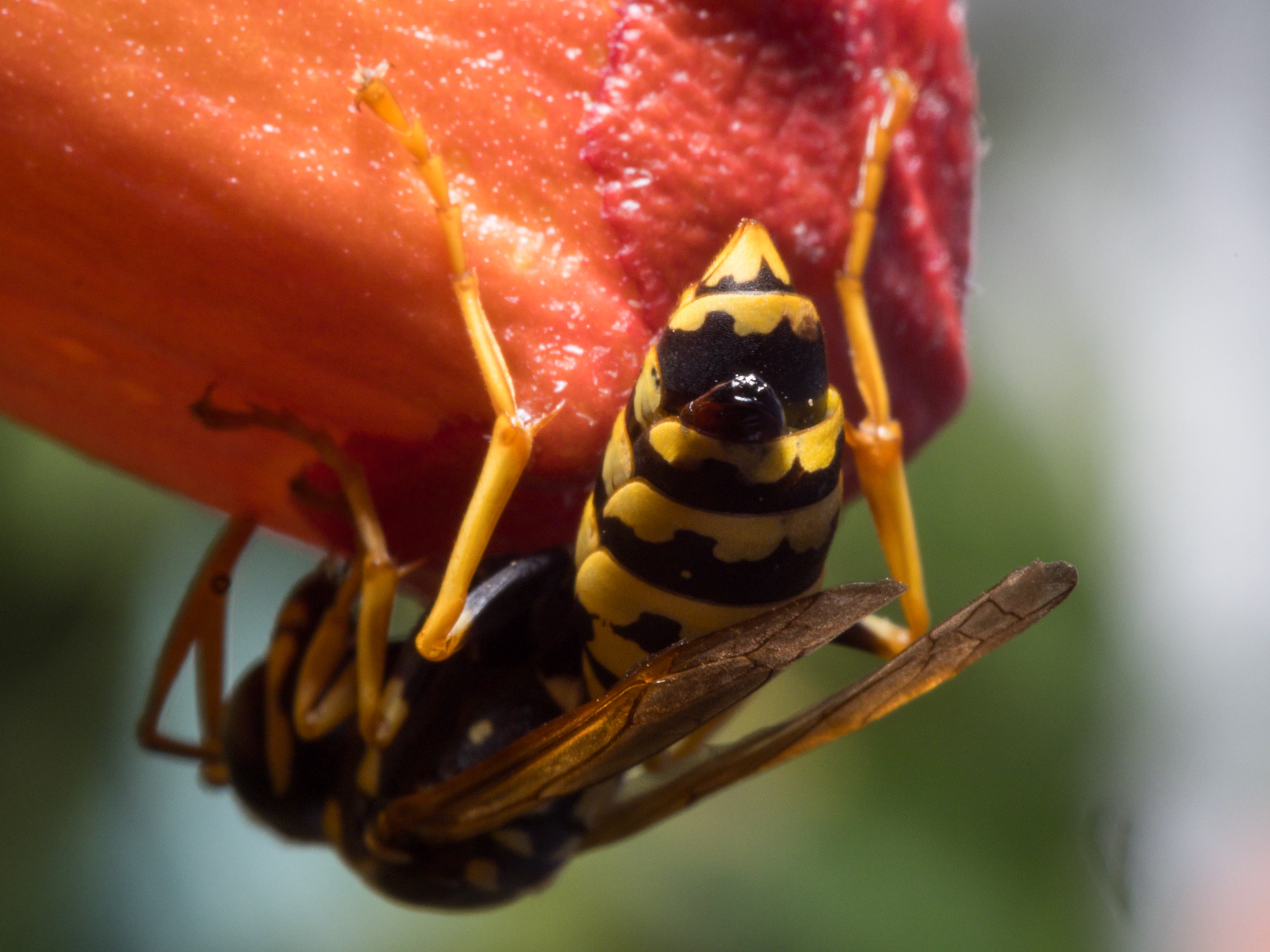
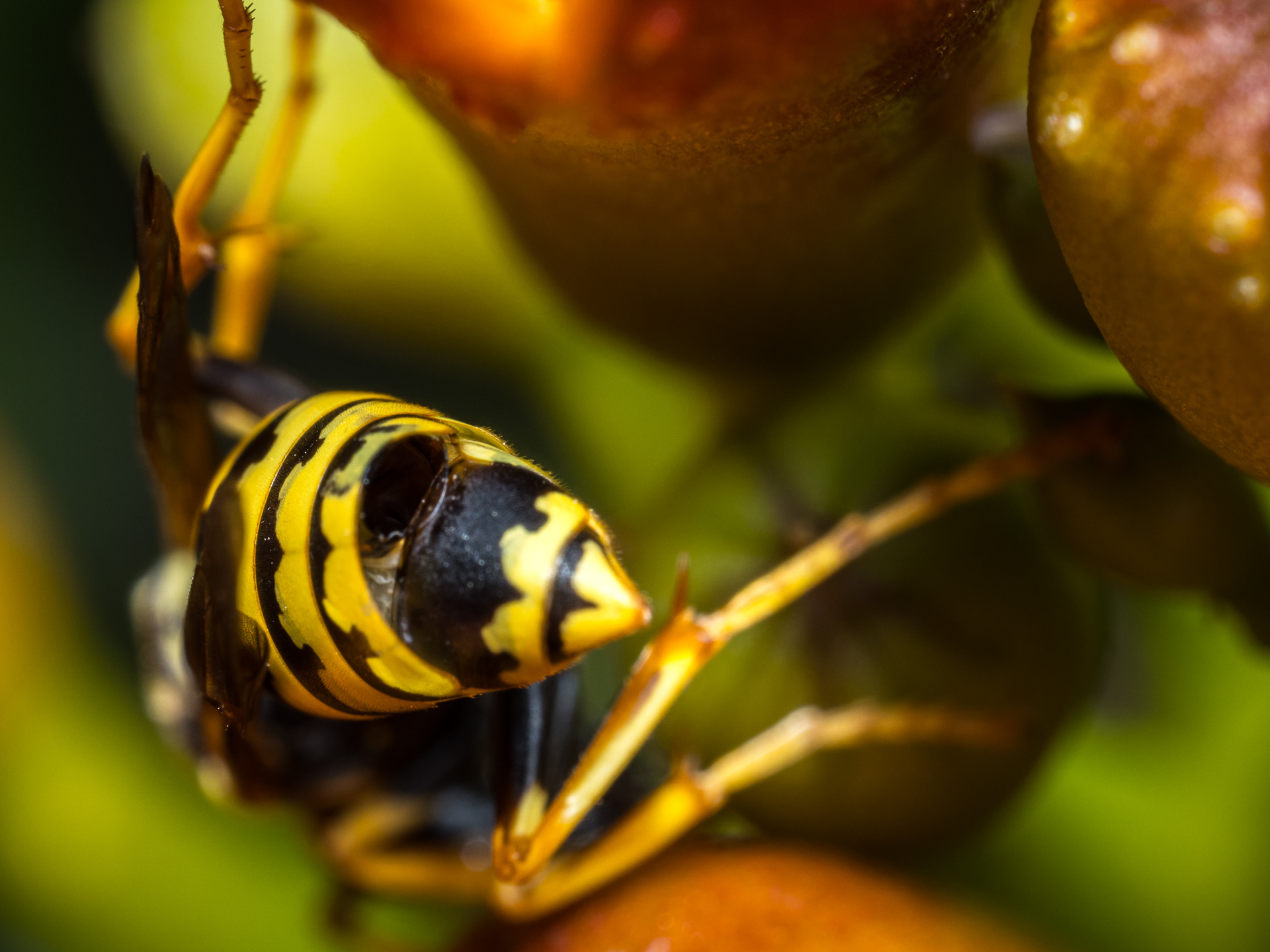
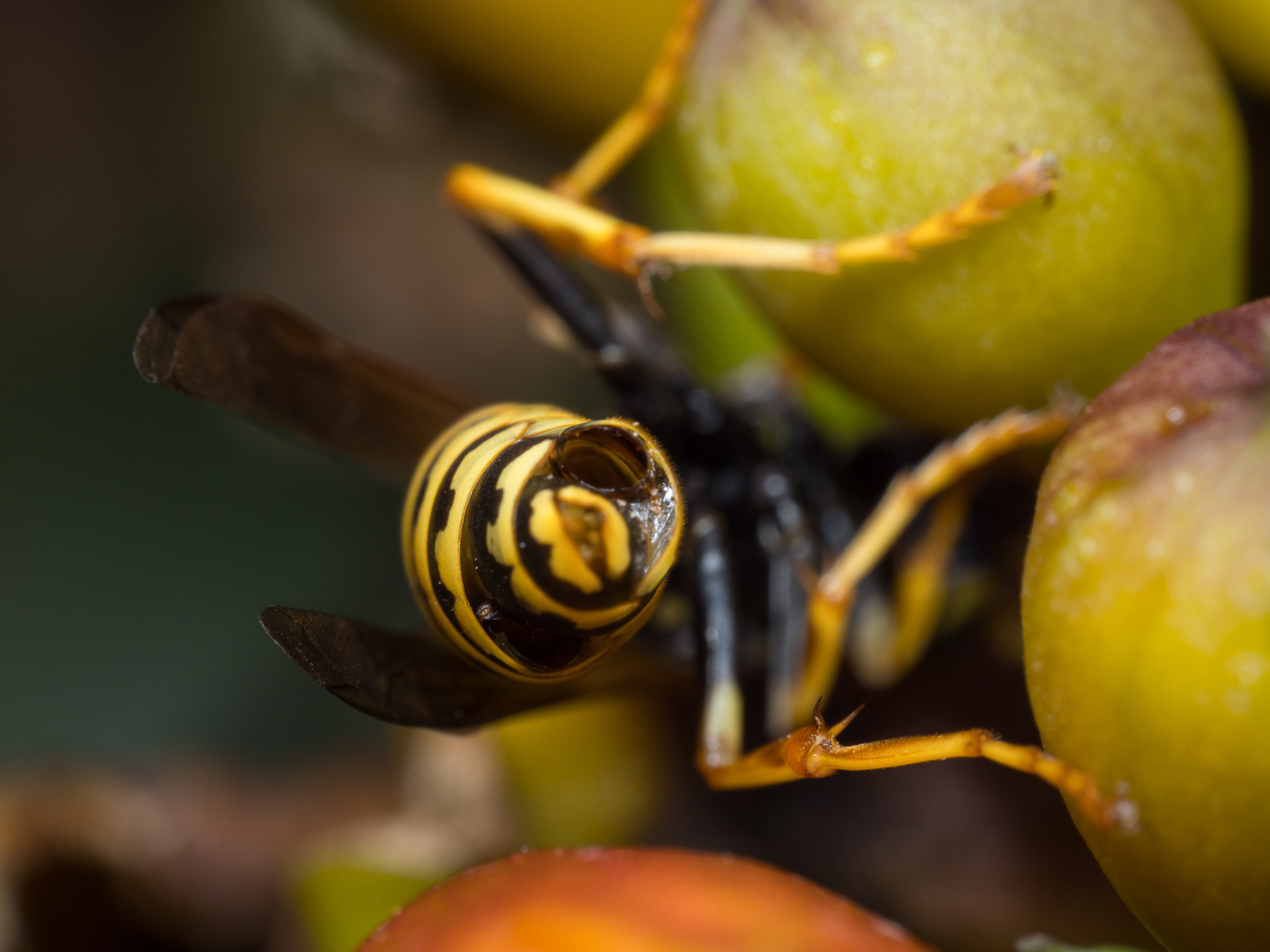
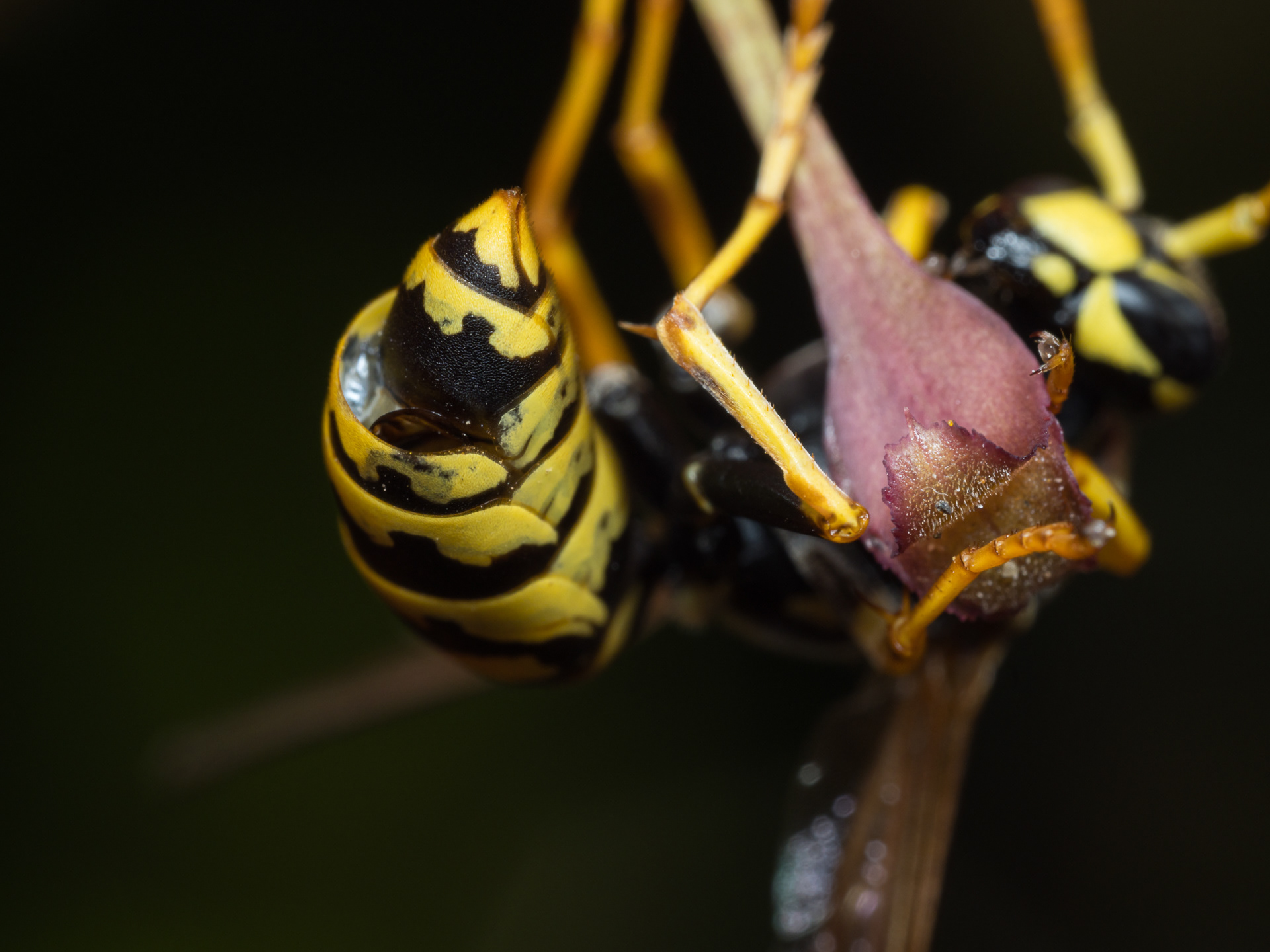
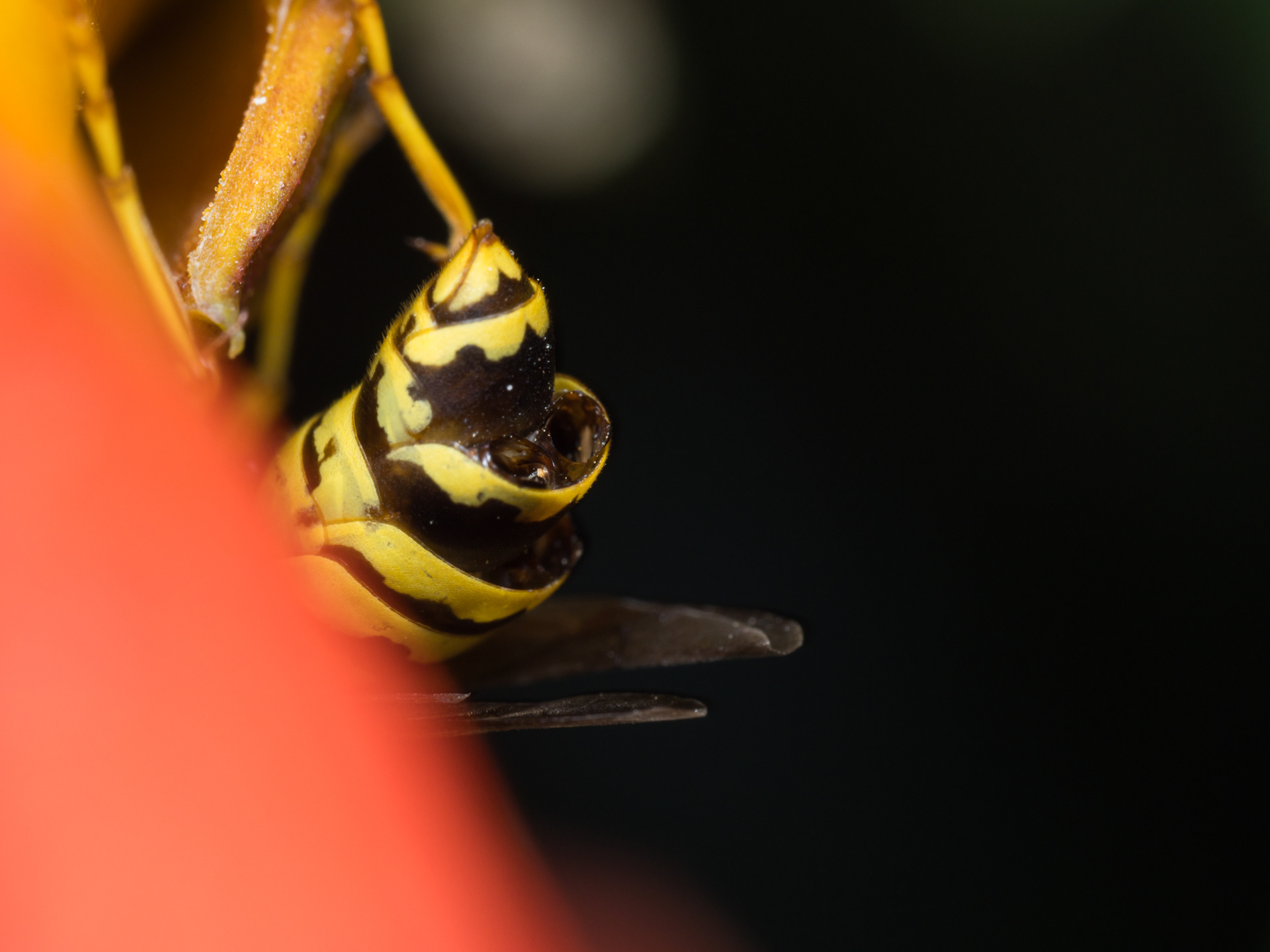
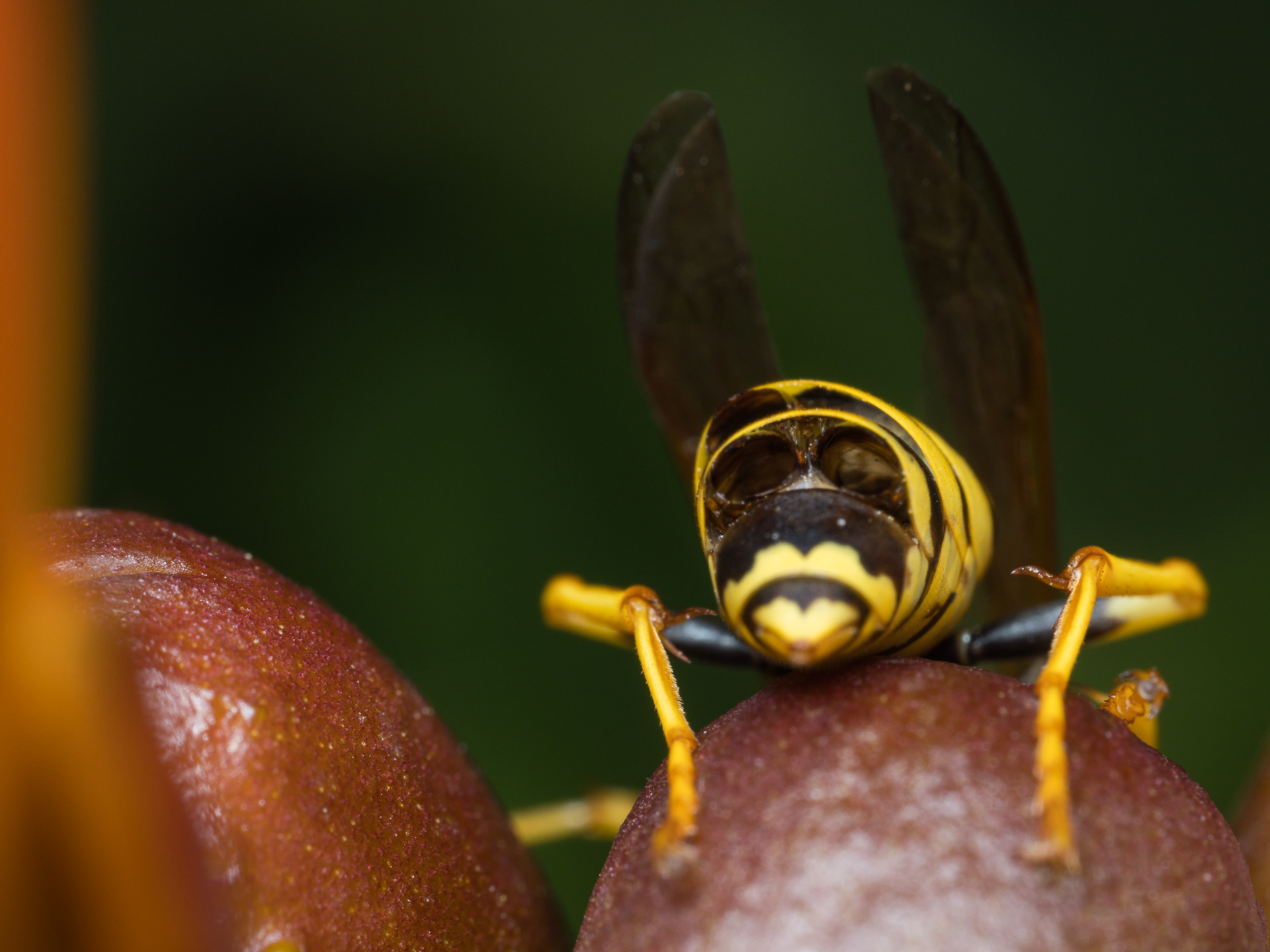
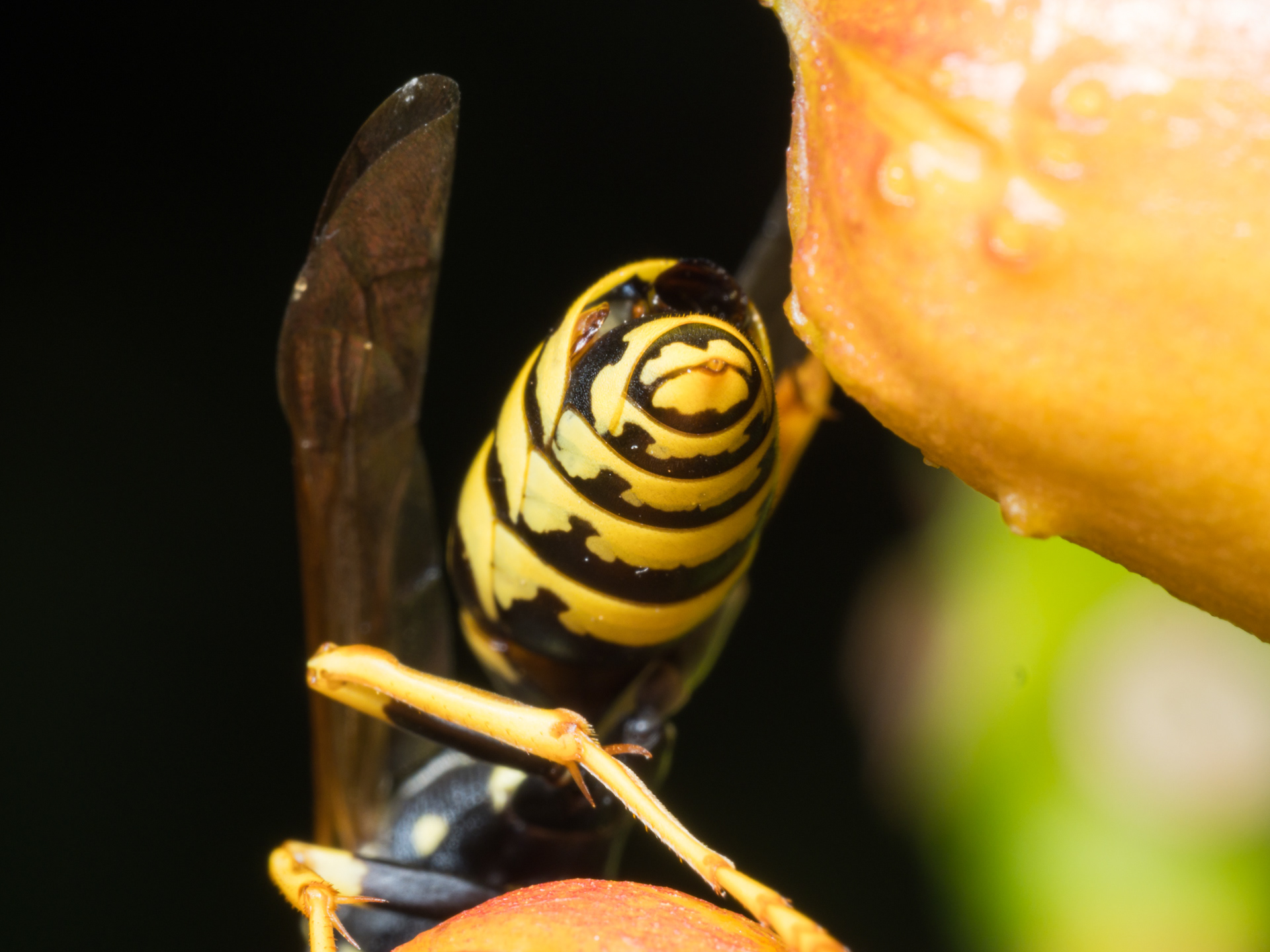
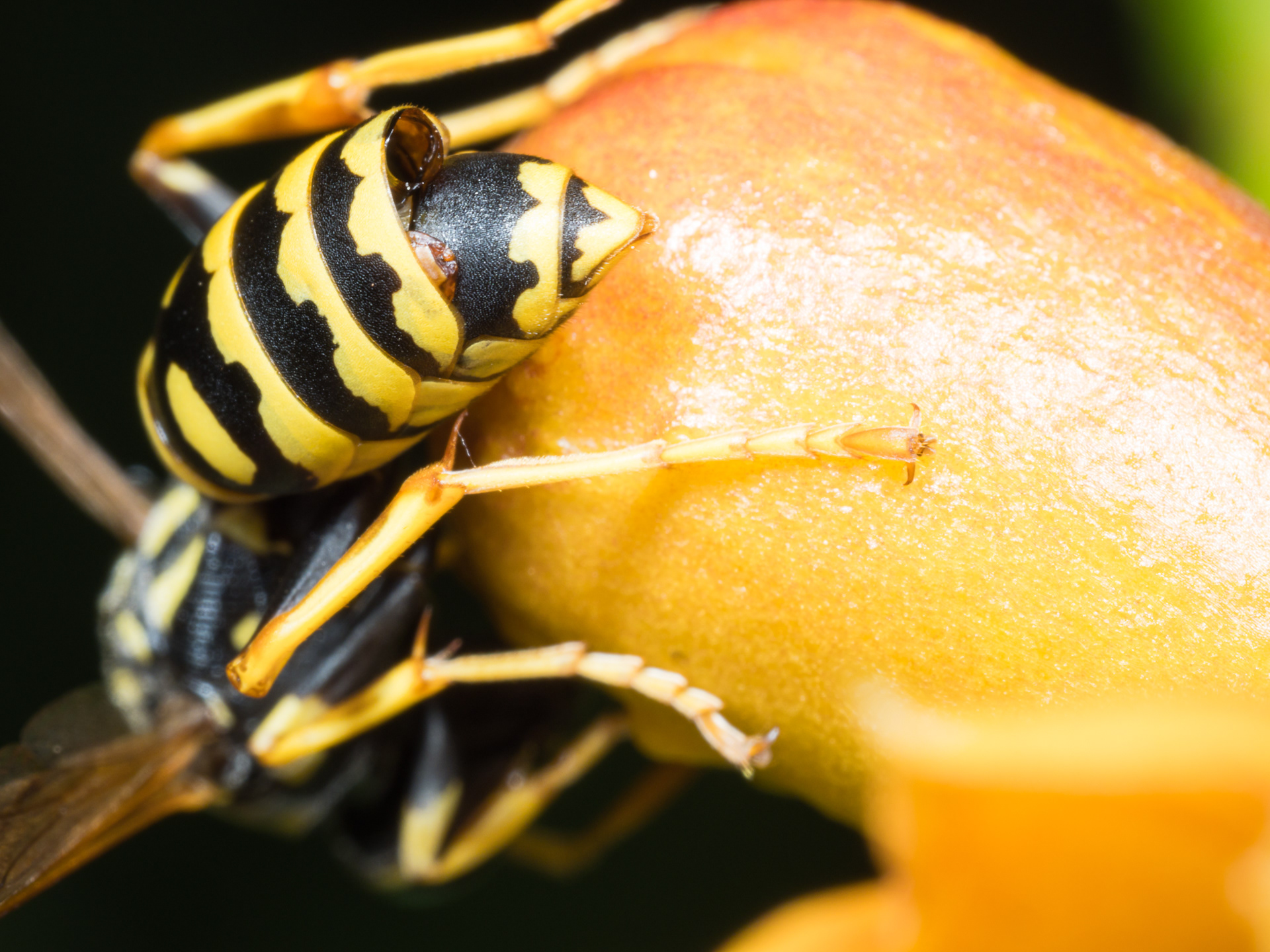
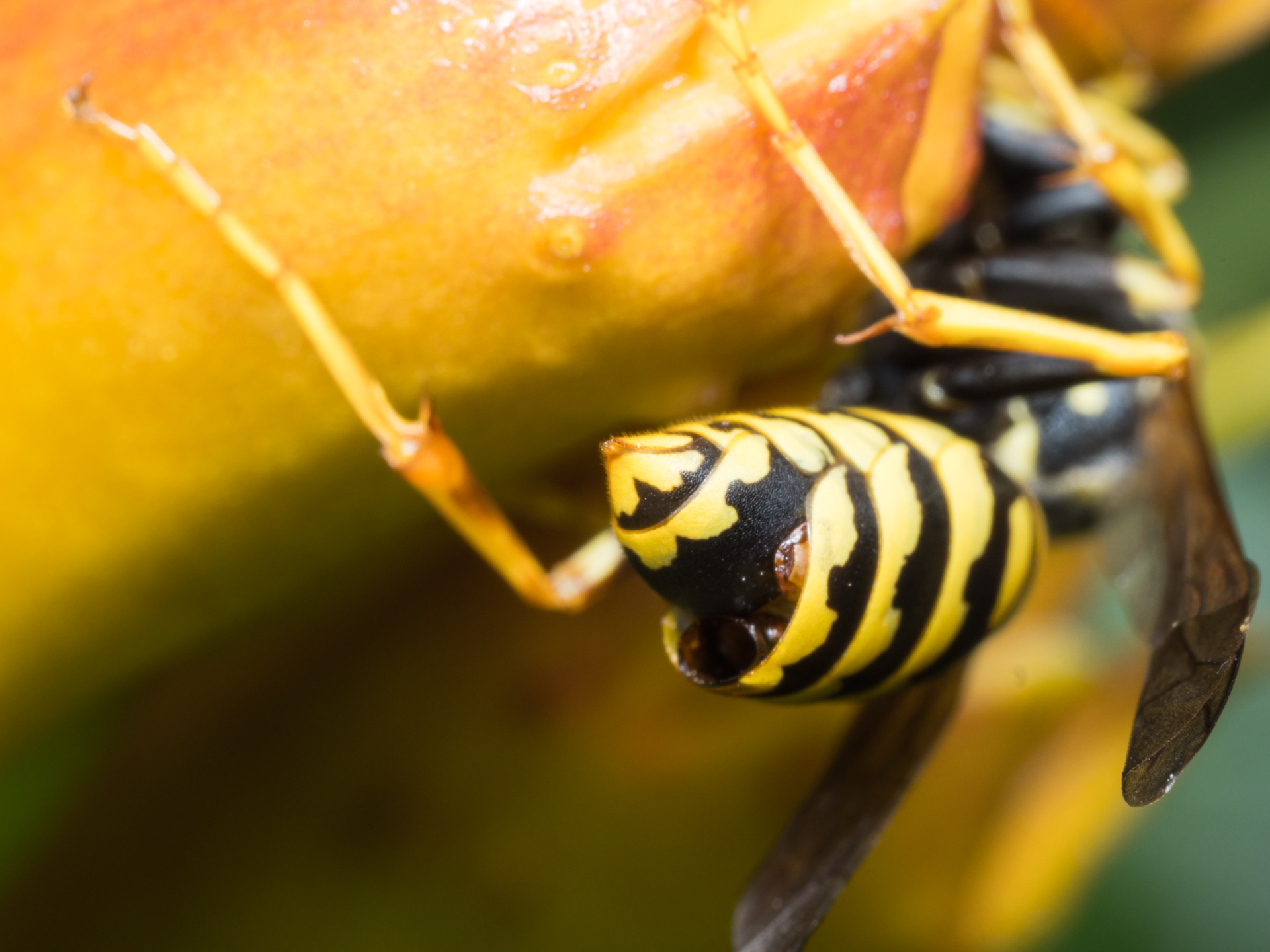
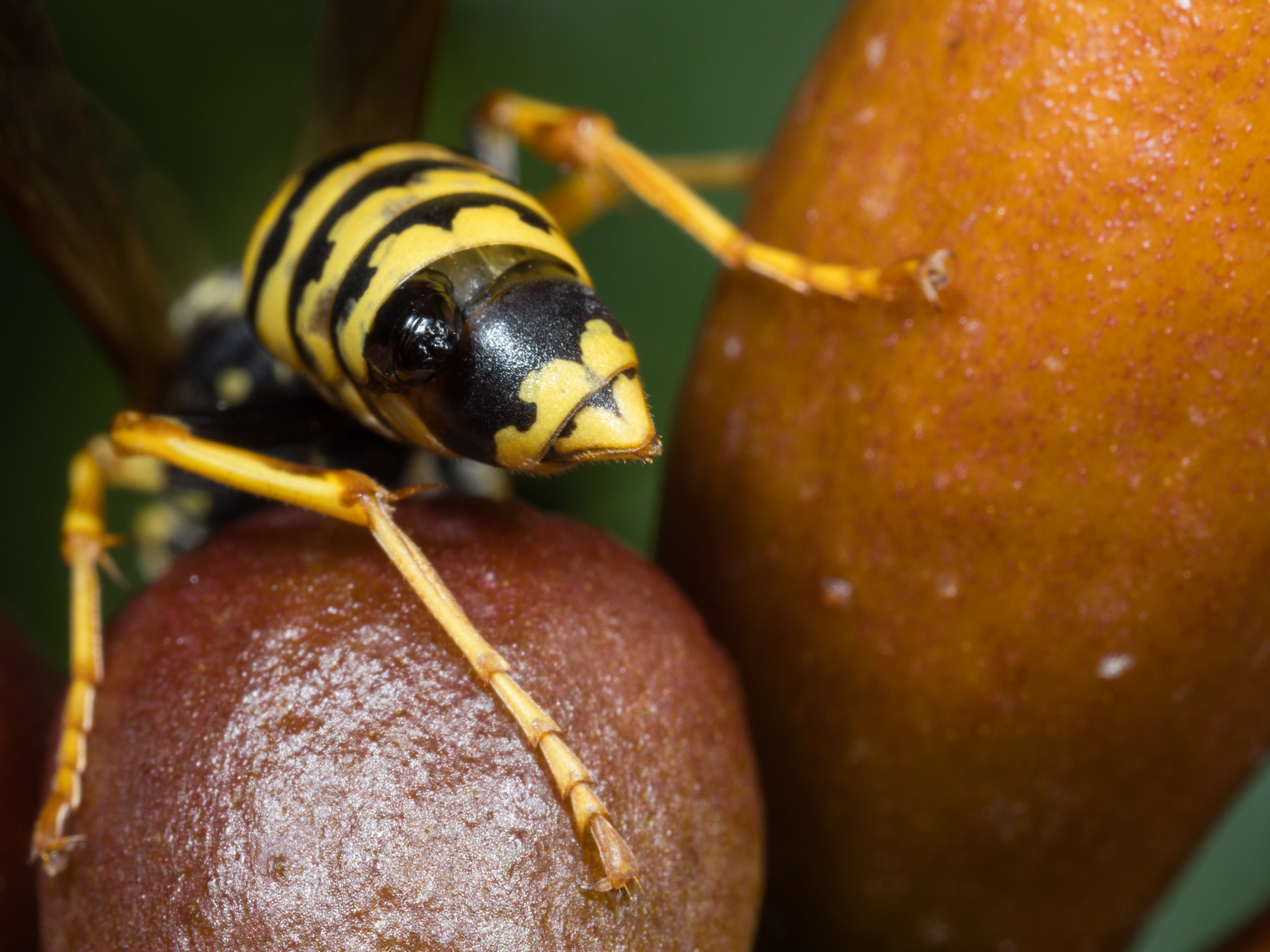
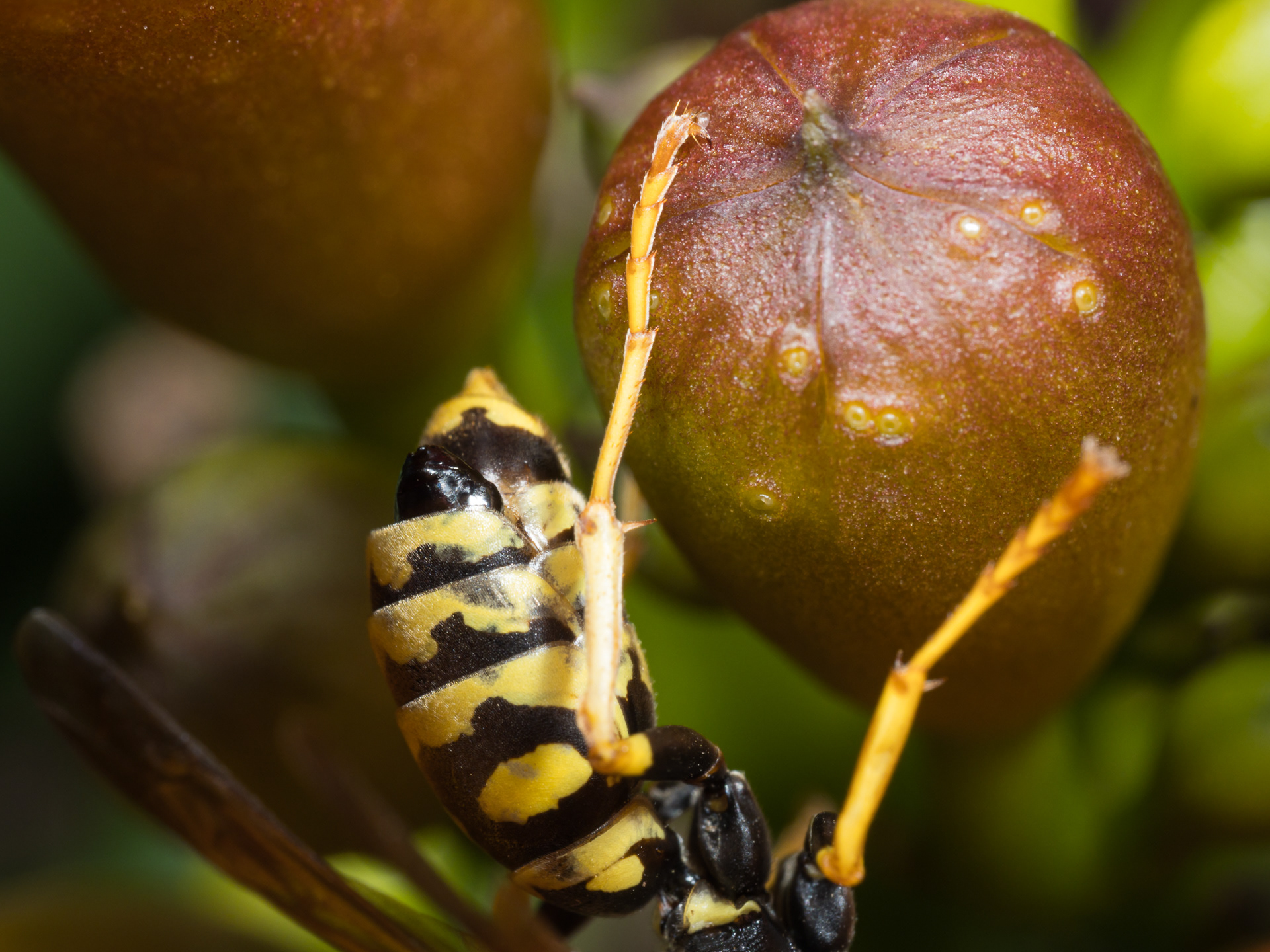
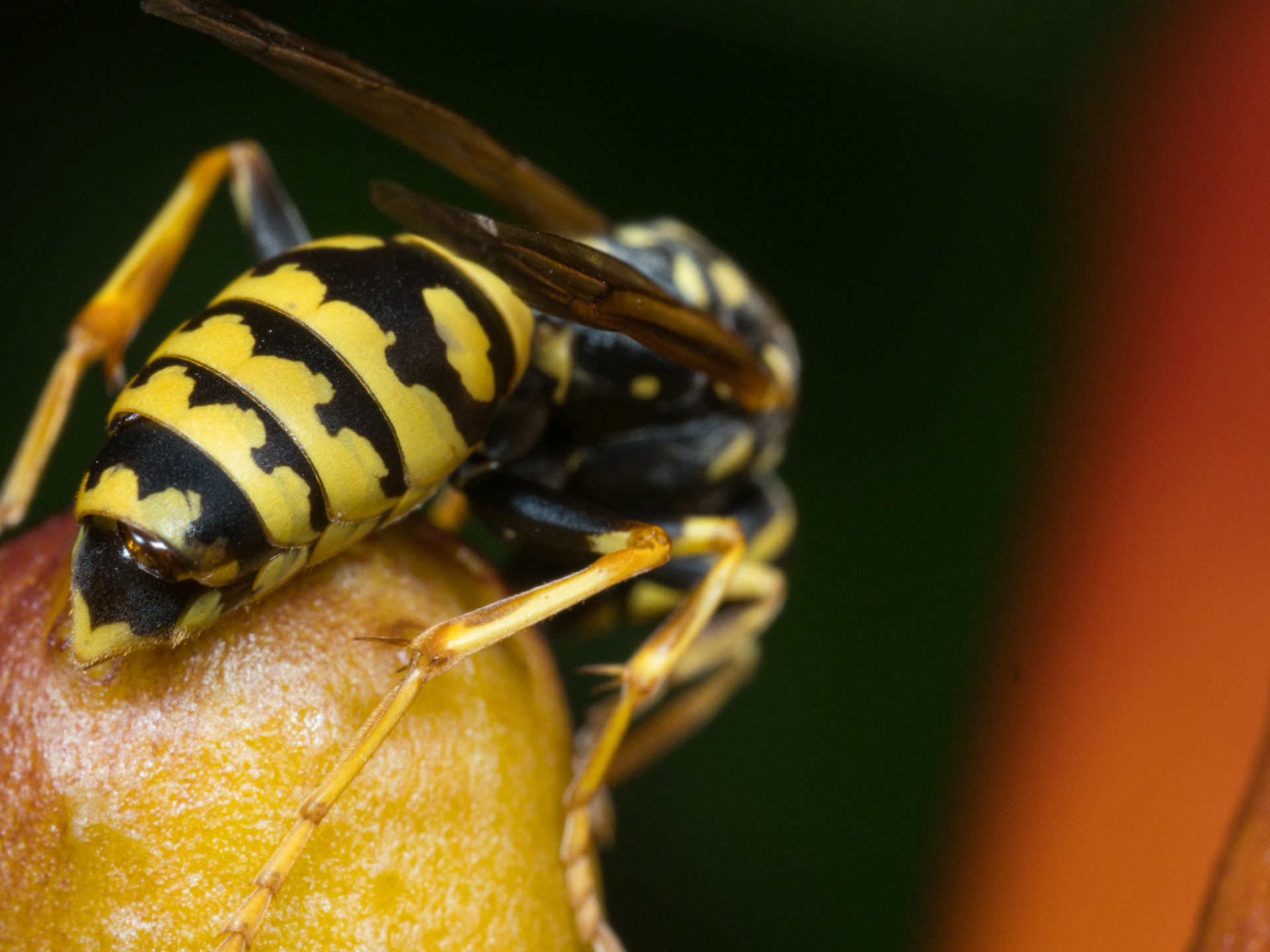
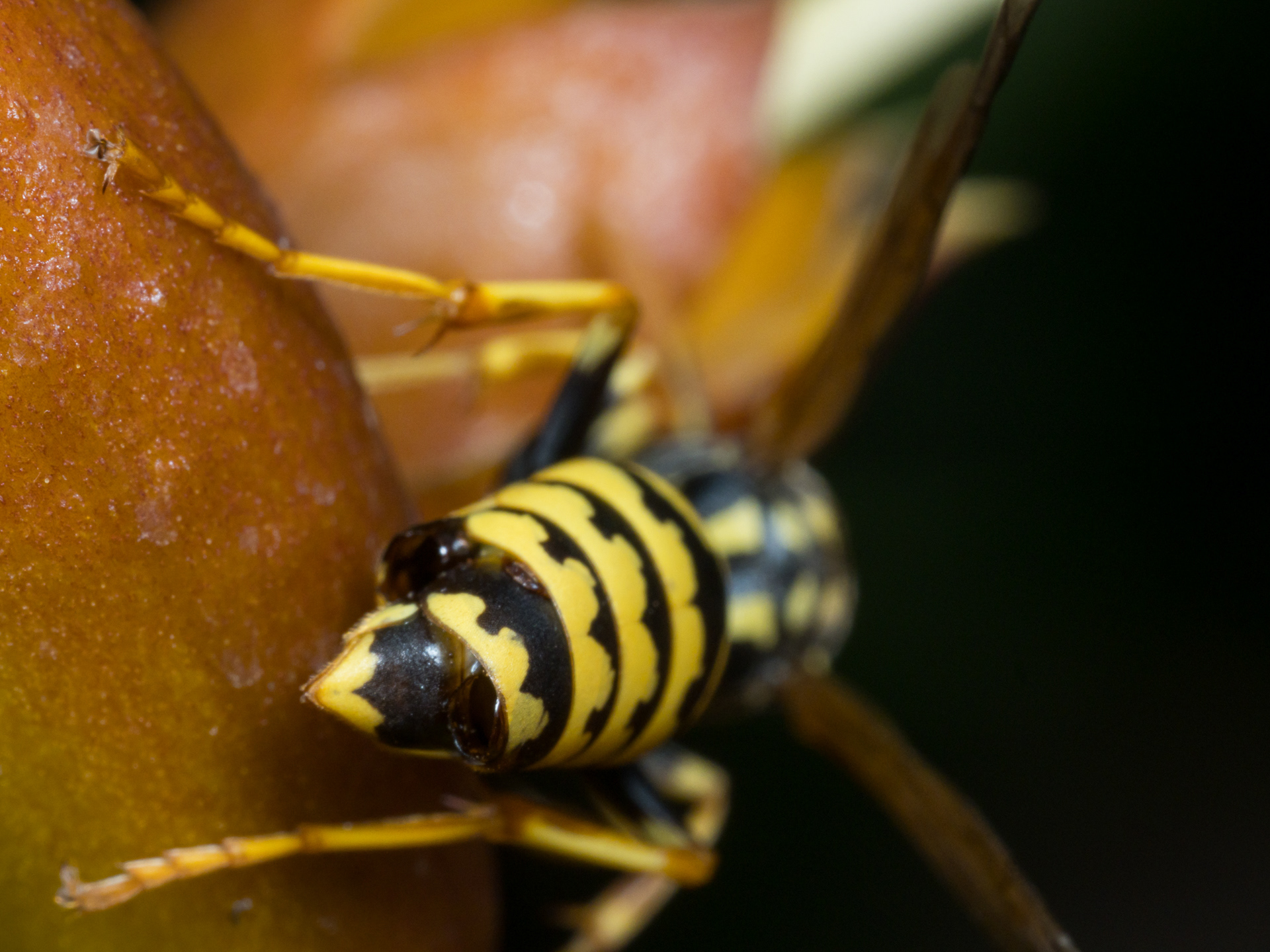
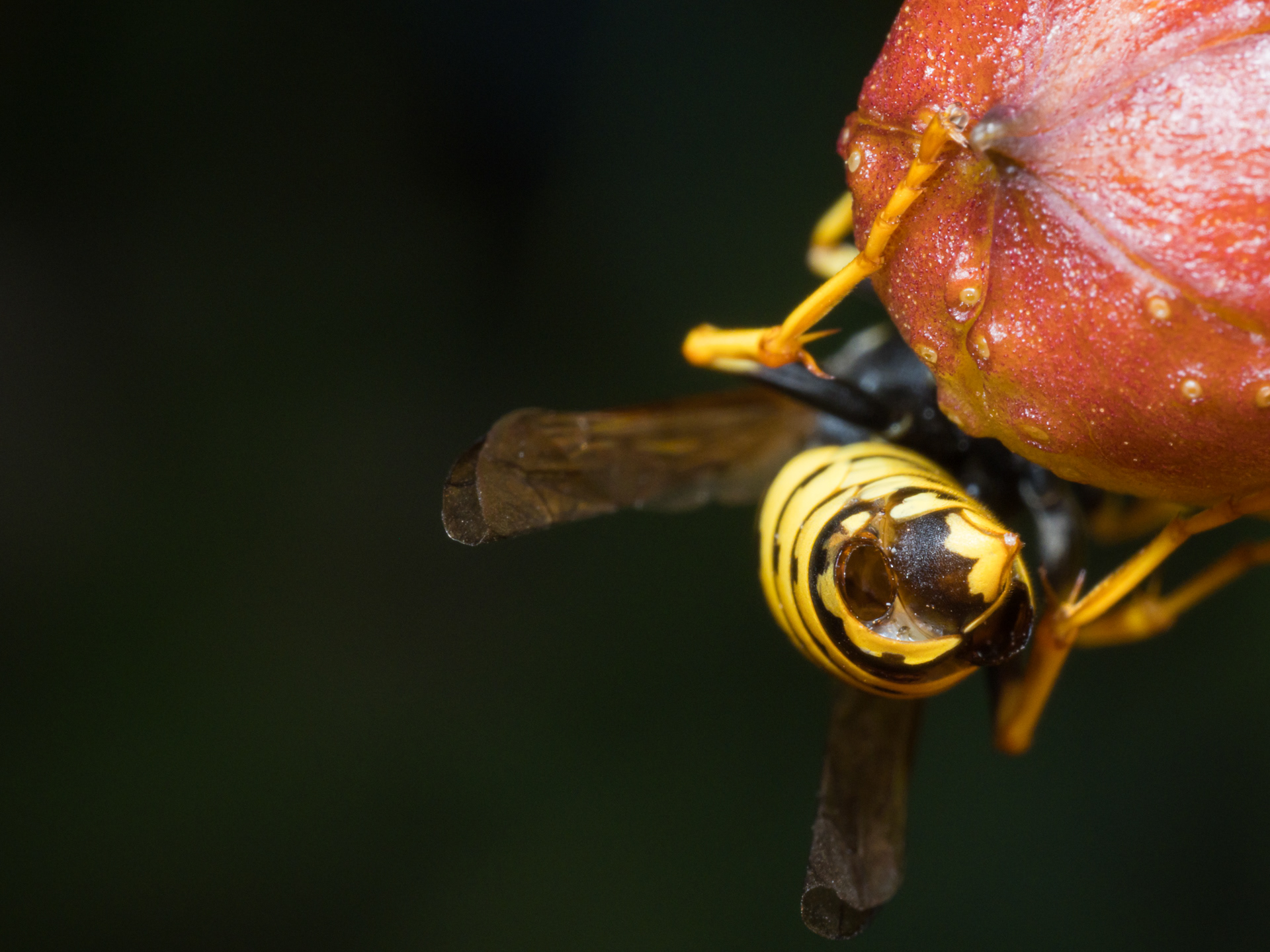
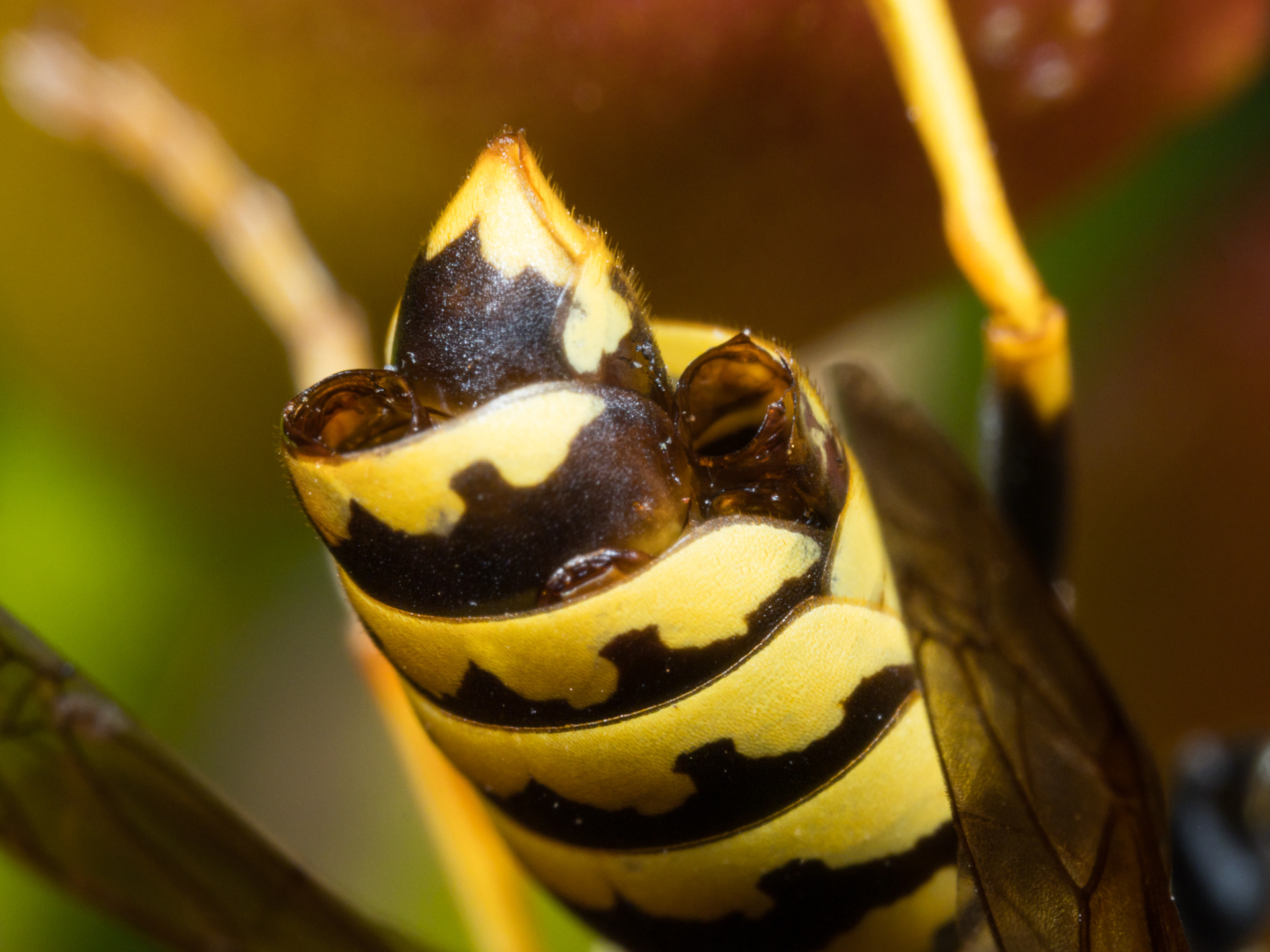
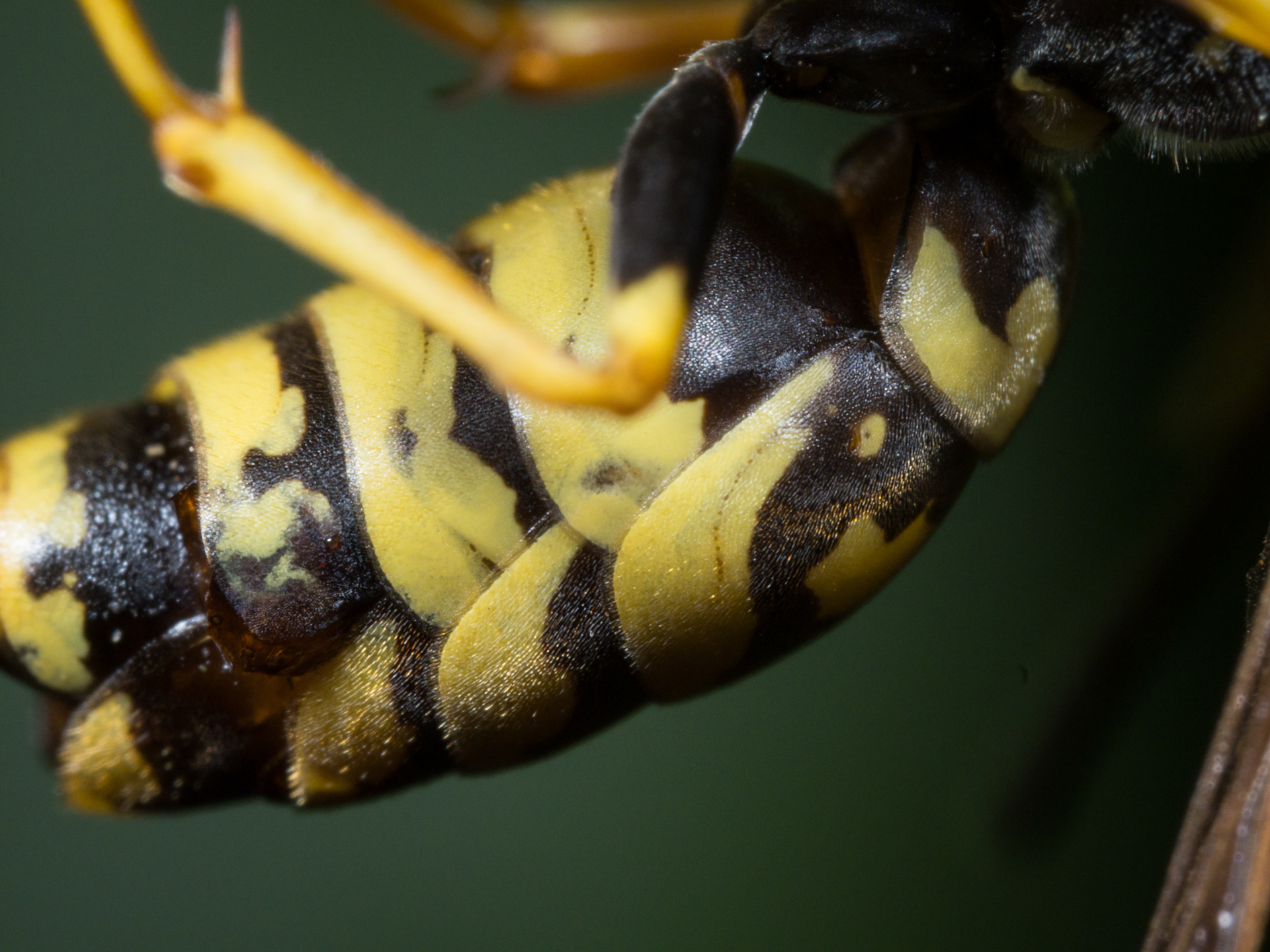
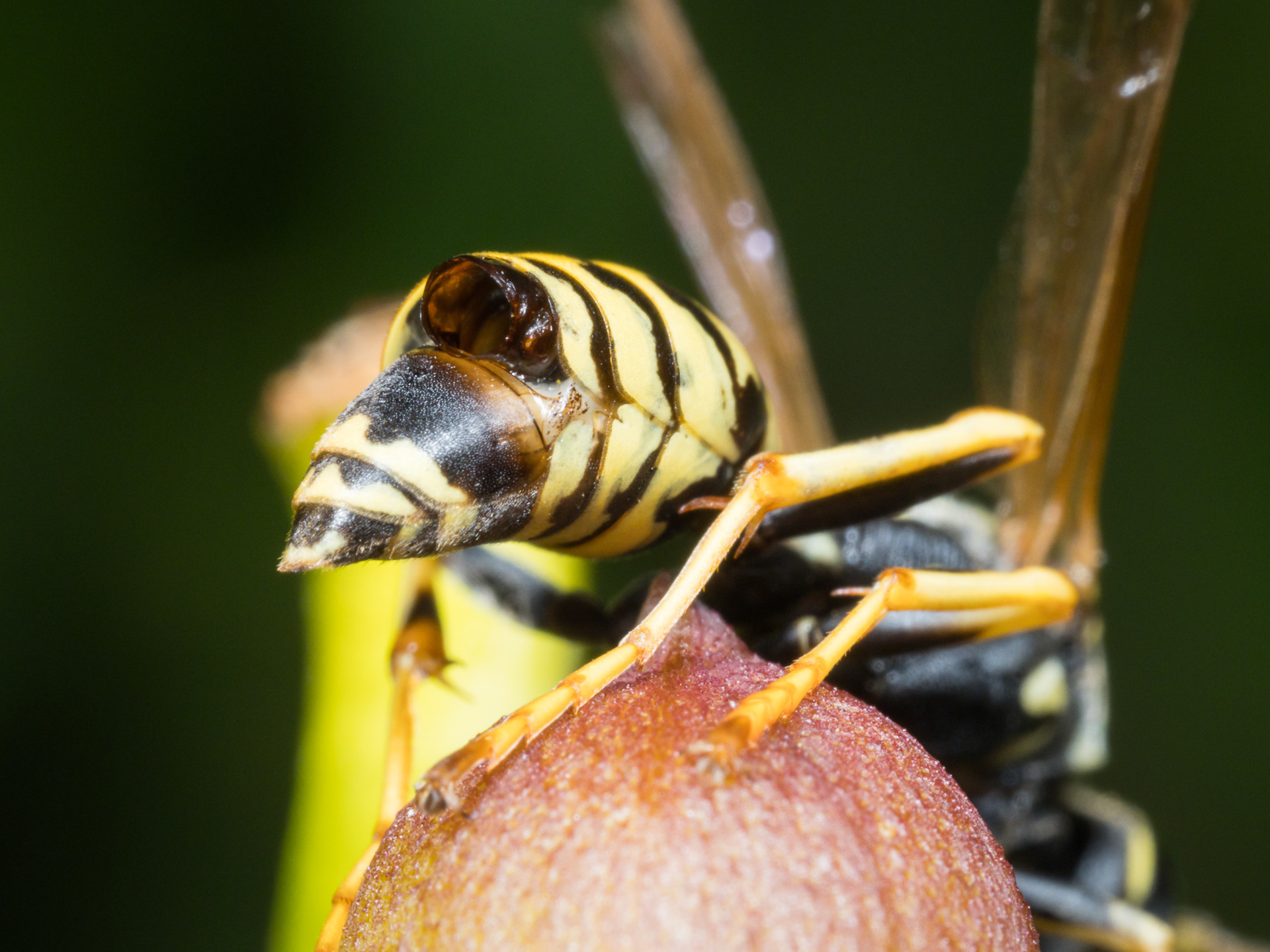
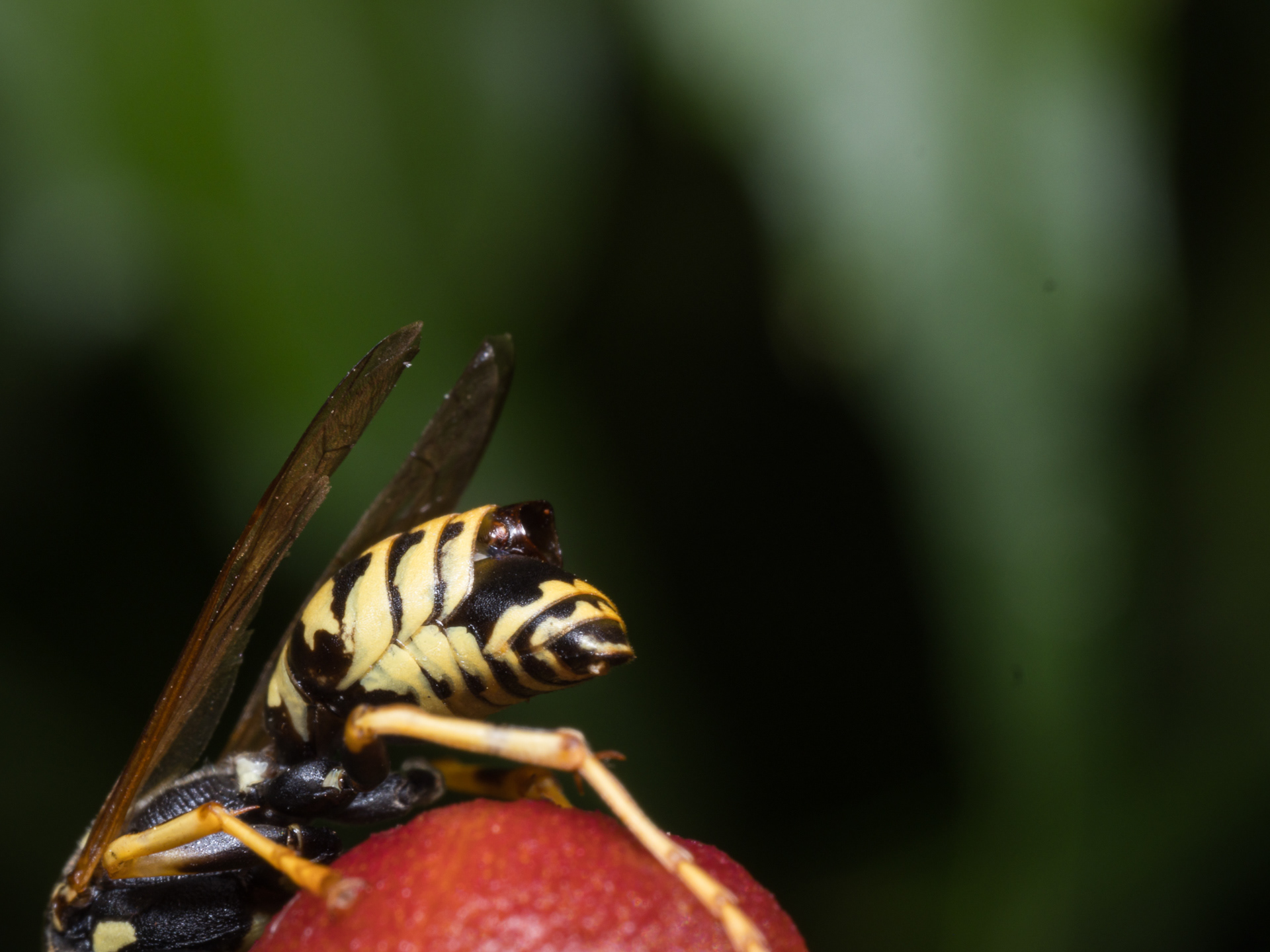
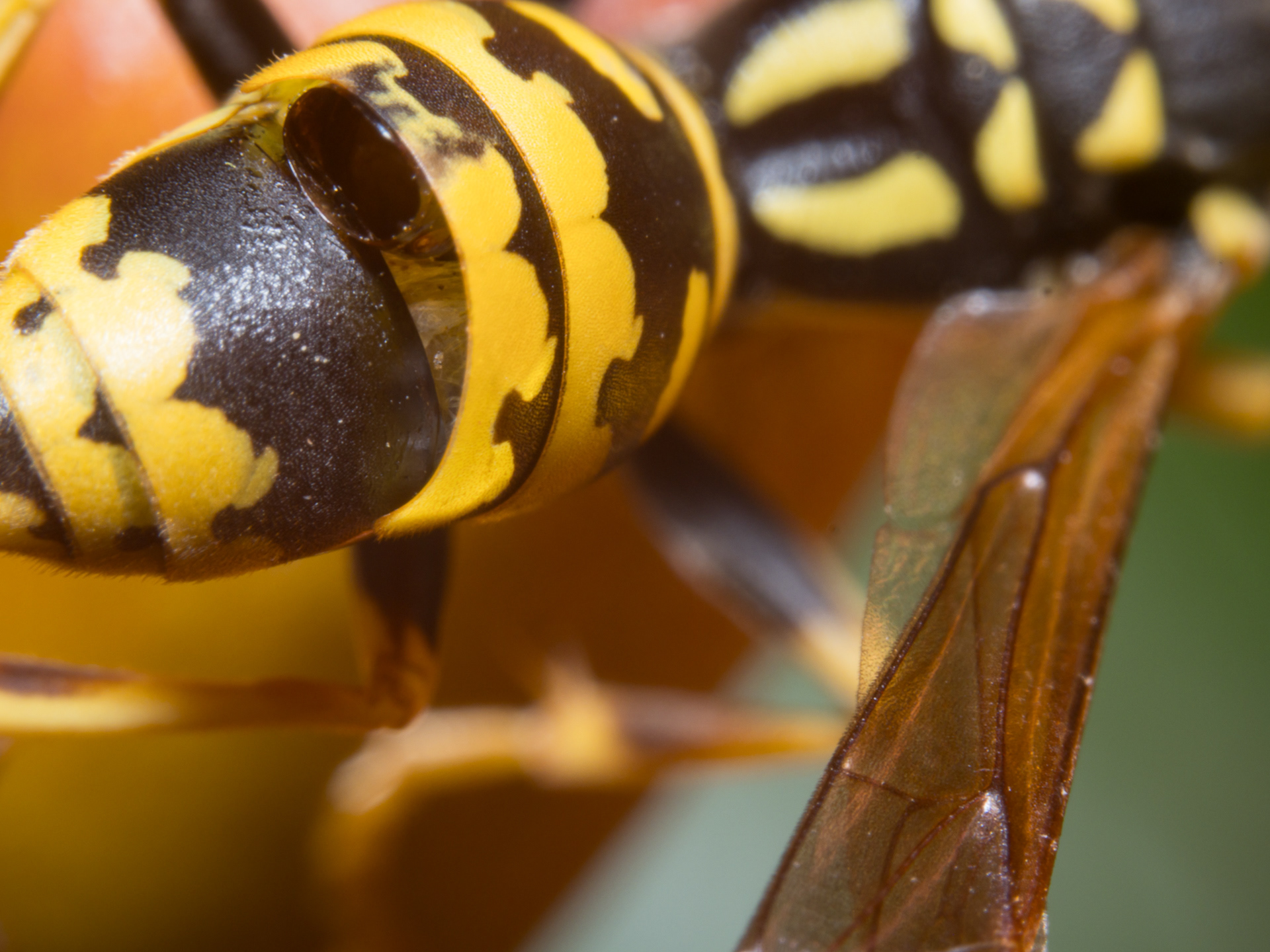
Sin embargo, una observación detallada de su anatomía revela una anomalía. En su abdomen, entre los segmentos de su armadura, se aprecia una ligera deformación. Una pequeña protuberancia marrón asoma bajo una de las placas esclerotizadas. La avispa, a pesar de su fuerza y su tamaño, es un vehículo. Transporta algo que no puede quitarse.
The vibration of the air changes. A deep, heavy buzz announces the arrival of an organism of a different scale.
A wasp of the genus Polistes lands on the leaf. Its mere presence alters the colony's dynamics. Its warning coloration, the pattern of yellow and black stripes, is a universal signal of danger in the insect kingdom.
The ants react to the intrusion. Following their defensive instinct, they attempt to surround the giant and bite its limbs. However, the physical difference is insurmountable. The wasp's exoskeleton is too thick; the ants' mandibles slip off the armored chitin without causing damage. The wasp barely needs to brush them aside with its spiny legs to continue its task.
Its objective is the energy resource. The wasp moves among the aphids, lapping up accumulated honeydew or capturing prey to shred and carry protein back to its nest. It is a dominant predator in this microcosm. Nothing on the plant poses a real threat to its physical integrity.
Sated, the wasp spreads its wings and resumes flight toward its colony, apparently at the peak of its vitality.
However, a detailed observation of its anatomy reveals an anomaly. On its abdomen, between the segments of its armor, a slight deformation can be seen. A small brown protrusion peeks out from under one of the sclerotized plates. The wasp, despite its strength and size, is a vehicle. It carries something it cannot remove.





V
El pasajero tiene nombre, pero apenas tiene forma.
Es una hembra de Xenos vesparum. No necesita ojos, ni alas, ni patas. Ha renunciado a todo lo que define a un insecto adulto para convertirse en pura permanencia. Vive incrustada entre los órganos de la avispa, asomando solo una pequeña placa marrón al exterior.
No es un ataque; es una estrategia. La avispa es la dueña del aire, armada con un aguijón que todos temen. El parásito ha entendido una vieja verdad: el lugar más seguro de la selva es la espalda del león.
Pero el anfitrión paga un precio.
Poco a poco, la avispa deja de ser ella misma. Ignora la llamada del nido. Olvida a sus hermanas. Su instinto de caza se apaga y su propio ciclo reproductivo se detiene en silencio. Ya no trabaja para la colonia; ahora sirve, sin saberlo, a la vida que lleva a cuestas.
Guiada por un impulso ajeno, vuela hacia lugares específicos, puntos de encuentro donde otros como su pasajero esperan. Allí, sobre su propio cuerpo, la vida se renueva.
Y cuando llega el momento, el ciclo no termina con la muerte, sino con la dispersión. Multitudes de crías minúsculas emergen del pasajero, bullendo sobre la avispa inmóvil, buscando un nuevo transporte para volver a empezar el viaje.
The passenger has a name, but barely a form.
It is a female Xenos vesparum. She needs no eyes, no wings, no legs. She has renounced everything that defines an adult insect to become pure permanence. She lives embedded between the wasp's organs, protruding only a small brown plate to the outside.
It is not an attack; it is a strategy. The wasp is the master of the air, armed with a sting that all fear. The parasite has understood an old truth: the safest place in the jungle is the lion's back.
But the host pays a price.
Little by little, the wasp ceases to be herself. She ignores the call of the nest. She forgets her sisters. Her hunting instinct fades, and her own reproductive cycle silently halts. She no longer works for the colony; she now serves, unknowingly, the life she carries.
Guided by an alien impulse, she flies to specific locations, meeting points where others like her passenger wait. There, upon her own body, life is renewed.
And when the moment comes, the cycle ends not with death, but with dispersal. Multitudes of tiny offspring emerge, swarming over the motionless wasp, seeking a new transport to start the journey all over again.

Statement
La naturaleza se construye sobre ficciones de poder.
Observamos el mundo a través de jerarquías visibles: la planta alimenta al pulgón, el pulgón alimenta a la hormiga, y la avispa, con su armadura y su aguijón, reina sobre todos ellos. A simple vista, el orden parece indiscutible. La avispa es el vértice, el depredador intocable.
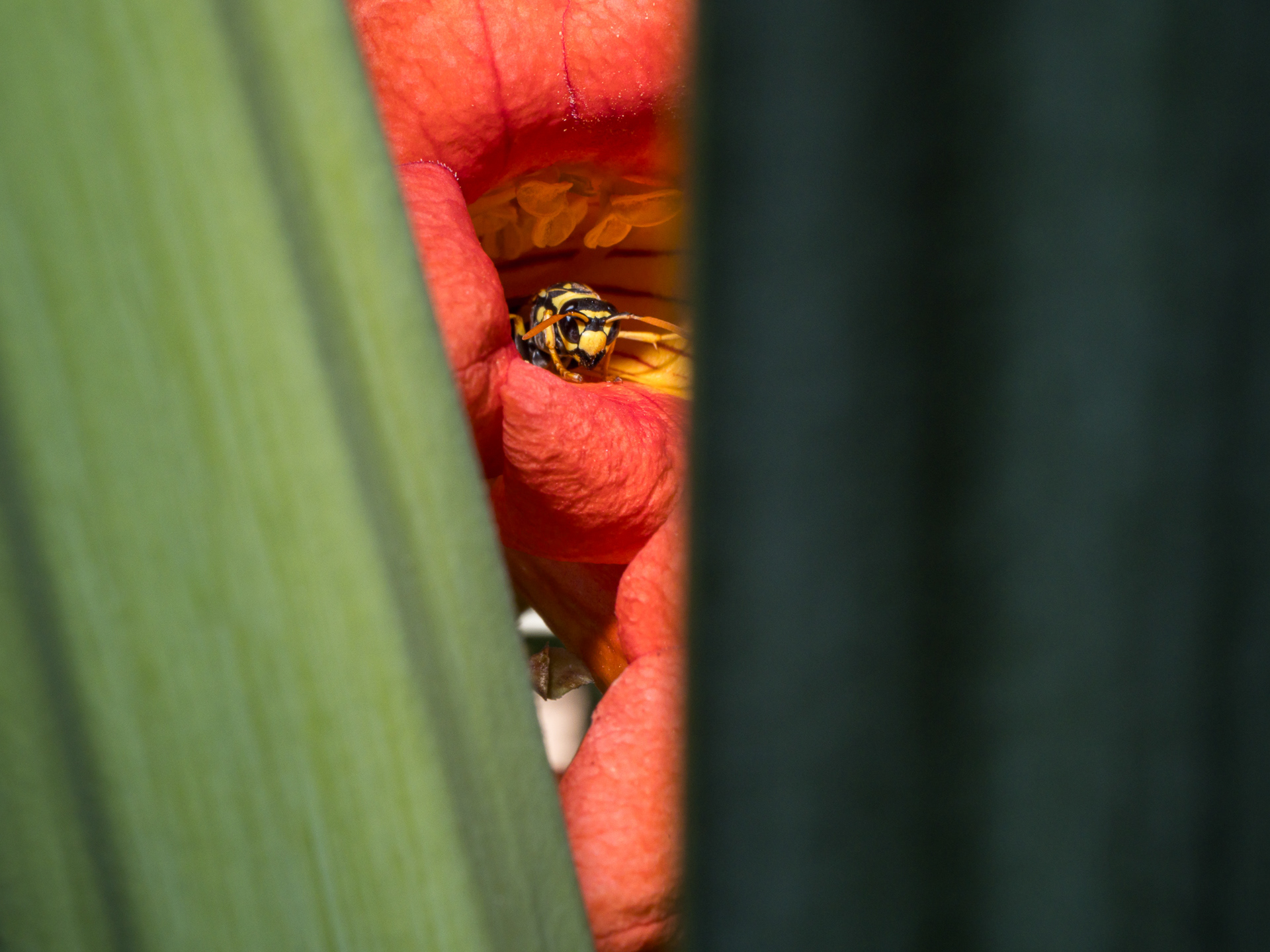
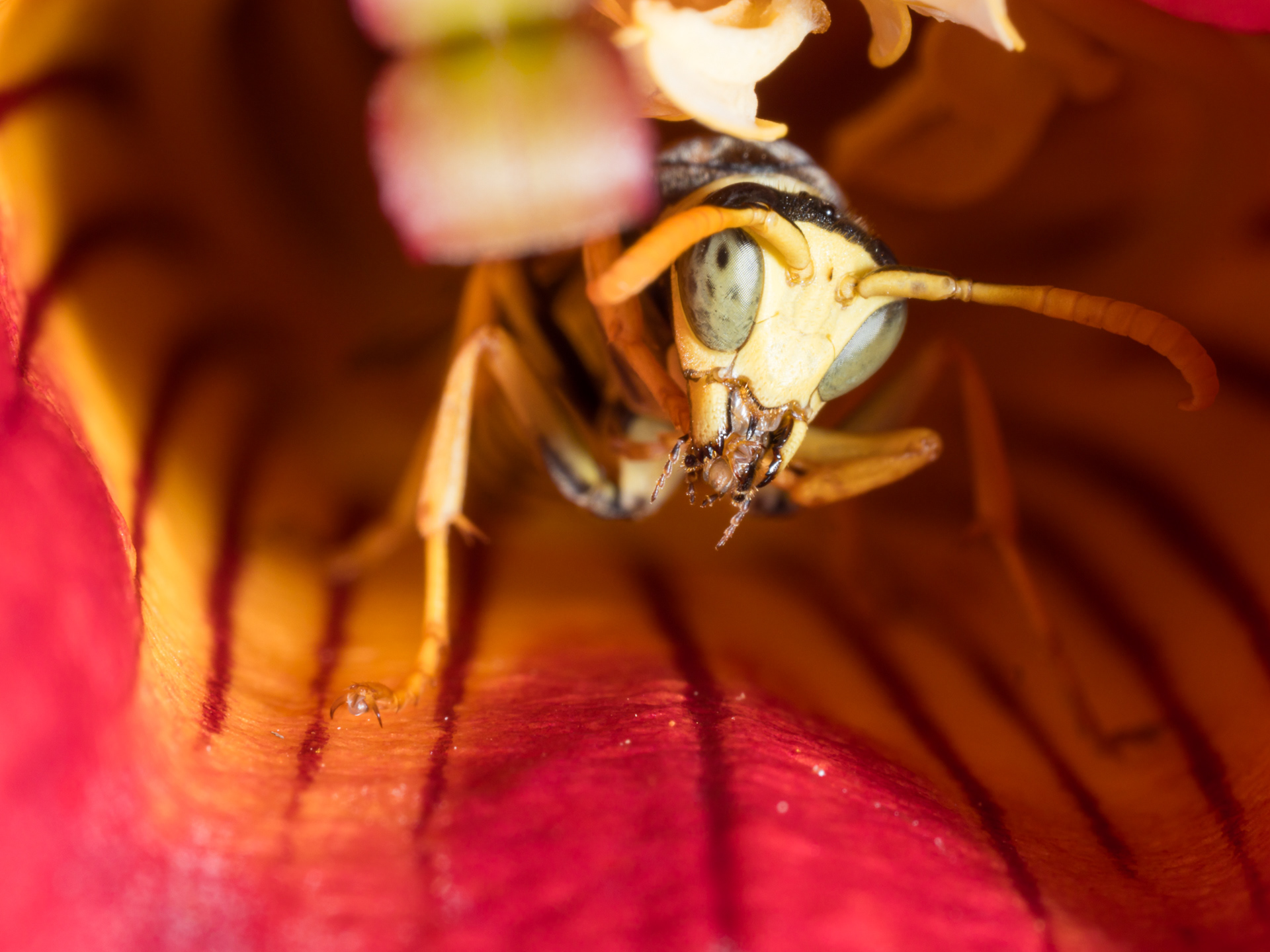
Sin embargo, esta serie fotográfica actúa como una disección visual que desmantela esa certeza. Al congelar el movimiento y acercar la mirada, revelamos una verdad oculta bajo la quitina: la existencia de un pasajero.
Lo que estas imágenes documentan es la inversión del control. El organismo más fuerte no es el que posee la fuerza bruta, sino el que logra habitarla. La avispa, temida y respetada, se revela aquí no como soberana, sino como un simple vehículo; un contenedor biológico al servicio de una criatura ciega y sin extremidades.
Este proyecto nos invita a cuestionar la solidez de las apariencias. Nos recuerda que, en la espesura de lo minúsculo, la verdadera supervivencia no consiste en tener las mejores armas, sino en encontrar el escondite perfecto. A veces, ese escondite está a plena vista, incrustado en la espalda de quien se cree invencible.
Nature is built on fictions of power.
We observe the world through visible hierarchies: the plant feeds the aphid, the aphid feeds the ant, and the wasp, with her armor and sting, reigns over them all. At a glance, the order seems indisputable. The wasp is the apex, the untouchable predator.
However, this photographic series acts as a visual dissection that dismantles that certainty. By freezing motion and drawing the gaze closer, we reveal a truth hidden beneath the chitin: the existence of a passenger.
What these images document is the inversion of control. The strongest organism is not the one with brute force, but the one that manages to inhabit it. The wasp, feared and respected, reveals herself here not as a sovereign, but as a mere vessel; a biological container at the service of a blind, limbless creature.
This project invites us to question the solidity of appearances. It reminds us that, in the thicket of the minuscule, true survival is not about having the best weapons, but about finding the perfect hiding place. Sometimes, that hiding place is in plain sight, embedded in the back of the one who believes themselves invincible.